




Read summarized version with:

ChatGPT

Gemini

Claude

Grok

Add as preferred on Google
We analyzed more than 125,000 US rent payments made online through Landlord Studio to see how tenants pay rent, when they pay it and what makes rent late.
Key findings
- 7 in 10 tenants pay on or before the due date. The most common day to pay is the due date itself.
- About 1 in 5 tenants pays by card when card payments are available. The rest pay by bank transfer (ACH).
- Card use falls as rent rises. 30.4% of rent under $1,000 is paid by card, compared with 7.9% of rent over $3,000.
- Every very late payment was manually initiated. Autopay payments were never scheduled after the due date.
- A bounced payment usually means late rent. After a payment bounced for insufficient funds, 79% of tenants paid four or more days late.
- Split payments run later. 30.2% of rent paid in installments was very late, compared with 13.3% of rent paid in one go.
- Where you live matters. Tenants in Alaska, Utah and Washington pay earliest. Tenants in Connecticut, Arkansas and Kentucky pay the latest.
Bank transfer or card: how do tenants pay rent?
Most tenants pay rent by bank transfer. When landlords accept card payments, about 1 in 5 tenants uses a card instead.
Rent payments made through Landlord Studio where tenants could choose a bank or card.
Card payments by brand
- Visa: 72.6%
- Mastercard: 22.7%
- Amex: 3.1%
- Discover: 1.6%
Bank payments by account type
- Checking: 94.3%
- Savings: 5.7%
Can you pay rent with a credit card?

Yes, if the landlord or their rent collection platform accepts cards. Tenants often pay by card to earn reward points or cashback, or to reach the minimum spend for a sign-up bonus.
Card payments carry a processing fee, often around 3%, and many landlords pass it on to the tenant where the law allows. Most cards pay back 1% to 2%, so a tenant who pays the fee usually loses more than they earn in rewards. A landlord who covers the fee instead loses part of every rent payment.
A card can help a tenant cover rent when money is tight, but if they don't clear the balance, they pay interest on top of the fee. For a full comparison of costs, speed and chargebacks, see ACH vs credit card for rent collection.
Lower rents are more often paid by card
Tenants paying under $1,000 a month were almost four times as likely to pay by card as tenants paying $3,000 or more.
Card payments are more often late
Cards made up about 19% of payments but about 29% of very late ones.
Card payments were also less likely to be made by autopay (10.5% of card payments, compared with 21.9% of bank payments), and manual payments are the ones that run late.
Card payments failed more often too. 10.1% of card payment attempts failed, compared with 3.9% of bank payment attempts. Almost all failed bank payments were rejected for insufficient funds.
Our data can't show why tenants choose a card, but one likely reason is cash flow. A tenant who is short when rent is due may put it on a credit card to get through to their next payday. If so, the card isn't what makes the payment late. The tenant was already behind, and the card is how they catch up.
For landlords, a tenant who switches from bank transfer to card may be an early sign of money trouble.
Most tenants pay on the due date
Seven in ten tenants pay on or before the due date. The single most common day to pay is the due date, followed by the day before and the day after.
ACH rent payments. Measured by the day the tenant paid.
Paying on the due date doesn't mean the landlord has the money on the due date. An ACH payment typically takes about 4 business days to reach the landlord, and only 8.2% of payments arrived by the due date. Our guide to how long ACH takes for rent covers the timeline step by step.
The 5th of the month is the new 1st
Tenants who pay late often pay at the end of the grace period. For rent due on the 1st, about 20% of very late payments were made on the 5th, and 40% between the 5th and the 7th.
ACH rent payments due on the 1st where the tenant paid four or more days late. Even leaving out tenants retrying after a bounced payment, about 1 in 5 very late payments was made on the 5th.
The 5th is also the most common day landlords set for a late fee to start. Many late payers seem to treat the end of the grace period as the real deadline.
Much of this lateness is planned. A third of very late payments were set up in advance for a later date, so for many tenants paying late is a choice about timing rather than a missed deadline.
Payday matters
Friday is the busiest day to pay rent, and late payments cluster on Thursdays and Fridays. That lines up with common paydays: tenants who are short at the start of the month often pay as soon as their next paycheck lands.
Autopay or manual: how tenants set up rent payments
Just over a quarter of rent payments (28.3%) are made by autopay, where the tenant sets up a recurring payment once and rent is pulled from their bank account automatically. The rest are made manually each month by logging into Landlord Studio's tenant portal.
Every autopay payment was scheduled on or before the due date. Manual payments made up all of the very late payments.
Autopay payments also bounced about half as often: 2.1% of autopay attempts bounced, compared with 4.0% of manual attempts.
Bounced payments: how often rent fails
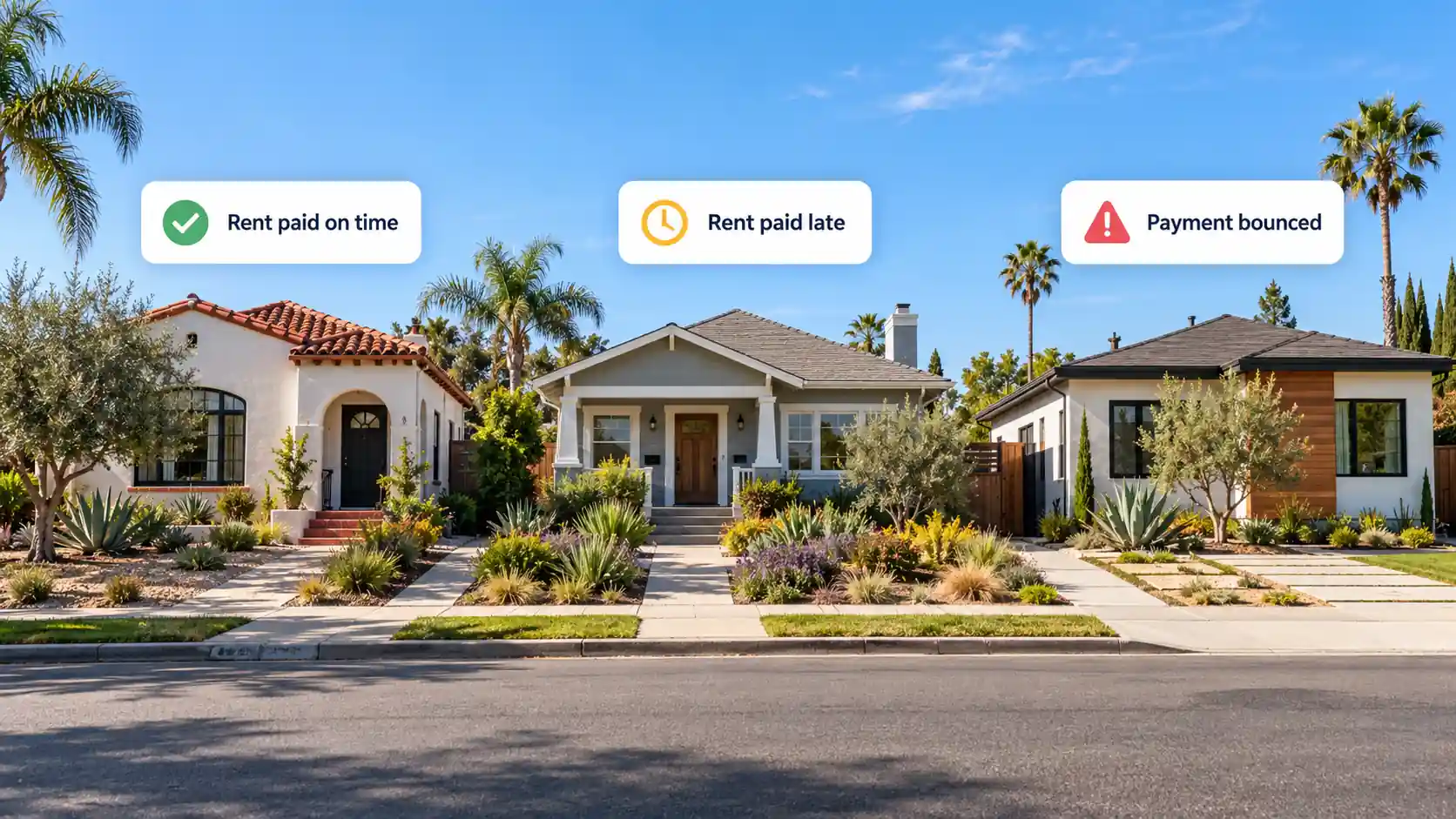
Most rent payments go through, first time. When one bounces, the rent that follows is usually late.
After a payment bounced for insufficient funds, the tenant's next attempt usually came four to seven days later. Part of that gap is how bank transfers work.
An ACH payment can take a few business days to process and then come back for insufficient funds, so neither the landlord nor the tenant may know rent has bounced until several days after it was paid.
A few tenants bounce again and again
More than half (56%) of insufficient funds bounces came from tenants who had already bounced in the previous 12 months. For landlords, the first bounce is the best moment to talk to a tenant, before it becomes a pattern.
What to do when payments bounce:
- First bounce - it's often a timing issue. Move the payment date closer to payday.
- Second bounce in a year - the tenant may be struggling. Set up a written payment plan, charge the returned payment fee in your lease (some states cap it), and log every failed payment.
- Repeat bounces - some states let you require certified funds or a money order for a set period, as long as you give written notice.
Check your state's rules and your lease before you change how a tenant pays.
Split and partial rent payments

About 1 in 10 rent payments is split across two or more payments. Those payments run much later.
This doesn't mean allowing partial payments causes late rent. Landlords may allow them because a tenant is already struggling. But it's worth knowing that leases with partial payments switched on were late more often.
Does rent amount affect when tenants pay?
Tenants with higher rents pay on time slightly more often.
Do late fees stop late rent?
Late fees don't appear to change when tenants pay. Tenancies with a late fee set up paid four or more days late 15.3% of the time, compared with 14.6% for those without one. The average late fee collected was about $73.
Rules on when and how much you can charge vary by state, so check your state's late fee rules before setting one. Our state-by-state guide to late fees covers the limits.
Which states pay rent on time?
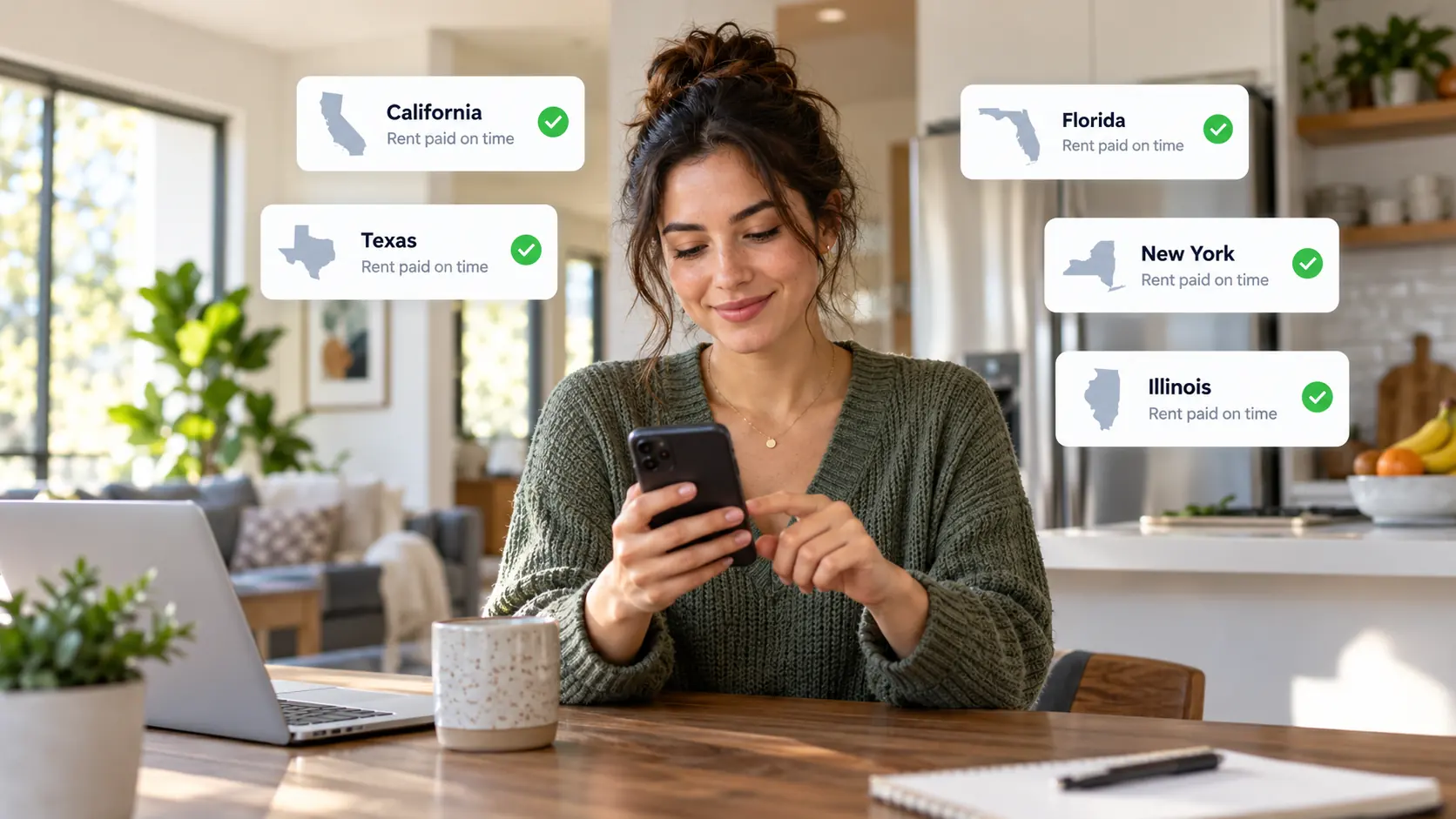
Where tenants live makes a difference. Across the US, 69.7% of tenants paid on or before the due date, ranging from 82.5% in Alaska to 53.8% in Connecticut. Western and Mountain states such as Alaska, Utah, Washington and Colorado pay earliest, while a band of Southern and Midwestern states, including Arkansas, Kentucky, Ohio and Alabama, pays latest.
Very late rent follows the same pattern. Nationally, 15.0% of tenants paid four or more days late, from 5.2% in Alaska to 35.5% in Connecticut. Processing time is the same in every state, so the differences come down to when tenants choose to pay.
See the full ranking of all 50 states and Washington, DC, with maps, in states where tenants pay rent on time.
What this means for landlords
- Offer autopay and encourage it - Autopay payments were never scheduled late and bounced about half as often.
- Schedule autopay a few days early - ACH takes about 4 business days, so a debit on the due date still lands late.
- Act on the first bounce - Most bounces come from tenants who have bounced before.
- Think about partial payments before switching them on - Leases that allowed them were late more often.
- Check your lease wording - Say whether rent is due when it's sent or when it's received.
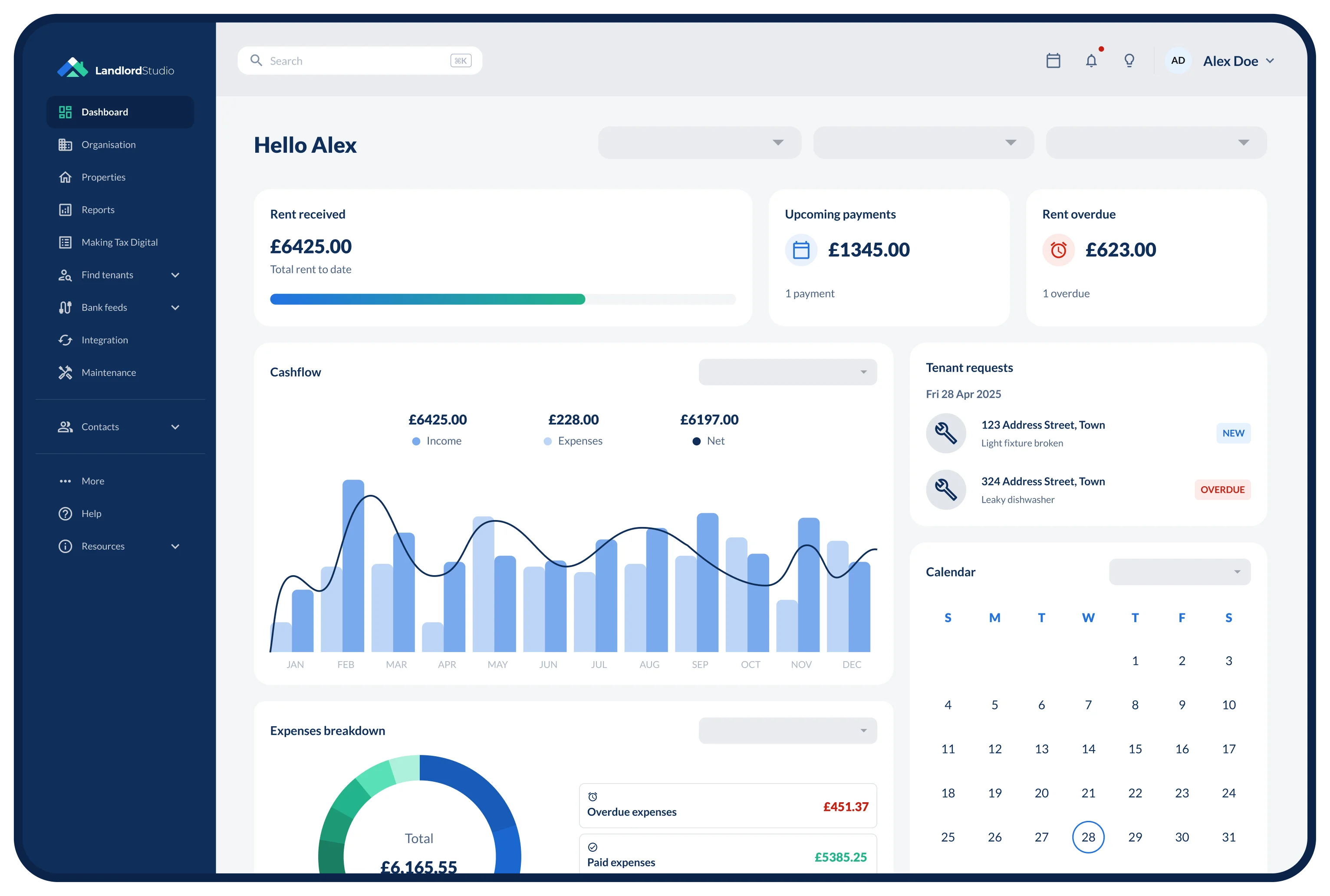
Landlord Studio's online rent collection lets tenants pay by bank transfer or card, set up autopay, and shows you where every payment is. You can get started free.
Methodology
This report uses more than 125,000 US residential rent payments made through Landlord Studio's online rent collection.
- Timing, autopay, bounces, split payments, rent amount, late fees and states: ACH bank transfer payments. "Paid" is the date the tenant or autopay scheduled the payment. "Very late" means four or more days after the due date.
- Bank vs card: payments made where tenants could choose bank transfer or card. Card payments are only available on some landlord accounts, so the card share applies where it was offered, not to all rent.
- States: each property's state was standardized from its address. States with fewer than 500 ACH rent payments are flagged as smaller samples in the full state ranking.
These figures show patterns, not cause and effect. Data is anonymized and aggregated.