



.jpg)
Read summarized version with:

ChatGPT

Gemini

Claude

Grok

Add as preferred on Google
Most landlords treat bookkeeping like that pile of receipts (or old batteries) in the kitchen drawer - something they'll "sort out later." Then April rolls around, and they're spending entire weekends trying to reconstruct twelve months of transactions, wondering if that Home Depot receipt was for a repair or a capital improvement, and panicking about missed deductions.
The alternative isn't more willpower. It's having a system that makes monthly bookkeeping easier than procrastinating.
Here's the rental property bookkeeping checklist that actually keeps you organized year-round, and how software like Landlord Studio automates most of it so you're not drowning in spreadsheets.
Your Rental Property Bookkeeping Checklist
Part 1: Monthly Bookkeeping Tasks
Regular monthly routines form the backbone of any reliable rental property bookkeeping system.
They are vital for tracking cash flow throughout the year and reducing costly end-of-year mistakes.
Record Rental Income
Log every rent payment the day it hits your account. This isn't about being meticulous - it's about catching issues early. When you record income immediately, you know exactly how much money is coming in each month, late payments jump out, partial payments get flagged, and you have a clean audit trail if a tenant disputes their payment history.
When you collect rent with Landlord Studio, payments are made directly into your bank account, and income is automatically tracked in the income expense tracker, so there's no manual entry to forget.
(Plus, dramatically reduce late and missed payments with automated reminders and late fees, and streamlined online payments.)
Categorize Operating Expenses
The IRS draws a hard line between deductible repairs and capital improvements. Tag expenses correctly when they happen, not months later when you've forgotten whether that bathroom work was a quick fix or a full renovation.
Monthly categorization also reveals spending patterns. If you're hemorrhaging money on emergency repairs, that's a signal to budget for preventive maintenance before something expensive breaks.
Reconcile Bank and Software Records
Your bank statement and your bookkeeping software should tell the same story. If they don't, figure out why. Maybe a check cleared late. Maybe software auto-categorized something wrong.
Catch these gaps monthly, not quarterly, or you'll spend hours hunting down a $47 discrepancy from March.
Log Maintenance Activity
Every repair matters, even minor ones. That $65 drain clearing adds up across your portfolio. But beyond tax deductions, your maintenance log tells you which properties are money pits and which tenants are rough on units.
This data informs renewal decisions and helps you budget realistically for turnover.
Store Digital and Paper Documents
Receipts, invoices, lease agreements, inspection reports - these all need homes. Not shoved in a folder, but organized by property and date so you can find them when a tenant sends a 2am "the water heater is leaking" text, or when you're refinancing, and the lender wants three years of maintenance records.
Landlord Studio's receipt scanning means you photograph invoices and they're automatically attached to the right property and transaction. No more lost receipts or filing systems that collapse after two months.
Also Read: Should You Use QuickBooks For Rental Properties?
.jpg)
Part 2: Quarterly Bookkeeping Tasks
Quarterly reviews catch problems before they crater your profit margins.
Review Profit and Loss Statements
Run a rental property profit and loss statement every three months. Compare it to the previous quarter and the same quarter last year. Rising utility costs? Vacancy eating into cash flow? These patterns are invisible if you only look at annual or monthly summaries.
Quarterly P&Ls also help you adjust rent competitively. If operating expenses are climbing but you haven't raised rent in 18 months, you're subsidizing your tenant's housing.
The easiest way to run reports is through purpose-built software like Landlord Studio.
Check Accounts Receivable and Payable
Who owes you money? Who are you late paying? Quarterly reviews of your accounts receivable prevents small arrears from becoming massive collection headaches.
They also protect relationships with contractors. Vendors remember landlords who pay promptly, and they'll prioritize your emergency calls over the landlord who ghosts invoices for 90 days.
Conduct Bank and Ledger Reconciliation
Monthly reconciliation handles the details. Quarterly reconciliation confirms the big picture still adds up. This is your safety net against software glitches, duplicate entries, or that weird deposit you couldn't identify in June.
Evaluate Maintenance Budgets
Compare what you budgeted for maintenance versus what you actually spent. Off by 30%? You're either underestimating costs or paying too much. Either way, adjust your projections so next year's budget reflects reality.
Update Tax and Compliance Documents
Property taxes, licenses, and insurance. These expire on different schedules. A quarterly check prevents you from accidentally operating with lapsed insurance or missing a license renewal that triggers fines.
Part 3: Annual Bookkeeping Tasks
Year-end is when you consolidate everything and prepare for tax filing.
Completing these tasks ensures landlords are able to meet tax obligations, evaluate long-term performance, and plan strategic investments.
Prepare Year-End Financial Statements
Generate a full income statement, balance sheet, and cash flow report. These aren't just for accountants. These are essential if you want to file an accurate tax return and see which of your properties are actually performing. Running an annual end-of-year statement means you know exactly what your ROI for the year is, and how much tax you owe.
These statements also matter when you're seeking financing or considering selling a property. Lenders and buyers want clean, organized financials, not a shoebox of receipts.
Reconcile and Archive Records
Confirm every transaction for the year is recorded correctly. Then archive everything - receipts, bank statements, leases, maintenance logs.
You're required to keep records for at least three years in case of an IRS audit, but organized archives are also invaluable for property valuations and sale negotiations.
Review Depreciation and Capital Improvements
Depreciation is often a landlord's biggest tax deduction. And how you deal with capital improvements can have a major impact on your annual depreciation amount. If you want to maximize your deductions, make sure you’ve got a depreciation schedule that suits your investment goals and are tracking capital expenses separately from repairs and maintenance.
Get depreciation wrong, and you're either overpaying on taxes or asking for an audit.
File Your Taxes
With everything categorized and reconciled monthly, tax filing should be straightforward. You hand your accountant organized reports, not a USB drive full of mystery transactions or a folder of printed bank statements and paper receipts.
This saves them time (and you money on their fees) and ensures you’re maximizing your legitimate deductions.
Evaluate Portfolio Performance
Finally, it’s time to step back and look at the whole picture. Which properties have the best cash flow? Where are vacancy rates highest? Should you raise rent, renovate, or sell underperformers?
This isn't bookkeeping anymore - it's strategy. But you can't make informed decisions without the clean financial data these routines create.
Useful Read: 11 of the Best Books for Real Estate Investors
The System Behind The Rental Bookkeeping Checklist
Structured bookkeeping reduces errors, supports compliance, and strengthens long-term financial decision-making, ultimately protecting and enhancing the value of rental investments.
But, the truth is, this rental property bookkeeping checklist only works if you have the systems and tools in place to help you manage it. Without these, you’re relying on discipline, spreadsheets, and the hope that you won't forget something important.
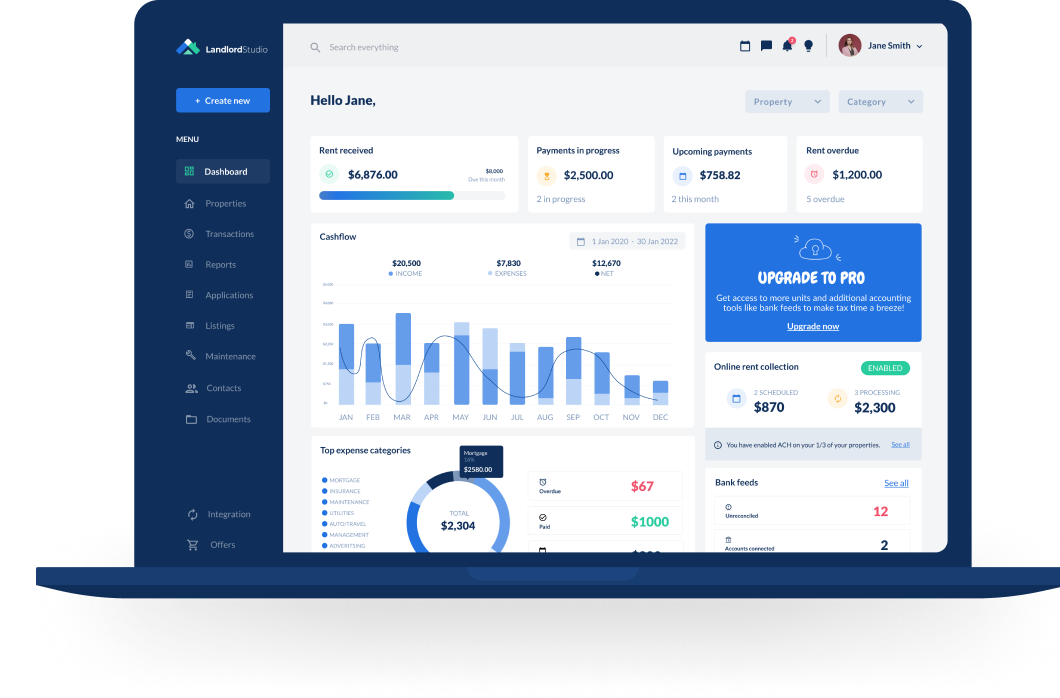
This is where Landlord Studio comes in. With Landlord Studio, you can automate the tedious parts - bank syncing and reconciliation, rent collection and income tracking, expense categorization, receipt storage, and instantly generate customizable reports and financial reporting - so these monthly, quarterly, and annual tasks take minutes instead of hours.
With a mobile app for receipt scanning and on-the-go updates, the software doesn't just track your numbers; it protects your profit margins by making sure nothing falls through the cracks.
Because the goal isn't perfect bookkeeping. It's maximizing your portfolio's value while spending less time on paperwork.
Create your free Landlord Studio account today to streamline your bookkeeping and maximize your portfolio ROI.
Rental Property Bookkeeping Checklist: FAQs
What is the best way to organize rental property bookkeeping?
Use a combination of accounting software and organized digital or physical folders. Categorize income, expenses, maintenance records, and tax documents consistently for easy retrieval.
How often should landlords reconcile their accounts?
Monthly reconciliation is recommended, with a deeper quarterly review to ensure cumulative accuracy and resolve discrepancies early.
Which expenses are deductible for rental property owners?
Common deductible expenses include repairs, property management fees, utilities, insurance premiums, and interest on loans. Capital improvements must be depreciated over time.
Should landlords track maintenance costs separately?
Yes. Tracking routine maintenance and major repairs separately helps with budgeting, tax compliance, and evaluating the property’s long-term financial performance.
What documents should be archived annually?
Keep all receipts, invoices, leases, bank statements, insurance policies, and tax forms. Organized archives facilitate audits and year-end reporting.
Can small landlords manage bookkeeping without an accountant?
Yes, with consistent monthly and quarterly routines and reliable software. However, professional review is advisable for annual tax filing and complex portfolios.