Welcome! Where would you like to log in?

Sign up and get
PRO free for 14 days
Once your PRO trial is over you can continue using Landlord Studio GO completely free.
By continuing you agree to our Terms & Conditions.

Visiting from the
United Kingdom?
Please visit our United Kingdom site for a better experience
Continue
Organizing Rental Property Income and Expenses at Tax Time
With the tax year coming to a close it’s time to start thinking about getting your books in order and ensuring everything is accounted for.

Read summarized version with:


Contents
- About IRS Form 1040 Schedule E
- About Passive Activity Loss Limitations
- Tax Planning and Depreciation
- About Safe Harbors
- What Records Should you Keep Track of?
- How to Keep Track of Records
With the tax year coming to a close it’s time to start thinking about getting your books in order and ensuring everything is up to date and accounted for.
Hopefully, you’ve used a system like Landlord Studio, in which case it’s simply a case of running our reports, double-checking them, and then either sending them off to your accountant or getting to work on the relevant IRS paperwork, such as your Schedule E form, yourself.
In this article, we take a look at some of the key things you need to know when organizing and filing your taxes for the tax year ending December 31st and due by April 15th.
Related: 11 Property Tax Deductions For Landlords To Reduce Taxes
About IRS Schedule E Form 1040
Landlords that keep detailed summaries of their rental property expenses are the ones that are able to most benefit from the various tax advantages that come with the running of rental properties. And as IRS rules regarding rental income are quite generous you’ll definitely want to be taking advantage of them to maximize profits.
At the end of the year, landlords need to declare their income and expenses on IRS form 1040 Schedule E for “Supplemental Income and Loss”. To accurately fill out this it’s important to accurately track and categorize your income and expenses throughout the tax year. With a system like Landlord Studio, this is made particularly easy with our default categories created to match up with the IRS categories. Then at the end of the year, you simply run our Schedule E report and copy the details across.
By tracking all your income and expenses with a system like Landlord Studio all your data is easily accessible, easily updatable, and right at your fingertips whenever you need it.
Related: A Breakdown Of Your Schedule E Expense Categories

What you need to know about Passive Activity and Passive Loss Limitations
Generally speaking, rental income is considered passive income. This means there are limitations as to how much you can deduct and what income you can deduct losses against. For example, unless you qualify as a Real Estate Professional, you can only deduct up to $25,000 in one tax year.
However, you can deduct losses sustained from one property against your property portfolio as a whole. It’s important to understand the passive activity loss limitations and the salient exceptions in regard to rental property accounting and it’s recommended you discuss this with a licensed professional.
Related: Passive Activity And Passive Activity Loss Limitations In Real Estate
Tax Planning and Depreciation
Effective tax planning is important to ensure your peace of mind. Your rental property income should be sufficient to pay the mortgage, property taxes, insurance, and other routine maintenance expenses, eg. it should be cashflow positive. However, there are two factors that might cause expenses to exceed income in any given year.
These are firstly, large unexpected maintenance or repairs such as needing to replace a roof or refurbishing an old apartment after a long-term tenant leaves. And secondly, depreciation, which needs to be calculated and deducted every year – as the IRS will reclaim part of the depreciated amount through a process called depreciation recapture should you deduct it or not.
In these circumstances, losses may exceed income levels or a landlord may have losses greater than the limits set by the passive activity loss limitations rule of $25,000.
Should your rental losses exceed the passive activity loss limitations mentioned above they can be carried forward to the following year. While the same loss limitations are applied to each year you can continue carrying forward losses against your rental indefinitely.
About Safe Harbors
There are various safe harbors that landlords should be aware of which have been created by the IRS to simplify the categorization of expenses such as maintenance and repairs. For example, the De Minimis Safe Harbor. The De Minimis Safe Harbor election eliminates the burden of determining whether every small-dollar expenditure for the acquisition or production of the property is properly deductible or capitalizable. It essentially means you can elect to deduct at the end of the year expenses which would otherwise be needed to be capitalized (eg. improvements) as long as they are below $2,500.
Additional safe harbors to be familiar with include the Safe Harbor for Small Taxpayers and the Routine Maintenance Safe Harbor.
Related: 3 IRS Safe Harbors Landlords Need To Know About

What Records Should You Keep Track Of?
The short answer… everything.
The IRS is known for auditing small businesses, and more than 2 million get audited every year. Should you come into their crosshairs for whatever reason, you will need the documentation to back up every one of your claims.
The two types of records you will need to keep. These are permanent records and short-term records.
Permanent Records
Permanent records are, as the name suggests, records that you should store indefinitely. These include but are not limited to:
- Loan documents
- Property deed/title
- Lease documents
- Any legal documentation such as fines, inspection records, or court appearances.
- Permits
- Any depreciable assets – such as the property or improvements made to it.
- Incorporation documents
- Insurance policies
Short-Term Records
Short term records are records that should be kept for a minimum of 5 years. These are documents that will be used to support any claims you make in your taxes.
Examples of short term records include but are not limited to:
- Income received
- Advertising costs
- Entertainment costs
- Legal costs
- Professional expenses
- Repairs and maintenance
- Travel made for business purposes – such as mileage
- Wages paid to employees or contractors
How Should You Keep Track of Your Records?
In order to take advantage of the tax benefits investing in real estate, it’s recommended that you keep digital copies of all your important documentation including things like receipts, lease documents, W-2’s etc. securely stored on a computer and backed up on a secure cloud server. You may want to keep a hard copy of the most important documentation stored somewhere secure. This keeps everything safe and organized so that you can easily locate and share the file should you need to.
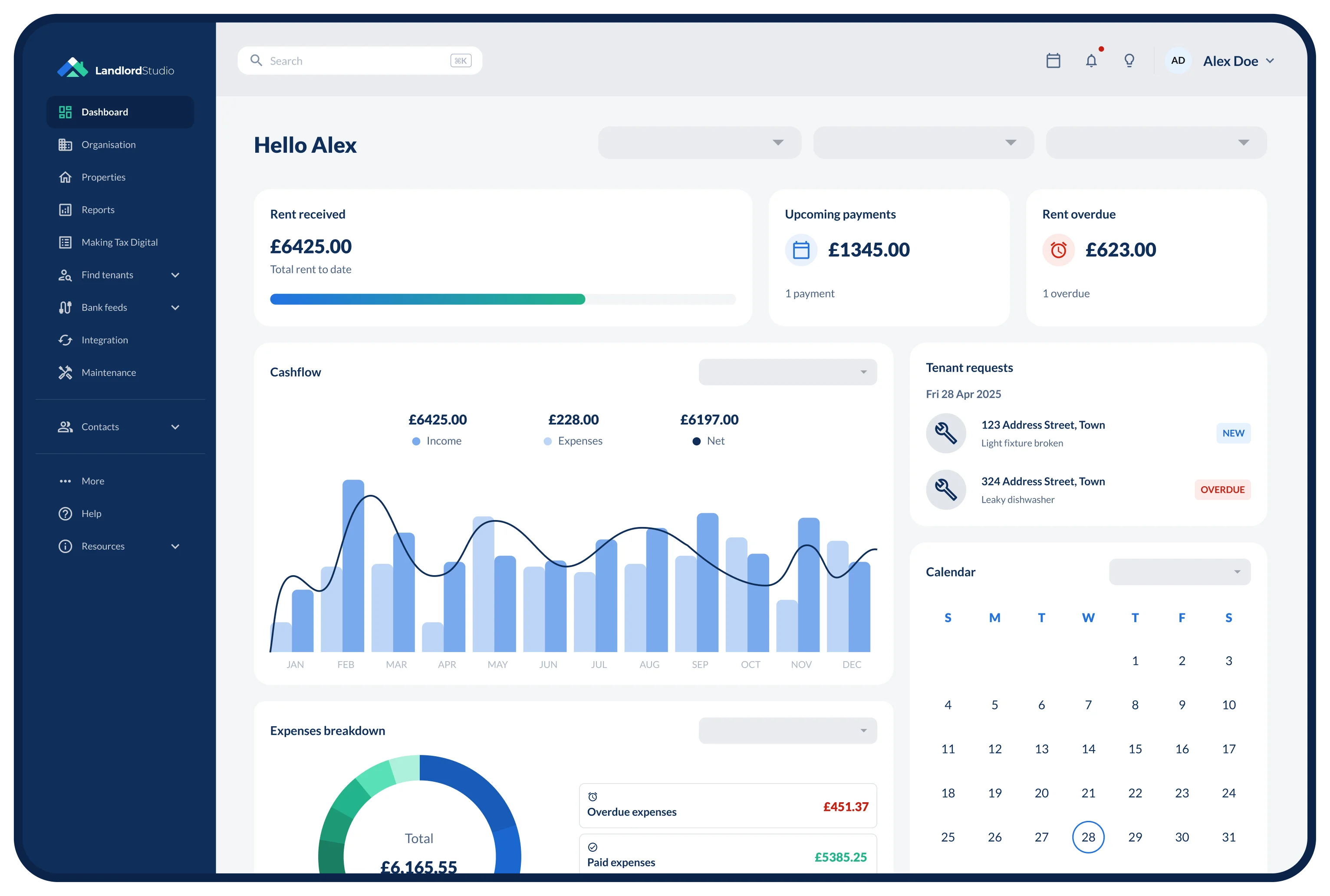
Using software like Landlord Studio allows you to keep all your files organized within the software organized by property and tenancy with space for additional information. Additionally, you can easily digitize receipts on the go using the app and upload them to attach to the relevant expense, automate income tracking with online rent collection, and you can connect your bank account to reconcile income and expenses in the software directly.
It’s recommended that you consult with a licenced CPA to ensure you file your taxes correctly to maximize deductions and avoid any unwanted questions from the IRS.
You Might Like:
- Should You Use QuickBooks For Rental Properties?
- Tracking Rental Property Expenses: What Landlords Need To Know
- Everything You Need To Know About Rental Income Tax Rates
- What Is Accelerated Depreciation & How Can Landlords Use It For Tax Benefits?
- Rental Property Accounting 101: Capital Improvements Vs. Repairs


About Landlord Studio

Landlord Studio is an easy to use property management and accounting software designed for landlords.
Find and screen tenants, collect rent online, track income and expenses, run reports, and more - all for free.
Create your FREE account with Landlord Studio today.

From finding tenants to filing taxes. Reduce vacancies and maximize your portfolio ROI with software designed for you.
Get started for free