




.png)
Read summarized version with:

ChatGPT

Gemini

Claude

Grok

Add as preferred on Google
The Tax Optimization Mindset
Successful rental property investing requires more than just collecting rent and maintaining properties—it demands a strategic approach to tax planning. The most profitable landlords don't view tax preparation as a dreaded annual event but as an ongoing business strategy that significantly impacts their returns. In many cases, the difference between average and exceptional rental property performance comes down to tax optimization.
Think of tax deductions as hidden money within your rental business. Without a proper system to capture and document these deductions, you're essentially leaving cash on the table. This isn't about finding loopholes or questionable practices—it's about legitimately claiming every deduction you're entitled to under tax law.
Tax optimization is a completely legitimate business strategy. According to tax experts, maintaining detailed records is crucial for substantiating your deductions. Implementing a robust documentation system ensures you can confidently claim every eligible expense while having the evidence to support your deductions if questioned.
How you categorize expenses dramatically affects your bottom line. What might seem like minor classification differences can translate to thousands of dollars in tax savings when applied consistently across your rental portfolio.
Essential Deductions Every Landlord Must Claim
Maintenance and Repairs vs. Improvements
One of the most significant distinctions in rental property tax planning is understanding the difference between maintenance/repairs and improvements. This classification determines whether an expense is immediately deductible or must be depreciated over many years.
Repairs maintain your property in good working condition and are fully deductible in the year you pay for them. Examples include:
- Fixing leaky plumbing
- Repainting rooms
- Replacing broken windows
- Repairing appliances
Improvements add value to your property, adapt it to new uses, or extend its useful life. These must be depreciated over several years. Examples include:
- Adding a new room
- Installing a new HVAC system
- Replacing an entire roof
- Major kitchen renovations
Tax experts emphasize the importance of properly documenting all repairs with invoices, receipts, and notes explaining the nature of the work. This documentation becomes vital if your deductions are ever questioned during an audit.
Depreciation: Your Most Powerful Tax Tool
Depreciation often represents the largest deduction available to rental property owners. This accounting method allows you to deduct the cost of your property over its useful life as determined by the IRS.
Residential rental properties are typically depreciated over 27.5 years, while commercial properties use a 39-year schedule. Research shows that depreciation provides significant tax benefits by allowing you to claim a portion of your property's value as a deduction each year without affecting your cash flow.
Component depreciation (also called cost segregation) can accelerate your deductions by identifying parts of your property that qualify for shorter depreciation schedules. Items like appliances, carpeting, and some fixtures might qualify for 5-7 year depreciation schedules rather than the standard 27.5 years.
Travel and Transportation Expenses
Many landlords underutilize travel deductions. Whether you're driving across town to collect rent or flying across the country to check on your property, these expenses are potentially deductible.
Local travel: You can deduct mileage (using the standard mileage rate) or actual expenses for trips to your rental properties for business purposes like showing units, collecting rent, or supervising repairs.
Long-distance travel: If you own rental property away from your home area, travel costs including airfare, lodging, and 50% of meals may be deductible when the primary purpose is to manage your rental business.
Proper documentation is essential. Keep a mileage log with dates, destinations, and business purposes for local trips. For longer trips, maintain receipts and notes documenting the business activities conducted.
Advanced Tax Strategies That Pay Dividends
Home Office Deduction for Landlords
If you manage your rental properties from home, you may qualify for the home office deduction. According to tax benefit research, this deduction allows you to write off a portion of your housing expenses based on the percentage of your home used exclusively for rental management.
To qualify, you must use part of your home regularly and exclusively for managing your rental business. This means the space cannot be used for personal activities. A dedicated desk in your bedroom generally won't qualify, but a separate room used only for rental management likely will.
You can calculate this deduction using either:
- Simplified method: Deduct $5 per square foot (up to 300 square feet)
- Regular method: Calculate the percentage of your home used for business and apply that percentage to eligible home expenses like mortgage interest, insurance, utilities, repairs, and depreciation
Strategic Timing of Income and Expenses
Thoughtful timing of income and expenses can significantly impact your tax situation. Consider these strategies:
Year-end planning: If beneficial, defer income by delaying December rent collection until January, or accelerate deductions by paying January expenses in December.
Multi-year planning: Consider your expected income in coming years. If you anticipate higher income next year, deferring deductions might make sense.
Case studies of successful real estate investors show how strategic timing can optimize tax outcomes across varying income levels, particularly for those managing substantial rental income.
Professional Services Deductions
Investing in professional services often yields returns far exceeding their cost through tax savings and improved property management:
Property management software: Tools like Landlord Studio provide organized expense tracking and tax reporting features that simplify documentation and maximize deductions.
Professional services: Fees paid to accountants, attorneys, property managers, and other professionals are fully deductible business expenses.
Property assessments: Costs for professional inspections, appraisals, and other assessments are typically deductible as ordinary business expenses.
Implementation: Your Tax Optimization System
To capture all possible deductions, implement a year-round tax optimization system:
Digital documentation: Use property management software to capture expenses in real-time with digital receipt storage. This eliminates the year-end scramble for missing documents.
Regular tax planning: Schedule monthly expense categorization, quarterly tax estimate reviews, and annual strategic planning sessions with your tax professional.
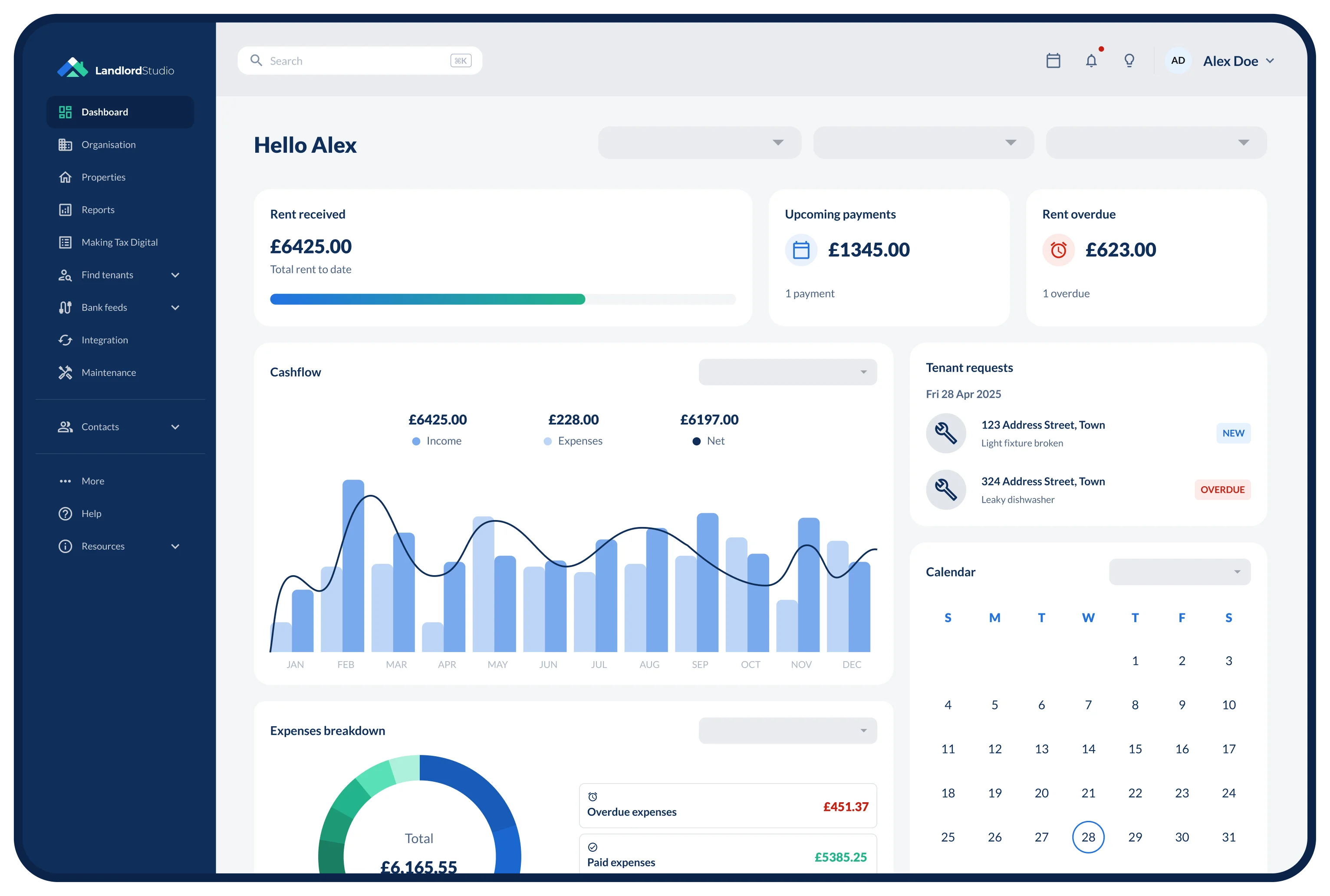
Integrated solutions: Landlord Studio's platform streamlines expense tracking, income management, and tax reporting in one system, ensuring nothing falls through the cracks.
Conclusion
Effective tax optimization for rental properties isn't about aggressive tactics—it's about systematic documentation and thorough knowledge of available deductions. By implementing the strategies outlined in this guide, you can legitimately reduce your tax burden while maintaining complete compliance with tax laws.
The financial impact of proper tax planning cannot be overstated. Landlord Studio users typically save 25 times their annual subscription costs through optimized tax deductions—a return on investment few other business expenses can match.
Start by implementing at least one new tax strategy from this article. Whether it's better expense categorization, more diligent mileage tracking, or exploring the home office deduction, each step improves your bottom line. Consider using Landlord Studio to simplify this process and ensure you never miss a deductible expense again.