



How to Track Rental Property Expenses
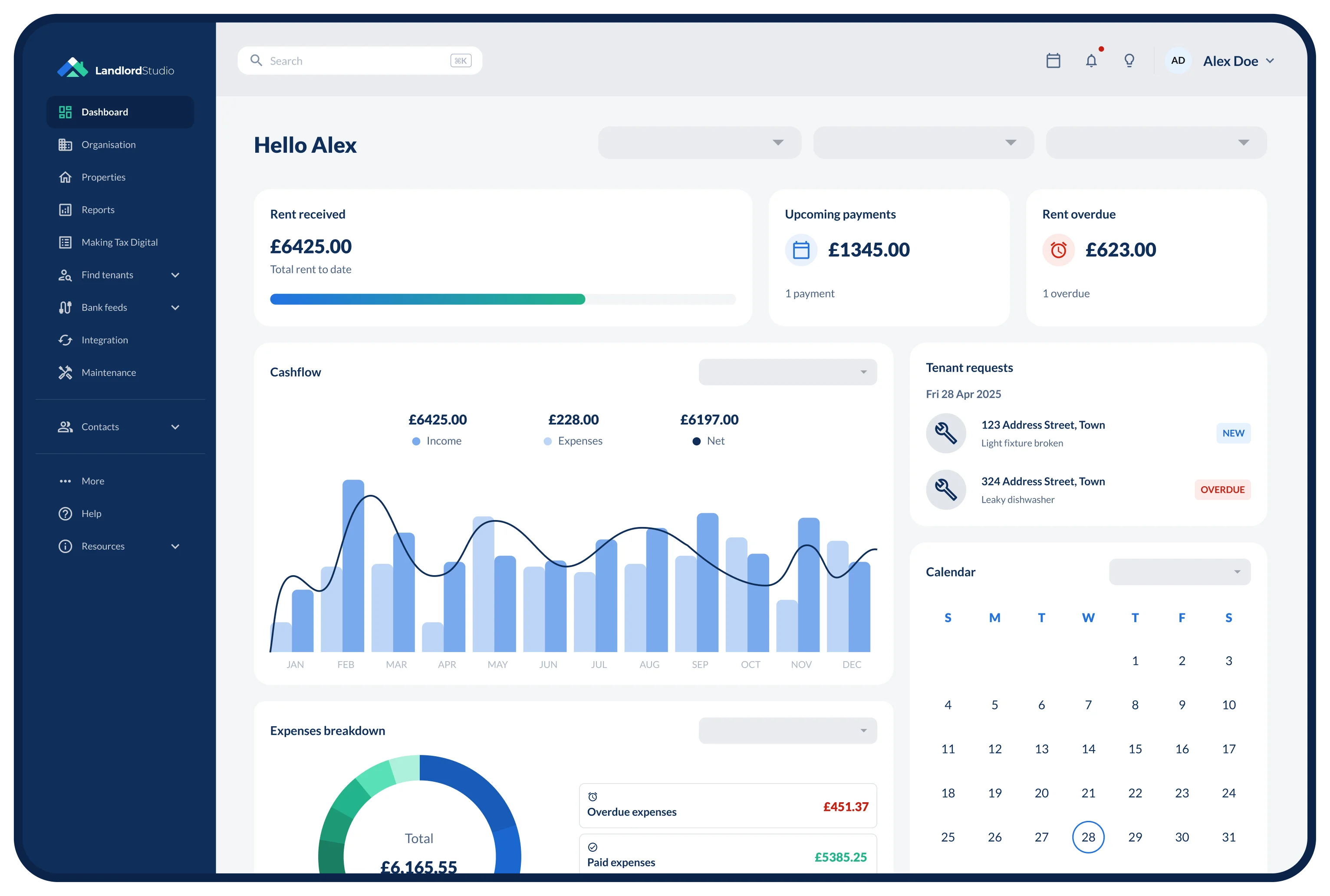
This guide outlines proven methods to organize and categorize rental expenses, and provides a free downloadable spreadsheet template.

%20(1).jpg)
Read summarized version with:

ChatGPT

Gemini

Claude

Grok

Add as preferred on Google
Managing a rental property is as much about financial discipline as it is about tenant relations. For landlords and real estate investors, learning how to track rental expenses efficiently can mean the difference between profitability and uncertainty.
Whether managing a single unit or a portfolio of properties, accurate records not only simplify tax time but also help identify cash flow trends and potential cost reductions.
Modern rental property expense tracking goes beyond storing receipts or logging transactions at year-end. Today’s landlords rely on structured systems; spreadsheets, cloud-based apps, and integrated accounting platforms to stay compliant, minimize errors, and make informed financial decisions.
This guide outlines proven methods to organize and categorize rental expenses, compares tools for manual and automated tracking, and provides a free downloadable spreadsheet template inspired by professional accounting standards.
Why Tracking Rental Expenses Matters
For most landlords, the margin between profit and loss hinges on expense management. Operating costs, which include maintenance, repairs, insurance, taxes, and utilities, can erode returns when left unmonitored. Systematic expense tracking turns what might seem like administrative overhead into actionable financial intelligence.
Accurate expense tracking offers three primary advantages:
1. Tax Compliance and Deductions
The U.S. Internal Revenue Service (IRS) allows landlords to deduct a wide range of operating expenses, from mortgage interest and property taxes to maintenance and depreciation.
However, deductions require verifiable records. Without consistent documentation, legitimate write-offs can be lost, increasing tax liability.
2. Financial Visibility and Decision-Making
Expense tracking enables landlords to assess property performance at a granular level. Understanding where money is spent, either on repairs, management fees, or utilities, reveals inefficiencies and highlights opportunities to increase net operating income.
Landlords who regularly reconcile their records can identify seasonal expense patterns and forecast maintenance budgets more accurately, improving long-term financial stability.
3. Simplified Accounting and Portfolio Scaling
For landlords expanding beyond a single unit, manual bookkeeping quickly becomes untenable. Centralized rental property expense tracking systems streamline data collection and automate categorization, reducing errors and saving time during audits or tax preparation.
Platforms such as Landlord Studio integrate expense logging with digital receipts, bank feeds, and performance analytics, providing real-time visibility across multiple properties.
Effective expense tracking is, therefore, not just an accounting function; it’s a cornerstone of sustainable property management.
Also Read: How To Track Rental Property Expenses On The Go
Common Types of Rental Property Expenses
Not all property expenses are created equal. Understanding how to categorize them correctly ensures clarity in accounting and maximizes eligible tax deductions. Broadly, rental property expenses fall into two categories: operating expenses and capital expenditures.
Operating Expenses
Operating expenses are the recurring costs necessary to maintain and manage a rental property. They’re typically deductible in the same year they occur. Examples include:
- Property management fees: Payments to third-party managers or assistants handling tenant communication, rent collection, and maintenance coordination.
- Repairs and maintenance: Routine work to keep the property habitable, such as plumbing repairs, HVAC servicing, or repainting.
- Utilities: Electricity, water, gas, and waste management, especially when these are paid directly by the landlord.
- Insurance premiums: Landlord insurance, property liability, and hazard coverage to protect against losses.
- Advertising and tenant screening: Costs related to finding new tenants, including online listings, background checks, and credit reports.
- Professional services: Legal or accounting fees associated with lease drafting, tax filing, or financial advice.
Capital Expenditures
Capital expenditures (CapEx) refer to significant improvements that extend a property’s life or enhance its value, like a new roof, HVAC system, or kitchen renovation. These are not deducted immediately but depreciated over time.
Misclassifying these as operating costs can lead to compliance issues and inaccurate reporting.
Using a digital platform such as Landlord Studio or a structured spreadsheet helps categorize transactions correctly, ensuring both immediate and long-term expenses are reflected accurately.
.jpg)
How to Track Rental Expenses Effectively
Successful rental property accounting depends on more than saving receipts. It requires a repeatable system that captures, categorizes, and reconciles every expense tied to a property. The approach may vary depending on portfolio size, but the fundamentals remain consistent: organize, record, and review.
- Manual Tracking: Spreadsheets and Receipts
For landlords managing one or two units, a spreadsheet-based system remains a practical option. A well-designed worksheet, such as the free rental property expense spreadsheet included with this guide, allows detailed entry of transactions by date, category, and payment method.
Key advantages include full data control and customizable formats. However, manual tracking requires discipline. Receipts must be stored securely, and all transactions logged promptly to prevent errors or omissions. Periodic reconciliation with bank statements ensures accuracy and highlights potential discrepancies.
When using spreadsheets:
- Assign separate tabs or sheets per property.
- Include clear headings for date, vendor, category, payment type, and notes.
- Update monthly to align with bank and credit card statements.
- Manual tracking is cost-effective but becomes cumbersome as your portfolio expands.
- Digital Tracking: Apps and Integrated Tools
Automation can significantly improve accuracy and save time. Modern platforms, such as Landlord Studio and similar digital tools, sync with bank feeds to import expenses directly. Categorize transactions automatically, attach digital receipts, and generate real-time reports.
Benefits include:
- Time efficiency: Automated imports reduce manual data entry.
- Accuracy: Categorization rules prevent classification errors.
- Accessibility: Cloud-based dashboards offer anytime access from desktop or mobile devices.
- Audit readiness: Digital storage simplifies documentation during tax reviews.
Landlords often combine both systems: spreadsheets for a high-level overview and software for detailed tracking and automation.
Also Read: Common Rental Property Expenses Investors Often Miss
Free Rental Property Expense Spreadsheet
The free rental property expense spreadsheet accompanying this guide is designed to balance clarity with flexibility, mirroring the format preferred by accountants and property management professionals.
Download our free rental property accounting spreadsheet.
Best Practices for Spreadsheet Use
- Enter expenses in real time: Waiting until month-end often leads to missing receipts or misclassified entries.
- Use consistent naming: Match categories with tax form terminology to simplify deductions.
- Back up regularly: Store a copy in cloud storage or sync with a secure drive.
- Reconcile monthly: Compare spreadsheet totals with bank statements to ensure alignment.
Related: 5 Top Rental Property Bookkeeping Tips For Landlords
Final Words: How To Track Rental Property Expenses
While spreadsheets are a decent starting point, they’re ultimately time-consuming, error-prone, and difficult to scale. As your portfolio grows, manual data entry, receipt management, and reconciliations become bottlenecks that waste valuable time and introduce financial risk.
Modern landlords are shifting to smarter, automated tools like Landlord Studio — built specifically for rental property accounting.
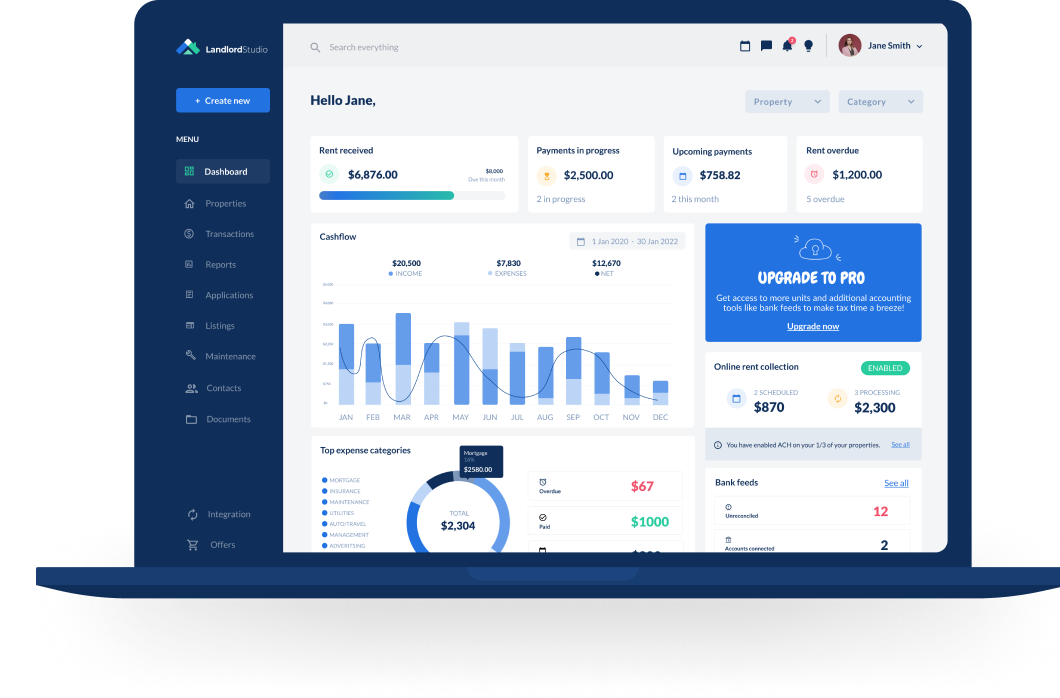
With Landlord Studio, you can:
- Automate expense tracking with secure bank feeds and smart categorization.
- Capture and store receipts instantly from your phone.
- Generate real-time reports that reveal true cash flow and performance.
- Stay tax-ready year-round with data structured to match IRS Schedule E.
- Collaborate easily with your CPA using our built-in accountant portal.
Stop juggling spreadsheets and paperwork. Simplify your rental accounting with a tool designed for landlords — not accountants.
Create your Free Landlord Studio account today and experience stress-free, automated rental property accounting.
Frequently Asked Questions
What’s the best way to track rental property expenses?
The best method depends on portfolio size. A spreadsheet works well for one or two properties, but landlords with multiple units benefit from using automated tools like Landlord Studio that sync with bank feeds and generate real-time reports.
Which expenses are deductible for rental properties?
Deductible expenses generally include mortgage interest, property taxes, insurance, maintenance, management fees, utilities, and professional services. Improvements that increase property value must be depreciated over time rather than deducted immediately.
How often should landlords update their expense records?
Ideally, weekly. Frequent updates prevent data loss, support accurate forecasting, and simplify reconciliation. Automated systems can handle daily updates, reducing manual work.
Can I track rental income and expenses in the same spreadsheet?
Yes. The provided template includes both income and expense tabs, allowing full cash flow visibility. Linking both provides a clearer financial picture and simplifies tax preparation.
How long should I keep receipts for rental property expenses?
The IRS recommends retaining records for at least seven years after filing, particularly for documentation related to depreciation or long-term improvements.
What’s the advantage of using software like Landlord Studio over Excel?
Software platforms automate data entry, categorize expenses, generate tax-ready reports, and integrate mobile receipt scanning, all of which save time and reduce the risk of human error.
About Landlord Studio

Landlord Studio is an easy to use property management and accounting software designed for landlords.
Find and screen tenants, collect rent online, track income and expenses, run reports, and more - all for free.
Stay Updated on Property Insights

Get weekly tips, tax updates, and landlord strategies straight to your inbox.
Inherited Tenants, Hidden Risks: A Due Diligence Guide for Buying Occupied Rentals
Join our webinar on buying tenant-occupied rentals. Discover the due diligence checklist, where occupied rentals leak money, and how to vet what you inherit.
Details:
Free
Hosted by:
Matt Hardy
Jennifer Ruelens
When:
August 26, 2026
10:00am PT / 1:00pm ET
Duration:
45 mins
Format:
Live Webinar
Guest:
Jennifer Ruelens, Property Manager, Investor & Founder with 20+ Years Experience in Real Estate
Co-host Matt Hardy, Head of Marketing at Landlord Studio