




.jpeg)
Read summarized version with:

ChatGPT

Gemini

Claude

Grok

Add as preferred on Google
Most landlords track income and expenses obsessively—then struggle to answer basic questions about their portfolio's actual financial health. What's your total equity position? How leveraged are you across all properties? What's your debt-to-asset ratio?
A rental property balance sheet answers these questions instantly. Unlike income statements that show monthly cash flow, balance sheets capture your complete financial position: total assets, outstanding liabilities, and owner equity across your entire portfolio.
This template gives you the same structure professional real estate operators use—with fields designed specifically for rental properties. Track property values, accumulated depreciation, loan balances, and equity position in one standardized format. Use it for lender presentations, partnership discussions, tax planning, or simply understanding where you actually stand financially.
Works for single-property owners and growing portfolios alike.
Related Article: Real Estate Accounting: The Definitive Guide For 2026
Why Balance Sheets Matter in Real Estate Investing
Income statements show whether you're profitable month-to-month. Balance sheets show whether you're building wealth long-term.
Most landlords know their properties cash flow—rent covers the mortgage, maybe throws off a few hundred dollars monthly. But they can't answer basic leverage questions: What's your loan-to-value ratio across the portfolio? How much equity would survive a 20% market correction? Could you pull cash out for the next deal without over-leveraging?
Balance sheets make these distinctions clear:
- Total asset value (current property values, not purchase price)
- Outstanding debt (every mortgage, HELOC, and line of credit)
- Actual equity position (the difference—your real net worth in real estate)
This matters for practical decisions. Should you refinance Property A to fund Property B's down payment? A balance sheet shows whether you have enough equity to make that work. Is your portfolio over-leveraged for a market downturn? You can't answer that with rent rolls alone.
Lenders require balance sheets for portfolio loans and refinancing. Partners expect them for joint ventures. But the primary value is strategic: balance sheets reveal whether your properties are building wealth or just generating cash flow while staying flat on equity.
Financing structure drives equity growth—and balance sheets track that relationship. Interest-only loans preserve cash flow but build zero equity through principal paydown. Amortizing mortgages reduce debt monthly. Refinancing resets your liability structure entirely. Without tracking these changes systematically, you're managing by feel rather than data.
The distinction between operational performance (cash flow) and capital structure (equity growth) separates investors building portfolios from landlords just covering expenses.
Industry News: 6 Ways the ‘One Big Beautiful Bill’ Impacts Real Estate Investors

The 3 Core Components of a Rental Property Balance Sheet
A well-structured statement groups financial data into three sections: assets, liabilities, and owner equity. This layout aligns with standard accounting rules and mirrors the approach used across professional real-estate finance.
1. Assets
Assets are what you own: property value (building and land), cash reserves, security deposits held, and maintenance supplies. Many investors also track accumulated depreciation to show book value changes over time.
Update property valuations annually using market comps, recent sales, and income-cap estimates to keep figures aligned with lender expectations.
2. Liabilities
Liabilities are what you owe: mortgages, credit lines, unpaid invoices, and tax obligations. Separate current liabilities (due within 12 months) from long-term debt to clarify immediate financial pressure versus extended commitments.
As mortgage principal decreases through amortization, liabilities fall and equity rises—even if property values stay flat.
3. Owner Equity
Owner equity equals assets minus liabilities. It represents your financial stake, not cash on hand.
Equity increases through loan paydown, value-add renovations, or market appreciation. It decreases when debt rises or property values fall.
Lenders scrutinize equity closely because it determines your loan-to-value ratio and borrowing capacity for future acquisitions.
Useful Resource: Free Rental Property Expenses Spreadsheet For Landlords
How to Build a Rental Property Balance Sheet Example
Building a balance sheet requires gathering property records, lender documents, and current valuation data.
The goal is to assemble information that reflects both current market conditions and historical transactions.
Step 1: Establish Property Baseline
Pull your purchase price, acquisition date, and land/improvement breakdown from closing documents. Cross-reference with your appraisal report and current insurance policy to verify values. This forms your asset foundation.
Step 2: Determine Current Market Value
Update property value annually using one of these methods:
- Broker price opinion
- Recent comparable sales
- Cap rate calculation (annual NOI ÷ market cap rate)
Note your valuation method on the balance sheet to maintain consistency across reporting periods.
Step 3: Record All Assets
List everything you own related to the property:
- Current property value (building + land, shown separately)
- Cash reserves and operating accounts
- Security deposits held
- Prepaid insurance or contracts
- Maintenance supplies and materials
- Accumulated depreciation (subtract this from property value for book value)
Step 4: List All Liabilities
Record everything you owe:
- Current mortgage balance (principal remaining)
- HELOCs and credit lines
- Outstanding vendor invoices
- Property tax obligations
- Security deposits owed to tenants
Separate short-term liabilities (due within 12 months) from long-term debt for clarity on cash flow pressure.
Step 5: Calculate Owner Equity
Subtract total liabilities from total assets. The result is your equity position—your actual financial stake in the property.
Positive equity indicates financial stability. Negative equity signals over-leverage or declining values. Track quarterly to identify whether principal paydown and appreciation are building wealth or whether financing adjustments are needed.
Useful Resource: 2026 Rental Property Analysis Spreadsheet [Free Template]
Using a Rental Property Balance Sheet Template
Leveraging a rental property balance sheet template allows you to standardize your reporting across properties and time periods—reducing errors and enabling portfolio-level analysis.
Consistency Across Properties
A standardized template ensures every property tracks the same data points: acquisition cost, current market value, mortgage balance, cash reserves, accumulated depreciation, and liabilities. This uniformity makes portfolio comparisons meaningful rather than anecdotal.
When property managers, accountants, or partners review your financials, they're working from the same framework, eliminating confusion about what's included or how figures were calculated.
Complete Data Capture
Templates include pre-built rows for commonly missed items: depreciation schedules, loan amortization tracking, recurring liabilities, and reserve account balances. Less risk of incomplete data affecting equity calculations or lender presentations.
Add notes fields to document valuation methodology or major capital improvements—helpful context during tax filing or refinancing discussions.
Portfolio-Level Insights
Using identical structures across all holdings enables trend analysis. Track equity growth, reserve levels, and loan-to-value ratios across your entire portfolio without reformatting data or reconciling different spreadsheet layouts.
Spot which properties are building wealth through principal paydown versus market appreciation. Identify over-leveraged assets before they become problems.
Free Real Estate Balance Sheet Template
| Rental Property Balance Sheet | |
|---|---|
| Account | Amount ($) |
| ASSETS | |
| Current Assets | |
| Cash & Cash Equivalents | |
| Security Deposits Held | |
| Prepaid Insurance | |
| Prepaid Expenses | |
| Maintenance Supplies | |
| Total Current Assets | |
| Fixed Assets | |
| Land Value | |
| Building & Improvements | |
| Less: Accumulated Depreciation | |
| Total Fixed Assets | |
| TOTAL ASSETS | |
| LIABILITIES | |
| Current Liabilities | |
| Accounts Payable | |
| Security Deposits Owed | |
| Property Taxes Payable | |
| Current Portion of Mortgage | |
| Total Current Liabilities | |
| Long-Term Liabilities | |
| Mortgage Balance | |
| HELOC Balance | |
| Other Long-Term Debt | |
| Total Long-Term Liabilities | |
| TOTAL LIABILITIES | |
| OWNER'S EQUITY | |
| Initial Capital Investment | |
| Retained Earnings | |
| Current Period Net Income | |
| TOTAL OWNER'S EQUITY | |
| TOTAL LIABILITIES & EQUITY | |
Customize this structure based on portfolio size and reporting needs. Add rows for renovation costs, refinancing events, or supplemental debt as your properties require.
Download A Pre-Built Real Estate Balance Sheet Template
If you prefer ready-made spreadsheets, several sites offer free real estate balance sheet templates:
- Examples.com provides portfolio-level templates designed for multi-property investors tracking aggregate positions.
- Microsoft Office has a standard balance sheet template that's straightforward to customize with rental property-specific line items.
- Rentals Z offers printable Excel templates plus additional real estate worksheets and tracking tools.
- Wise provides downloadable templates in Excel and Google Sheets formats for investors working across platforms.
Final Words: Rental Property Balance Sheet
Balance sheets clarify what income statements can't, whether your properties are building wealth or just generating cash flow. Track total assets, outstanding debt, and actual equity position to make better decisions about refinancing, acquisitions, and portfolio leverage.
Use the template above or download a pre-built spreadsheet to start tracking your financial position quarterly. Consistent documentation shows lenders you're serious, helps partners understand your capital structure, and gives you the data needed to manage portfolio risk intelligently.
Must Read: 9 Best Real Estate Accounting Software 2026
Landlord Studio for Day-to-Day Accounting
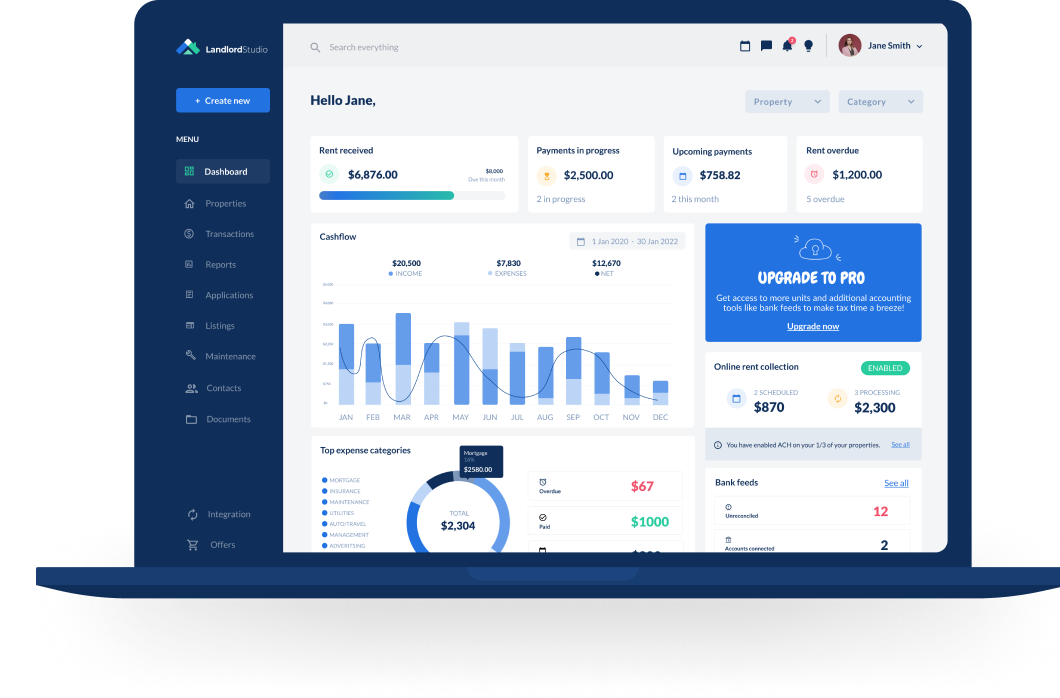
While Landlord Studio doesn't currently generate balance sheets, it's built for rental property accounting where most landlords actually need help: income and expense tracking, mileage logging, receipt management, and tax-ready financial reports.
Use Landlord Studio for operational accounting and the balance sheet template for strategic financial positioning. Together, they give you complete visibility into both cash flow performance and long-term wealth building.
Rental Property Balance Sheet: FAQs
What Is a Rental Property Balance Sheet Used For?
It provides a snapshot of a property’s financial position, showing assets, liabilities, and the owner’s equity. Investors reference it when evaluating leverage, performance trends, and financing options.
How Often Should a Balance Sheet Be Updated?
Quarterly updates work for most landlords, though portfolios with frequent renovations or refinancing activity may benefit from monthly reviews.
How Do You Determine Property Value for a Balance Sheet?
Owners typically use market comparables, income-capitalization estimates, or appraisal data. The method should remain consistent from period to period for reliable trend analysis.
Should Security Deposits Be Included?
Security deposits appear as both an asset (cash held) and a liability (owed to tenants). Some investors track them separately depending on jurisdictional rules.
What Makes a Good Rental Property Balance Sheet Template?
A strong template separates assets, liabilities, and equity; includes fields for market value, depreciation, and mortgage balance; and allows notes for valuation methodology or improvements.
Can Multiple Properties Be Combined Into One Balance Sheet?
Portfolios typically track each asset individually but may produce consolidated statements for lenders or partners. Individual sheets support more precise performance comparison.