A Florida lease agreement is essential in establishing clear expectations between landlords and tenants, particularly in the state’s dynamic rental market.
Having a well-crafted lease not only safeguards the interests of both parties but also minimizes potential disputes. However, many property owners overlook crucial clauses that can lead to complications down the line.
This guide will explore the vital components of lease agreements in Florida—including personal details, property descriptions, and payment terms—ensuring compliance with state laws. Plus, we offer free Florida rental agreement templates to help you get started on your own lease agreement.
Essential Lease Clauses
According to Florida Residential Landlord and Tenant Act, a rental agreement in Florida should contain the following components to be considered a valid and enforceable lease:
- Parties Involved: To make sure that both parties are aware of who is in charge of carrying out the conditions of the lease, the agreement should explicitly name the landlord and the renter and include their contact details.
- Property Description: This part of the lease should provide a thorough description of the rented property, including the full address and, if relevant, the unit number. It may also provide a description of any personal belongings (such as furniture or appliances) that are part of the lease.
- Lease Terms: The length of the lease, which is often stated as a start date and an end date, must be specified in the lease agreement. It's also important to provide the rent amount, due date, and acceptable payment options. The processes for rent hikes and any late payment penalties may be additional pertinent information.
- Security Deposit Details: The security deposit amount and terms for its return at the conclusion of the lease term should be spelled out in the lease agreement.
- Maintenance Responsibilities: The lease must specify exactly who is in charge of upkeep and repairs. While landlords are often in charge of repairing any damage not brought on by the tenant's carelessness, tenants are typically in charge of maintaining the property clean and reporting any damage as soon as it occurs.
- Additional Clauses: Other provisions unique to the property or the persons concerned might exist. These can cover things like pet policies, subleasing, property improvements or modifications, and what happens when a lease failure occurs. Other significant provisions may specify how disagreements or lease violations will be resolved, as well as who is responsible for utilities, upkeep of the property, and access to common areas.
Required Disclosures in a Florida Lease Agreement
Following Florida law, landlords must provide tenants with a number of required written disclosures in a residential lease agreement in Florida. These disclosures guarantee openness and educate renters on significant facets of their rental property and contract.
- Lead-based paint: In buildings constructed prior to 1978, landlords are required to declare the existence of lead-based paint. This lead-based paint disclosure is required by federal law to shield renters from the health risks of lead exposure.
- Radon gas: Particularly for rentals constructed prior to 1978, landlords are required to inform tenants about the existence of radon gas in their homes. One naturally occurring radioactive gas that can be extremely harmful to one's health is radon.
- Authorized agents: All parties involved in the ownership and management of the property must have their names and addresses disclosed by the landlord. This guarantees that tenants are aware of who to contact with a variety of tenancy-related issues.
- Mold: While it's not always necessary, Florida encourages landlords to report any mold that may be present in the rental property. Tenants can make better judgments regarding their living conditions if they are aware of the serious health hazards posed by mold.
- Fire protection: Smoke detectors and fire extinguishers are examples of fire safety equipment that landlords should keep their tenants informed of. Tenant safety and adherence to regional fire codes depend on this information.
- Flooding: Landlords should let tenants know if their property is in a flood zone. Tenants can take the necessary precautions to save themselves and their possessions by being aware of the flood danger.
- Building code violations: Tenants should be informed of any current building code infractions that have not been fixed. This guarantees that renters are informed of any possible problems with the property that can compromise their comfort or safety.
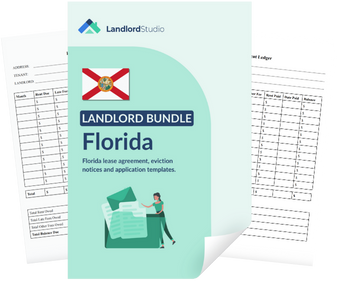
Download Free Florida Templates
Get lease documents rental applications forms and more in this free landlord form bundle.
Fixed-Term vs. Month-to-Month Leases:
The most common forms of rental lease agreements in Florida are month-to-month and fixed-term leases. But, which one should you opt for as a landlord?
Below is a table comparison that highlights the unique characteristics, legal requirements, and ramifications of both Florida rental agreement type.
| Features |
Fixed-term Leases |
Month-to-Month Leases |
| Duration |
Set for a specific period (e.g., 6 months, 1 year) |
Continues indefinitely until terminated by either party |
| Notice for Termination |
Typically, no notice is required; ends automatically unless renewed |
Requires 30 days' written notice from either party to terminate |
| Rent Changes |
Rent is fixed for the duration of the lease; cannot be increased until renewal |
Rent can be adjusted with proper notice, usually 30 days |
| Early Termination |
Tenant may face penalties for breaking the lease early; landlord cannot terminate without cause |
Either party can terminate with notice, providing more flexibility |
| Legal Obligations |
Both parties must adhere to the lease terms; landlords must maintain the property. |
Similar obligations, but with more flexibility in terms of changes |
Security Deposit Rules in Florida
One of the most important things that a Florida residential lease agreement should have is information about the security deposit.
Here's an overview of Florida security deposit laws that ought to be covered in a Florida lease agreement:
- Maximum amount: Florida law does not limit the security deposit amount; typically, landlords collect one to two months' rent.
- Collecting Security Deposits: Landlords can collect deposits at the lease's start.
- Accepted Deductibles from Security Deposit: Deductions may include unpaid rent, cleaning costs, property damage, and unpaid utilities.
- Return Timeline: Landlords must return the deposit within 15 days if no deductions are made; if deductions occur, notice must be given within 30 days.
- Holding Deposits: Deposits can be held in an interest-bearing account, a non-interest-bearing account, or via a surety bond.
Related: Florida Security Deposit Laws
Rent Collection Rules in Florida
Below is an overview of some of the rent collection rules that are required to be included in rental agreement Florida.
- Late Rent Fees: Late fees must be reasonable, capped at $20 or 20% of the monthly rent, whichever is greater (Fla. Stat. § 83.808(3)).
- Grace Period: While not mandated, many leases include a grace period of 3–5 days for late rent payments.
- Rent Withhold: Tenants can withhold rent if landlords fail to make necessary repairs, following a written notice period of at least seven days.
- NSF Fees for Bounced Checks: For bounced checks, NSF fees vary based on the check amount: $25 for checks up to $50, $30 for checks between $50.01 and $300, and either $40 or 5% for checks over $300.
Related: Florida Rent Increase Laws: How Much Can You Raise The Rent?
Tired of having to deal with late rent as a landlord? Try using Landlord Studio’s online rent collection tool. This platform allows tenants to automate their payments, and you’ll save time on bookkeeping with seamless, automated income tracking.
Even better, it’s free for landlords! Each transaction carries a small fee of $2.50, which you can choose to pass along to tenants or cover yourself. And you’re always in control—set rent amounts and due dates, prevent partial payments, and easily manage late fees.
Lease Termination and Renewal
The procedures for ending and renewing a lease in Florida differ according to the kind of agreement that is in effect.
- Fixed-Term Leases: If not renewed, these leases automatically expire at the end of the designated term. If a tenant wants to leave, they must provide the landlord with written notice at least 30 days before the lease expires.
- Month-to-Month Leases: With a minimum of thirty days' written notice, any party may end these leases. Both landlords and tenants can get ready for the changeover during this notice time.
- Renewal Notices: Unless specifically stated in the lease, landlords are often exempt from providing a notice of non-renewal. However, 30 to 45 days before the lease expires, it is customary for landlords to inform tenants of renewal offers or non-renewals.
- Holdover Tenants: A tenant may be considered a holdover tenant if they stay after the lease has ended without renewing, which could result in double rent charges or, if the landlord accepts the rent, a conversion to a month-to-month tenancy.
(Fla. Stat.§ 83.57)
Conclusion
The importance of having a clear lease agreement Florida cannot be overstated for both landlords and tenants. Following Florida rental law, it is essential for landlords to include all key terms in the lease, such as rent amount, lease duration, maintenance responsibilities, and termination conditions, to ensure the agreement is legally valid.
Additionally, adhering to state laws regarding notice periods for lease termination and renewal is vital to prevent disputes and avoid costly legal issues. A well-structured rental lease agreement Florida fosters a positive relationship between landlords and tenants while protecting their rights.
Florida Landlord Tenant Laws
Related Articles
More free Florida lease agreement template(s)




![A Guide To Florida Lease Agreements [+Free Template]](https://cdn.prod.website-files.com/637ac7502ecc7e25ee8a2510/66acc72f36b5ad415af75322_63ab67fc7a18d449e1a58c06_flags-state-Florida-flag-modified.webp)


%201.svg)

