




Move-In, Move-Out Checklist for Landlords
Free fillable move-in/move-out inspection checklist for US landlords. Record every room's condition and protect the security deposit. Instant PDF.

Download the Free Checklist
Walk the property, record its condition, and settle the deposit with confidence.
With this free template, you’ll be able to:
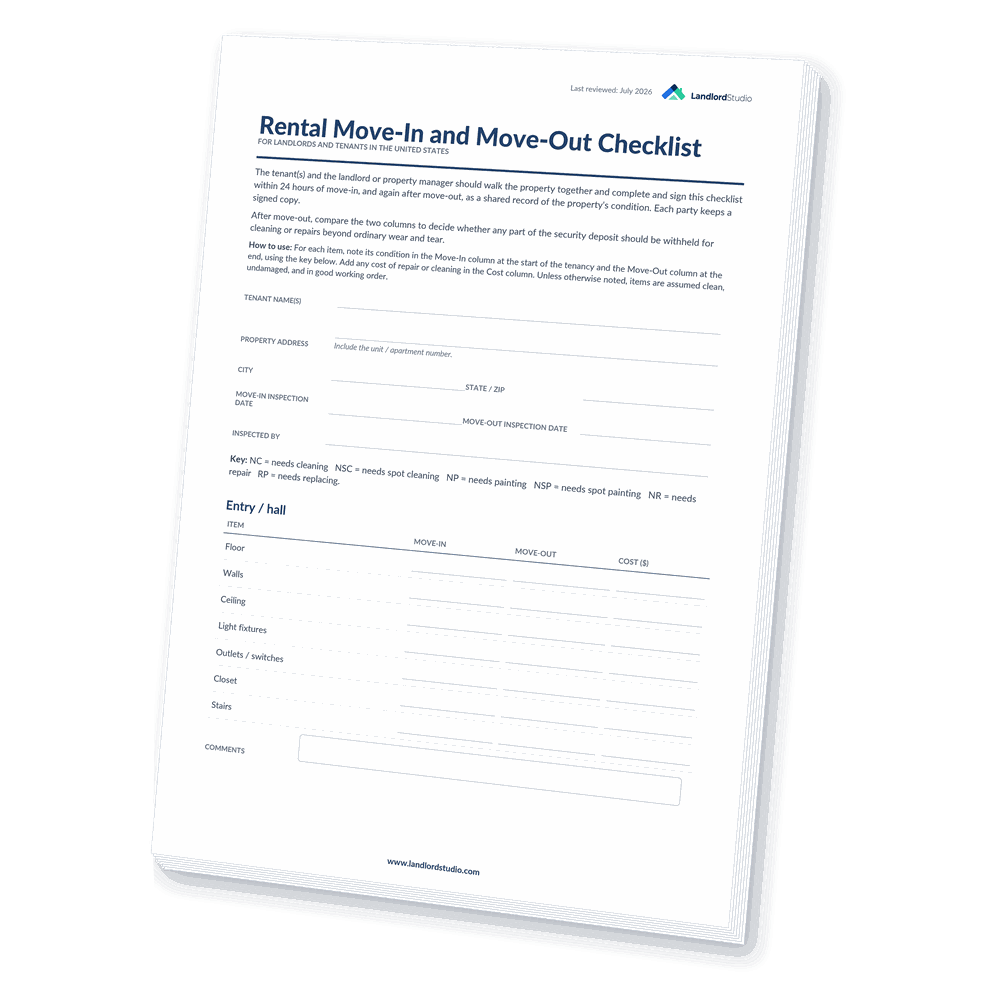
- Room-by-room condition record with Move-In, Move-Out and Cost columns for every fixture
- Signature blocks and a photo/video record so both parties agree on condition
- Legal notes cover state deposit deadlines, itemized deductions, and wear-and-tear
- Fillable PDF - complete it on screen or print it
Produced by Landlord Studio
Other resources you might be interested in

Tenant Welcome Letter
Use our welcome letter template to help get your landlord/tenant relationship off to the right start.
Landlord Template Bundle
Get 30+ essential landlord templates, including lease agreements, notices and inspection checklists.
Rent Receipt Template
Issue clear rent payment receipts so you and your tenants keep accurate records of every payment.

Manage up to 3 rental properties for free!
Sign up and get PRO free for 14 days. When the trial ends, keep tracking rent, expenses and reports for up to 3 properties, free forever with Landlord Studio GO.
By continuing you agree to our Terms & Conditions. · Already have an account? Log in
FAQs
What is a move-in and move-out inspection?

A move-in inspection records the condition of a rental property before the tenant moves in, creating a baseline for the tenancy. A move-out inspection records the property's condition when the tenant leaves so landlords and tenants can identify any changes or damage that occurred during the tenancy.
When should you conduct move-in and move-out inspections?
The move-in inspection should be completed once the property is ready for the tenant but before they move in their belongings. The move-out inspection is generally completed once the tenant has removed their belongings, although some states have specific rules around pre-move-out inspections. Always check your state and local requirements.
What should be included in a rental property inspection?
Inspect the property room by room, including walls, floors, doors, windows, appliances, plumbing, fixtures, smoke and carbon monoxide detectors, and any outdoor areas. Record the condition of each item, note existing damage or required repairs, and take dated photos to support your written inspection report.
Should the landlord and tenant complete the inspection together?
Where possible, yes. Completing the inspection together gives both parties an opportunity to review the property's condition, discuss any issues, and agree on what has been recorded. Both parties should review and sign the completed inspection report and keep a copy for their records.
What is the difference between normal wear and tear and tenant damage?
Normal wear and tear is the gradual deterioration that occurs through everyday use, such as faded paint or lightly worn flooring. Tenant damage goes beyond normal use and may include things like broken fixtures, large holes in walls, or significant stains. Comparing the move-out inspection with the original move-in report can help determine whether damage occurred during the tenancy and whether a security deposit deduction may be appropriate.