





Read summarized version with:

ChatGPT

Gemini

Claude

Grok

Add as preferred on Google
You found a property listing that looks promising. The rent numbers seem solid, the neighborhood checks out, and the seller is motivated. But before you make an offer, do you know exactly which metrics to run, and whether they actually hold up in today's market?
Most investors who lose money in real estate don't fail because they picked a bad neighborhood. They fail because they didn't underwrite the deal correctly. We sat down with Micah White, a Chicago-based licensed real estate broker and investor who has closed over $175 million in deals, to break down exactly how he evaluates properties, the systems he uses to manage them, and the tax strategies that help him keep more of what he earns.
Whether you're analyzing your first deal or your fiftieth, here's the framework.
Start With Your Investment Goals
Before you run a single number, get clear on what you're trying to achieve. Every investor's goals are different, and your buy box should reflect that.
Are you looking for monthly cash flow and passive income? Or are you playing the long game with appreciation and equity growth? Maybe you have a refinance strategy in mind where you want to recycle capital as quickly as possible.
Micah's approach targets a combination of cash flow and long-term appreciation while getting in at an attractive per-unit basis. Your criteria may look different, but the point is this: define your buy box first, then apply it to every property you evaluate. That keeps you from wasting time on deals that don't fit your strategy.
Three Metrics That Matter Most
Cash on Cash Return
This is the metric Micah prioritizes above most others. Cash on cash return measures how much money you're making every month after all expenses, divided by the total dollars you invested.
Here's a quick example: if a property generates $500 per month in cash flow, that's $6,000 per year. If your total investment (down payment, closing costs, rehab) was $100,000, you're earning a 6% cash on cash return.
Micah and his team target 12% or higher. That number may sound aggressive, but he achieves it by finding undervalued properties with room to force appreciation, whether through rehab or bringing rents up to market rate.
After Repair Value (ARV)
ARV is what a property will be worth after improvements. If you can buy a property at $600,000 that you believe is worth $800,000 after a value-add rehab or rent increases, that spread represents your opportunity.
This metric is especially important for investors who plan to refinance. The gap between your purchase price and the ARV is what allows you to pull your capital back out and redeploy it into the next deal.
The Updated 1% Rule
The traditional 1% rule says your gross monthly rent should equal at least 1% of the purchase price. According to Micah, that rule is outdated.
In today's market, especially in higher-cost cities like Chicago, a more realistic benchmark is 0.75% to 0.8% for a move-in-ready property. So if you're buying a property for $200,000, you should expect gross monthly rents of around $1,500 to $1,600, not $2,000.
If you're still screening deals against the old 1% rule, you're likely passing on solid opportunities.
Advice for New Investors: Underwrite Conservatively
If you're evaluating your first few deals in 2026, Micah's top piece of advice is straightforward: underwrite conservatively.
A lot of things can go wrong if your projections are too aggressive. One area that trips up new investors is property tax reassessment. In Chicago, for example, taxes are reassessed every three years. New investors often assume taxes will grow at a steady 3% to 5% annually, but when that reassessment hits, the assessed value resets to your purchase price. That can mean a 20%, 30%, or even 40% jump in your tax bill in a single year.
Micah shared that one of his own four-unit buildings just got reassessed with a 40% tax increase payable in 2026. If that wasn't factored into his original underwriting, that property would be underwater.
The takeaway: if you're not confident in your underwriting, invest the time to learn before you invest the money.
Build Your Team Before You Need Them
Micah recommends having five key people in place before you close your first deal:
- A real estate agent who specializes in investment properties and can help you source opportunities
- A lender who understands investment property financing (unless you're buying all cash)
- A real estate attorney for transaction contracts and legal protection
- A real estate-focused accountant who understands depreciation, cost segregation, and the tax benefits specific to rental property
- A home inspector or contractor for evaluating property condition and handling repairs
The key word here is before. Having these relationships established means you can move fast when the right deal appears. Speed matters in competitive markets.
Why Systems Beat Spreadsheets as You Scale
Micah is a self-described spreadsheet guy. But he's also honest about where spreadsheets fall short.
The core issue is automation. When you're managing a growing portfolio, spreadsheets require manual updates for every transaction, every expense, every rent payment. And things get missed. Micah admitted he's forgotten to update expenses and had items fall through the cracks, which created headaches at tax time.
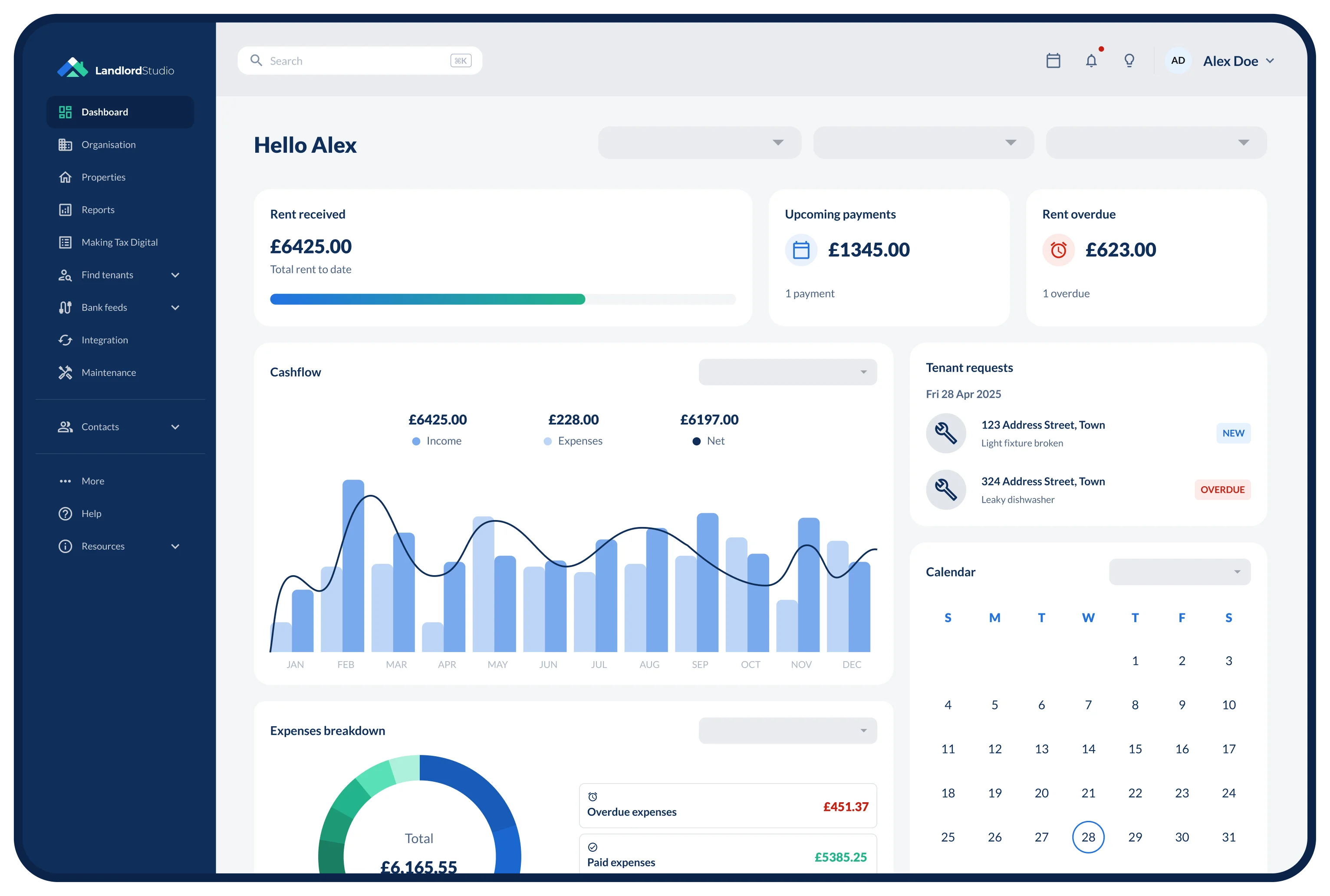
Property management software solves this by centralizing rent collection, expense tracking, and maintenance requests in one place. Instead of juggling spreadsheets, WhatsApp messages, and bank statements, everything feeds into a single system that keeps your financials clean year-round.
This matters for two reasons. First, it reduces the risk of errors and missed deductions. Second, it lets you delegate. Once your systems are documented and automated, you can hand the day-to-day management to someone else and focus on higher-value activities like finding your next deal.
If you're managing three properties or fewer, Landlord Studio's free plan gives you a place to start building those habits early. For larger portfolios, features like bank feed reconciliation and automated expense categorization save serious time, especially when tax season rolls around.
Tax Strategies That Protect Your Returns
Strong deal analysis gets you into the right property. Smart tax strategy helps you keep more of the income it generates.
Get a Real Estate-Focused Accountant
Not all CPAs are created equal. Micah is emphatic about finding an accountant whose practice focuses primarily on real estate. They'll understand depreciation schedules, cost segregation studies, bonus depreciation, and the specific write-offs available to rental property owners. A generalist CPA may miss opportunities that a specialist would catch immediately.
Track Expenses Weekly, Not Yearly
Reconciling your accounts once a year is a recipe for missing deductions and frustrating your accountant. Micah holds a weekly meeting with his business partner to review everything that came in and went out, flagging any expense over $200 for discussion.
The habit of tracking in real time, rather than reconstructing a year's worth of transactions in March, saves time and money. Tools like Landlord Studio make this easier with features like receipt scanning that automatically categorizes expenses as you go.
Separate Capital Improvements From Operating Expenses
This is a mistake Micah sees investors make regularly. Capital improvements, like a full unit rehab with new appliances and flooring, increase your property's depreciable basis. They should be tracked separately from routine operating expenses like a plumbing call or lawn care.
When you hand your accountant a clean breakdown of capital improvements versus operating expenses, you make their job easier and ensure you're capturing every depreciation benefit available to you.
Don't Overlook Mileage and Meals
Every trip to a property for a showing, inspection, or maintenance visit is a deductible expense. Mileage tracking is one of the most commonly under-reported deductions among landlords, and it adds up fast when you're managing multiple properties.
Business meals are another overlooked category. Coffee with a contractor, lunch with a potential partner, dinner with a client: 50% of those costs are deductible. Micah keeps a simple log of who he met, what they discussed, and when. He even opened a separate credit card dedicated to client-related meals and business expenses to make tracking effortless.
Time Your Acquisitions Strategically
If you've had a profitable first three quarters, talk to your accountant about purchasing another property in Q4. A new acquisition gives you depreciation that can offset the income you've already earned that year.
Micah also shared a less obvious strategy: pay attention to the land-to-building ratio. Land isn't depreciable, but the building is. If you're comparing two properties at the same price, the one with a lower land basis relative to the building's assessed value gives you more depreciation to work with. It's a small detail that can make a meaningful difference over time.
The BRRRR Strategy: Recycling Capital to Scale Faster
For investors looking to accelerate portfolio growth, Micah broke down the BRRRR strategy (Buy, Rehab, Rent, Refinance, Repeat):
- Buy a property below market value
- Rehab it to increase the property's value
- Rent it at top-of-market rates
- Refinance based on the new, higher appraised value
- Repeat using the capital you pulled out
Here's a concrete example: you buy a property for $100,000, invest $50,000 in rehab, and the property appraises at $200,000. A lender will refinance at 75% loan-to-value, giving you $150,000, which covers your original $100,000 purchase and $50,000 rehab. You now have a cash-flowing property with none of your own money left in the deal, free to repeat the process.
The key to making BRRRR work is finding properties with real value-add potential. Properties that are already stabilized at market rents won't give you the spread you need.
FAQ
What cash on cash return should I target for rental properties?
A good benchmark depends on your strategy, but Micah targets 12% or higher. Properties that are already stabilized and rented at market rates tend to land in the 6% to 8% range. Higher returns typically require finding undervalued properties where you can force appreciation through rehab or rent increases.
Is the 1% rule still relevant in 2026?
Not in its original form. In most US markets, especially higher-cost cities, a more realistic ratio is 0.75% to 0.8% of the purchase price for a move-in-ready property. Using the old 1% rule as a hard filter will cause you to pass on deals that are genuinely profitable.
Do I need property management software if I only own one or two rentals?
You can manage a couple of units with spreadsheets if you're comfortable with that. But setting up systems while you're small builds a foundation that makes scaling much easier later. Tracking habits you develop with one property will save you serious time and money when you own ten.
How do I find deals with 12% cash on cash returns?
Look for underlying value. Properties owned by long-term landlords who haven't raised rents in years can be 20% or more below market rate. That gap is your opportunity. Higher cash on cash returns generally come from properties that need work, whether that's rehab or a re-leasing strategy to bring rents to market.
What expenses do landlords miss most often at tax time?
Capital improvements that get lumped in with operating expenses, mileage to and from properties, and business meals are the three most commonly missed categories. Keeping a separate credit card for business expenses and logging mileage consistently throughout the year are simple fixes that pay off when you file.
Build the Foundation Now
Whether you're running numbers on your first deal or scaling toward your tenth property, the fundamentals don't change: know your metrics, underwrite conservatively, and build systems that let you manage efficiently.
If you're ready to get your finances organized and stop wrestling with spreadsheets, try Landlord Studio free for up to three properties. Track income, expenses, and mileage in one place so you're always tax-ready and always in control of your portfolio's performance.