



Rental History Report: Tips for Accepting Tenants for Landlords
Ensure you’ve found the right tenant; run a rental history report to check an applicant’s rental and eviction history and financial stability

Read summarized version with:

ChatGPT

Gemini

Claude

Grok

Add as preferred on Google
It’s important to gain a clear picture of a prospective tenant for two main reasons. Firstly, the last thing you want is to choose a tenant who complicates your life. This is why simply finding someone to occupy your unit is no good — you could face problems including nonpayments, damage to your property, or even end up needing to evict the tenant. Equally, you want to avoid turning down someone who could be a great fit.
A key way to ensure you’ve found the right tenant is with a rental history check. You should figure out what this will involve even before you list your rental property to ensure you’re ready to go with the first applicant.
What Is a Rental History Report?
A rental history report is an essential part of tenant screening and refers specifically to where a tenant has lived along with the contact details for each landlord. You can choose the timeframe you want, although three years is typical. You should ask applicants directly for their landlord references which should include two to three previous landlords. Plus, you’ll need to ask them to sign a consent form that allows you to contact their former landlords.
When you contact landlords, ask them questions to learn things about potential tenants that numerical data may obfuscate or not fully reflect. For instance, you could ask about the condition of the rental when tenants left, whether they were punctual paying rent, and if they broke the lease in any way. All these past behaviors are good indicators of what to expect from tenants. One good key question to ask a previous landlord is whether they would rent to the tenant again.
What Is the Workaround for Tenants Without a Rental History?
There’s always a chance that you’ll receive an application from people with no rental history, such as college students or young tenants just moving out of their parent’s homes. There’s no need to dismiss these applications — instead, you just need a workaround:
- Proof of employment. Ask applicants to provide you information about their jobs and contact their employers to confirm the details.
- Proof of income. You may also like to ensure applicants are earning enough to afford rent payments. Proof of income can come in the form of pay stubs or tax returns.
- Co-signed lease. If a tenant is unable to produce either of the above (which is common in the case of students), you could request the tenant ask someone who does have a rental history to co-sign.
- Gut feeling. As well as the above, it’s worth considering your impression of the renter. It’s a good sign if the tenant arrives on time for the appointment and is respectful at the meeting.
In addition, follow our advice on how to find good tenants.

Rental History Check: Tips for Landlords
Before accepting a tenant, there are a few more things you should do as part of your rent history check. This will ensure you fully verify the tenant and increase the likelihood that you will select a tenant that can and will pay their rent on time every month. It may seem like a lot of work to do all these things, but it will mean you’ll be able to relax for the period of the lease.
1. Set Personal Expectations for a Prospective Tenant
It’s crucial you have expectations in mind before you run a rental history report on a prospective tenant. Otherwise, it will be impossible to know when you should accept a tenant and when to keep searching. Determine how strict you’ll be with your standards according to the desirability of your unit and what kind of tenants you expect to attract.
For instance, you need to decide if you’ll accept someone who broke a lease in the past (this could depend on the circumstances), made late rent payments (how many), or has a recent criminal record. Use this to create criteria for tenants, making sure your decisions adhere to the Fair Housing Act and any state laws.
2. Inform the Tenant About the Mandatory Rental History Check
Tell applicants from the start that you’ll be running a rental check. This has the benefits of showing renters that your listing is legitimate and stopping anyone who is unwilling to submit to a check from applying — preventing wasted time on all sides. Specify what kind of information you’re requesting (addresses and contact information) and the timeframe you want to cover.
It’s also worthwhile telling tenants what you’re looking for. This will prevent any renters who see they won’t qualify from applying. In addition, it will give tenants without a rental history the chance to find out if a family member or close friend would be willing to co-sign.
3. Get the Tenant to Sign the Rental History Agreement
You must receive written permission from a prospective tenant before you can use a rental history report for rent verification. Ask your attorney to create a document that states that you will review information about the tenant’s length of residency, the amount paid in rent, and payment history.
This is something else you can mention in your rental listing. It will show applicants that you’re serious about vetting tenants before you approve them and give prospective tenants the chance to compile the necessary information to submit an application as quickly as possible — which they’ll want to do if they’re keen to secure the unit.
4. Carefully Review the Application
Never assume that all applicants who are willing to submit a rental history with their application actually fulfill your criteria. It’s up to you to review tenant records thoroughly. In particular, look for gaps, omissions, and inconsistencies. Since these could be red flags, oversight, or have a reasonable explanation, it’s important to ask the renter for clarification.
For instance, if there’s an extended break in a tenant’s rental history, you need to find out why. It could be because the tenant moved back in with their parents or was sharing with someone without being on the lease. However, it could equally be that the tenant would prefer you don’t contact a particular landlord. Other warning signs include incorrect contact information and incomplete addresses.
5. Check References From Previous Landlords
Aim to spend around 15 minutes on the phone with each landlord you call. When possible, you should call an applicant’s current landlord and one previous landlord to receive feedback from two different people.
Start by confirming that the tenant did actually rent from the landlord. Then, ask about whatever you feel matters most in your situation — this will likely include information about rent payments, the condition the tenant left the property, and communication with the tenant. If your tenants pay for their own utilities, you may also like to ask whether an applicant paid these on time. Finally, it can be useful to find out if anyone else was living with the tenant or if the tenant had any problems with neighbors, such as noise complaints.
6. Check for Eviction History
You may miss noticing evictions unless you carry out an eviction history check. This should form part of your tenant screening report. People with previous evictions are statistically more likely to go through an eviction again.
Note that checking evictions as part of renting history should be part of the application process for all prospective tenants. Using it for only some applicants could be considered discrimination, putting you in violation of the Fair Housing Act.
7. Conduct a Thorough Tenant Screening
After you’ve completed your verification of applicants’ rental history, conduct any subsequent checks that you feel are necessary to determine if the tenant is a good choice for your unit. Every landlord has different priorities, although most agree that it’s best to find someone without an eviction history, who always paid on time in the past, and who will likely leave the property in good condition. You should be able to find all the information to determine if someone meets these criteria by looking at credit reports, requesting rental history reports, and calling landlords for interviews.
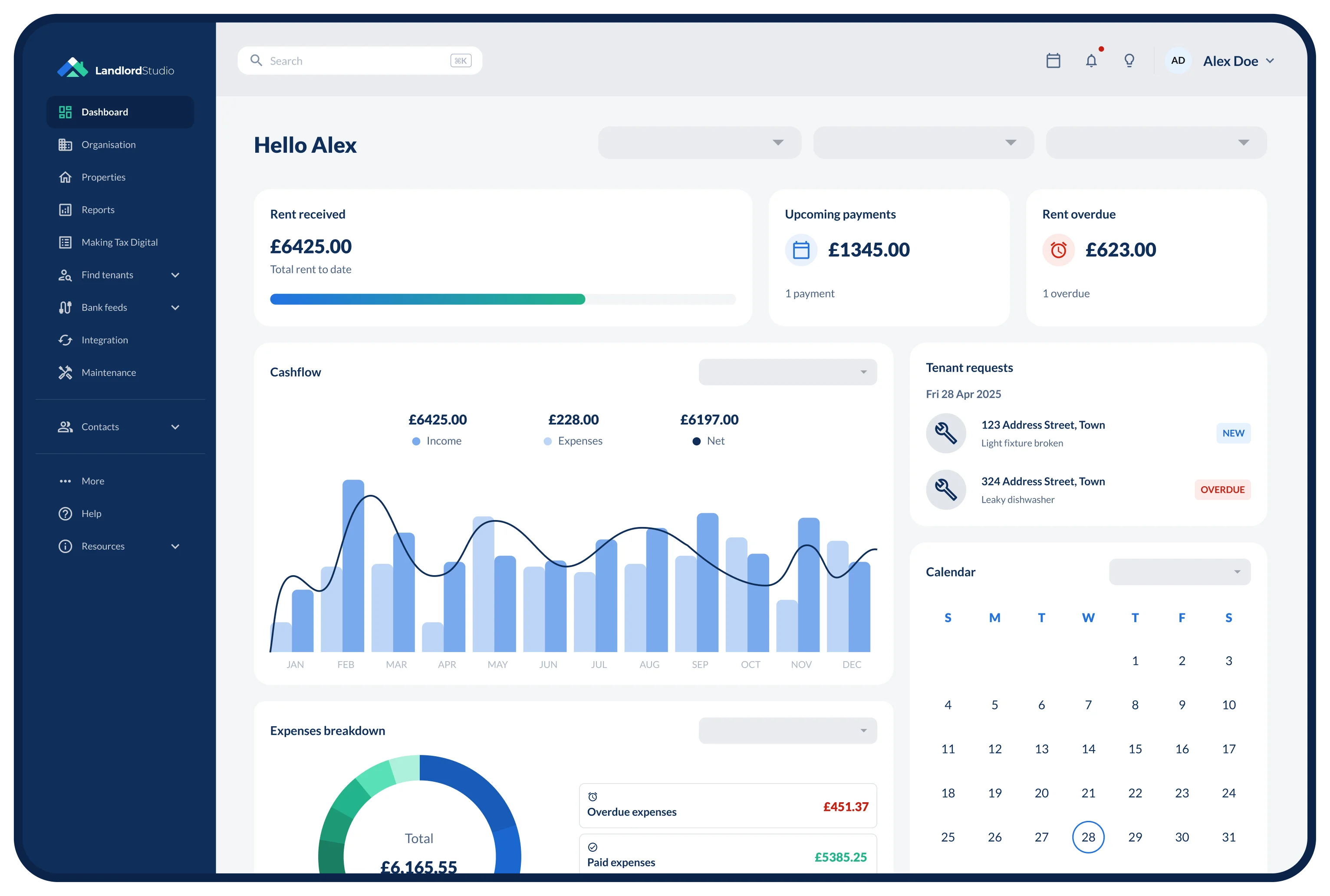
Carrying out a rental history check is the best way to find out how a tenant is likely to behave when renting from you. Although this does add a little extra work to the screening process, it ultimately avoids the stress of late payments, evictions, and other problems. Besides, you can simplify the process by using tenant screening services from Landlord Studio. Among many other features, the app allows you to create credit, renting history, and background check reports for a single cost that you can pass onto renters as part of the application fee.
Learn more about how you can streamline your rental management with Landlord Studio →
About Landlord Studio

Landlord Studio is an easy to use property management and accounting software designed for landlords.
Find and screen tenants, collect rent online, track income and expenses, run reports, and more - all for free.
Stay Updated on Property Insights

Get weekly tips, tax updates, and landlord strategies straight to your inbox.
Inherited Tenants, Hidden Risks: A Due Diligence Guide for Buying Occupied Rentals
Join our webinar on buying tenant-occupied rentals. Discover the due diligence checklist, where occupied rentals leak money, and how to vet what you inherit.
Details:
Free
Hosted by:
Matt Hardy
Jennifer Ruelens
When:
August 26, 2026
10:00am PT / 1:00pm ET
Duration:
45 mins
Format:
Live Webinar
Guest:
Jennifer Ruelens, Property Manager, Investor & Founder with 20+ Years Experience in Real Estate
Co-host Matt Hardy, Head of Marketing at Landlord Studio