




How to Get Rid of Cigarette Smells and Bad Odors in a Rental Property
Tenant moved out and left a smell behind? Here’s how landlords can remove cigarette smoke and bad odors before the next tenant tours the property.


Read summarized version with:

ChatGPT

Gemini

Claude

Grok

Add as preferred on Google
There are few things more disheartening at tenant turnover than opening the door, taking one breath, and realizing the property smells. Cigarette smoke, lingering pet odors, a damp musty note from a closed-up bathroom - whatever the source, a bad smell will tank a showing faster than a stained carpet or a chipped countertop.
Smell is the one thing photos can't capture and a quick walk-through can't fake. Prospective tenants will notice it in the first ten seconds, and most won't come back for a second look.
This guide walks you through how to get rid of cigarette and other common odors, when to bring in a professional, and how to stop the same problem happening again at your next turnover.
Common Rental Odors and How To Clean Them
In a hurry? Find your odor in the table below and jump straight to the fix. Costs are rough estimates for a typical 1–2 bedroom rental and will vary by region and severity.
| Odor | Difficulty | Cost (DIY) | How to Remove | Pro Needed? |
|---|---|---|---|---|
| Cigarette smoke (light) | Moderate | $100–$300 | Ventilate, wash hard surfaces, replace HVAC filters, deep-clean carpets. | No |
| Cigarette smoke (heavy) | Hard | $500–$1,500 DIY / $1,500–$6,000 pro | Full clean, then odor-blocking primer (Kilz/Zinsser B-I-N), then repaint. Often needs duct cleaning and carpet replacement. | Often yes |
| Pet urine | Moderate | $50–$200 (cleaners) / $500+ if pad or subfloor needs replacing | Enzymatic cleaner on carpets, baseboards, and subfloor. Blacklight test to find missed spots. Full steps ↓ | Only if pad/subfloor is soaked |
| Cooking grease & food smells | Easy | $30–$100 | Degrease vent hood, wash inside cabinets, clean behind appliances, repaint kitchen if needed. Full steps ↓ | No |
| Mold & mildew | Hard | $50–$200 surface / $500–$6,000+ if remediation needed | Find the moisture source first, fix the leak, then clean with a mold-killing solution. Full steps ↓ | Yes, if black mold |
| Garbage & fridge smells | Easy | $10–$30 | Deep-clean fridge with baking soda, run disposal with ice and citrus peel. Full steps ↓ | No |
| Showing tomorrow — no time for a full clean | Easy | $20–$150 | Bake cookies, simmer cinnamon, run an activated-carbon air purifier overnight, ventilate. Buys time, doesn't fix the underlying problem. Quick hacks ↓ | No |
How to Get Rid of Cigarette Smell in a Rental Property: Step by Step
The order of operations matters here. Skipping ahead - for example, painting over smoke-stained walls without sealing them first will cost you the work twice. Smoke residue bleeds straight through fresh paint within days.
1. Ventilate the property aggressively
Open every window. Set box fans in window frames pointing outward to pull air through the property. Run ceiling fans. If it's safe to do so, leave windows open overnight. This won't remove the smell on its own, but it clears the airborne particles before you start scrubbing them off surfaces.
2. Remove anything soft that the previous tenant left behind
Curtains, drapes, rugs, fabric blinds, and any leftover furniture all hold smoke. If you can launder them on a hot wash with a cup of white vinegar, do that. If you can't, throw them out. Trying to deodorize a smoke-saturated curtain costs more in time than replacing it.
3. Wash every hard surface in the property
This is the part most landlords underestimate. Smoke residue is sticky and lives on every surface that wasn't sealed, including:
- Walls, ceilings, baseboards, doors, and door frames
- Window frames, sills, and the inside of window tracks
- Inside cabinets, drawers, and closets
- Light fixtures, ceiling fan blades, and outlet covers
- Interior of appliances (refrigerator, oven, microwave, dishwasher)
Use a strong cleaner. Trisodium phosphate (TSP) works well, mixed per label instructions. A cheaper option is a 50/50 mix of warm water and white vinegar with a splash of dish soap. Wear gloves and eye protection. Wipe top-to-bottom so dirty water doesn't run over surfaces you've already cleaned.
4. Replace HVAC filters and clean the system
Your HVAC system has been circulating smoke for the length of the tenancy. At minimum, replace every filter and wipe down visible vent covers. For moderate to heavy contamination, hire a duct-cleaning service - otherwise the system will keep recirculating the smell into a clean property.
5. Deal with the carpets
Carpet is one of the worst smoke absorbers in any property. Sprinkle baking soda generously across the carpet, leave it overnight, then vacuum thoroughly with a HEPA-filter vacuum. Follow with a professional steam clean.
If after a deep clean you can still smell smoke when you press your nose to the carpet, the smell has migrated into the carpet pad and subfloor. At that point you're better off pricing out a replacement than fighting a losing battle. Hardwood, vinyl plank, or tile is easier to maintain between tenancies.
6. Seal walls and ceilings with an odor-blocking primer
This is the step that makes regular paint actually work. A stain-and-odor-blocking primer (Kilz Original, Zinsser B-I-N, or similar) forms a barrier that seals smoke residue under the wall surface so it can't keep off-gassing into the room. Apply two coats. Don't skip the ceiling - that's where most of the residue collects.
7. Repaint
Now you can paint. Two coats of a quality interior paint over your sealed primer will reset the walls. This is also a good moment to refresh trim and ceilings for the next tenancy.
8. Final deodorizing pass
Once the property is cleaned, sealed, and painted, run a final neutralizing pass. Options include an air purifier with an activated-carbon filter (running for several days), bowls of white vinegar or activated charcoal placed in each room, or an ozone treatment performed by a professional. Ozone treatment is highly effective for heavy contamination but the property must be unoccupied during treatment.
Other Common Turnover Odors and How to Tackle Them
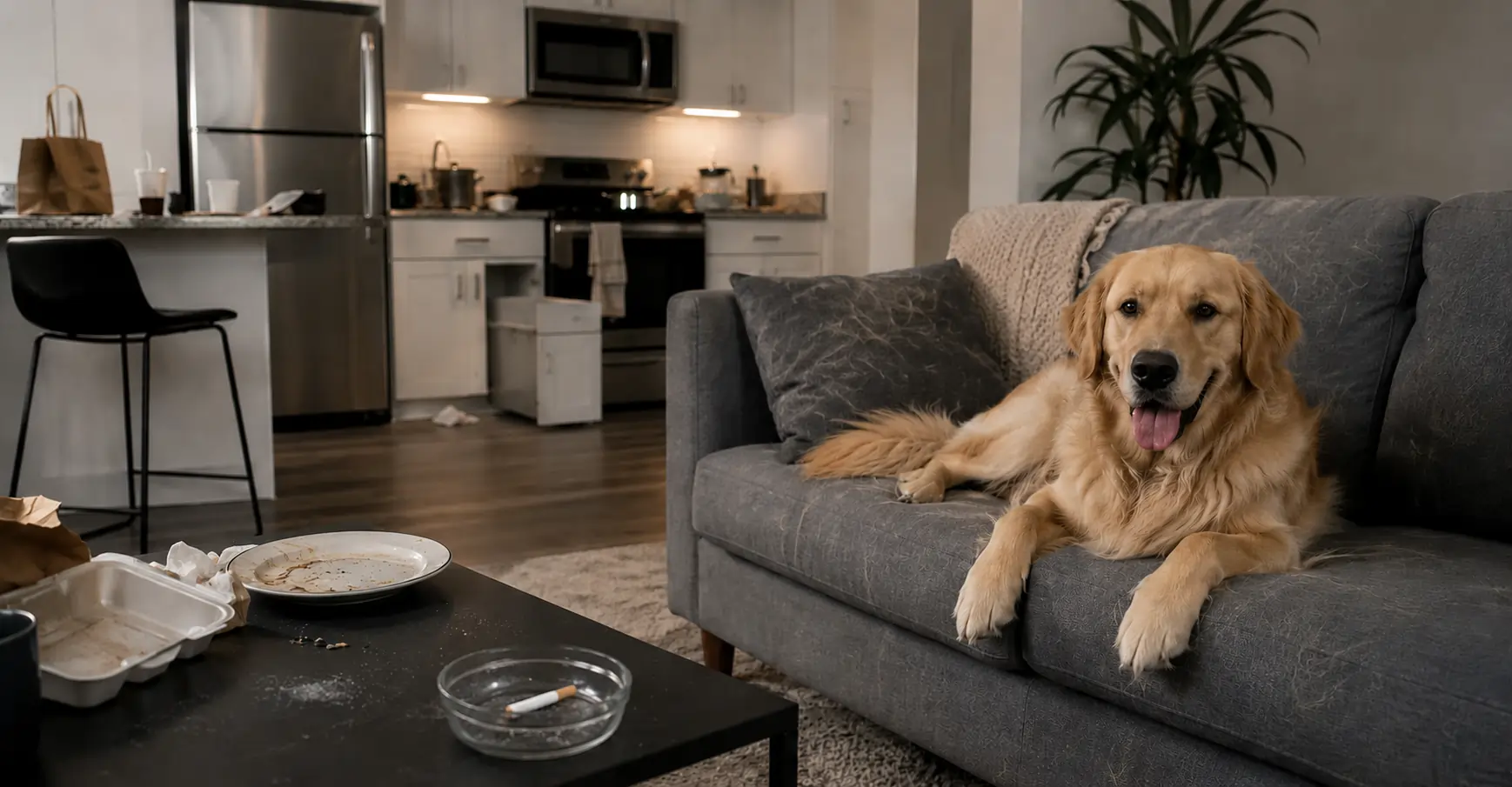
Cigarette smoke is the headline problem, but it's rarely the only one a landlord finds at turnover. Here's how to handle the other usual suspects.
Pet urine and pet odors
Skip household cleaners - they won't break down the proteins in urine that cause the smell. Use an enzymatic cleaner (Nature's Miracle, Rocco & Roxie, etc.) on carpets, baseboards, and subfloor.
For heavily soaked carpet, the pad and sometimes the subfloor below need replacing. A blacklight in a dark room will show you every spot you missed.
Cooking grease and strong food smells
Most of this is concentrated in the kitchen. Degrease the vent hood and filter, wash inside cabinets, clean behind and underneath the stove and refrigerator, and replace any grease-stained ceiling tiles.
A coat of paint in the kitchen is often enough to finish the job.
Mold, mildew, and musty smells
A musty smell means moisture. Don't just clean - find the source. Check bathrooms, around windows, under sinks, and behind washing machines. Fix the leak or ventilation issue, then clean affected areas with a mold-killing solution.
If you find black mold, get a professional assessment. Landlords have habitability obligations around mold in most states.
Garbage and fridge smells
Usually solved by a deep clean. Empty the refrigerator, wipe it down with a baking soda solution, and leave a box of baking soda inside with the door propped open for 24 hours. Check garbage disposal drains and run them with ice and citrus peel.
When to Call a Professional
DIY works for most light-to-moderate odor jobs, but bring in a pro if:
- The property is heavily smoke-contaminated: if walls and ceilings are visibly yellow, you're looking at a multi-day job with specialist equipment.
- You have a tight turnover window: the math often favors paying for a one-day professional clean over losing two weeks of rent to a slow DIY.
- There's biohazard or mold contamination: don't handle either yourself.
- You've cleaned, sealed, painted and the smell is still there: that's usually a duct or subfloor issue and needs specialist equipment.
Professional remediation typically runs $1,500–$6,000 depending on property size and contamination level. Track every dollar - you may be able to deduct it from the previous tenant's security deposit if smoking was prohibited by the lease, and it's a deductible operating expense either way.
Quick Hacks for a Tight Turnaround (When You Can't Do a Full Clean)
Sometimes the showing is tomorrow and the smell is today. These won't fix a real smoke problem - for that you need the full process above but they'll buy you a cleaner first impression while you book in the deeper work.
A few that actually move the needle:
- Bake cookies or simmer something on the stove an hour before the showing: the old realtor trick still works because it does two things at once: it puts a strong, pleasant smell in the air and signals "lived-in and looked-after." Cinnamon sticks, orange peel, and cloves simmered in water on low heat are the no-effort version if you don't want to bake.
- Run a reed diffuser or plug-in in each room: place them near doorways and in hallways where prospective tenants first walk in. Skip anything overly floral or chemical-smelling- clean linen, citrus, and light woody scents read as "clean" rather than "covering something up."
- Open a box of baking soda in each closet and under sinks: Cheap, invisible to the eye, and genuinely absorbs odors rather than masking them. Bowls of white vinegar left out overnight work the same way and won't leave any smell of their own by morning.
- Run an air purifier with an activated-carbon filter for 24–48 hours before the showing: this is the single best short-notice option. Carbon filters actually pull odor molecules out of the air rather than just masking them. A mid-range purifier will make a noticeable difference in a small unit overnight.
- Wipe down the entry points: front door, door frame, light switches, the inside of the entry coat closet. The smell that hits a prospective tenant in the first five seconds matters more than the smell in the back bedroom. Even a quick wipe with a vinegar-and-water solution on these surfaces resets the first impression.
- Open every window for an hour before the showing: then close them 15 minutes before tenants arrive so the property isn't cold. Fresh-air ventilation right before a viewing is the closest thing to a free trick that actually works.
One word of warning: don't rely on quick fixes for an actual smoke-damaged property. Prospective tenants who like the property will come back for a second viewing, and the masking smell will be long gone by then. Use these to bridge the gap to a proper clean - not to replace it.
How to Prevent This Happening at Your Next Turnover
A bad-smell turnover is a problem that's much cheaper to prevent than to fix. A few things to put in place before the next tenancy starts:
1. Include a no-smoking clause or smoking addendum in your lease
A clear no-smoking clause makes smoke damage a breach of the lease, which lets you charge against the security deposit if it happens. A standalone smoking addendum spells out what's covered (cigarettes, vapes, marijuana, anything else you want to include) and the consequences of breaching it.
2. Screen tenants properly
Smokers and heavy pet owners aren't a protected class, so it's reasonable to ask about smoking habits during screening. Pair that with full credit, background, and rental history checks. Past landlord references are the best signal for how a tenant treated their last property.
3. Run a thorough move-in inspection with photos
Document the property's smell-free starting condition with date-stamped photos and a signed move-in checklist. If the property comes back at move-out with smoke damage, you have a clear before/after record to support any security deposit deduction.
4. Schedule routine inspections during the tenancy
Most leases allow for periodic inspections with reasonable notice. Catching a lease violation six months in is far cheaper than discovering it a year later at turnover. A periodic walk-through also signals to tenants that the property is being looked after.
5. Itemize and charge for damage at turnover
If smoke damage occurs and your lease prohibits smoking, you can typically deduct cleaning, sealing, and painting costs from the security deposit, provided the costs are documented and the smoke damage is beyond normal wear and tear. Use an itemized damages list with receipts attached, and always check your state's security deposit laws before sending the deduction notice.
Can a landlord charge a tenant for cigarette smoke damage?
Yes, in most cases - provided the lease prohibits smoking and the damage goes beyond normal wear and tear. You can typically deduct the cost of cleaning, sealing, repainting, and replacing damaged carpets or fixtures from the security deposit. Keep itemized receipts, and review your state's security deposit laws before issuing the deduction.
Does painting alone get rid of cigarette smell?
No. Standard paint won't seal in the smoke residue, and the smell will bleed back through within days or weeks. You need to clean every hard surface first, then apply an odor-blocking primer (such as Kilz Original or Zinsser B-I-N), then paint over that. Skipping the primer is the single most common mistake landlords make.
How long does cigarette smoke smell last in a rental?
If untreated, smoke residue can off-gas for months or even years. Even after the property is aired out, the smell will return on humid days because moisture reactivates the residue. The only permanent fix is to clean, seal, and repaint affected surfaces — ventilation alone won't solve it.
Is cigarette smoke damage considered normal wear and tear?
No. Normal wear and tear covers minor deterioration like faded paint or worn carpet. Smoke damage requires specialized cleaning and sealing to remove, and is generally treated as tenant-caused damage - especially if the lease prohibits smoking. That makes the cost deductible from the security deposit in most states.
What's the best way to prevent smoke and odor problems in the first place?
Include a no-smoking clause in the lease, screen tenants thoroughly, run a documented move-in inspection, and schedule routine inspections during the tenancy. Catching a problem six months in is much cheaper than discovering it at turnover.
Bad Odors Turn Off Prospective Tenants
A bad smell during tenant turnover is one of the most frustrating problems a landlord can inherit -but it's also one of the most fixable, as long as you tackle it in the right way.
Beyond the cleanup itself, the smartest move is preventing the problem next time around: a solid lease with a no-smoking clause, proper tenant screening, documented inspections, and a system for tracking every expense at turnover so nothing slips through the cracks.
Landlord Studio gives DIY landlords everything they need to do that in one place - expense tracking, document storage, tenant screening, and tax-ready reporting.
About Landlord Studio

Landlord Studio is an easy to use property management and accounting software designed for landlords.
Find and screen tenants, collect rent online, track income and expenses, run reports, and more - all for free.
Stay Updated on Property Insights

Get weekly tips, tax updates, and landlord strategies straight to your inbox.
Inherited Tenants, Hidden Risks: A Due Diligence Guide for Buying Occupied Rentals
Join our webinar on buying tenant-occupied rentals. Discover the due diligence checklist, where occupied rentals leak money, and how to vet what you inherit.
Details:
Free
Hosted by:
Matt Hardy
Jennifer Ruelens
When:
August 26, 2026
10:00am PT / 1:00pm ET
Duration:
45 mins
Format:
Live Webinar
Guest:
Jennifer Ruelens, Property Manager, Investor & Founder with 20+ Years Experience in Real Estate
Co-host Matt Hardy, Head of Marketing at Landlord Studio