




Read summarized version with:

ChatGPT

Gemini

Claude

Grok

Add as preferred on Google
If you’ve ever read a lease agreement and wondered what “lessor” and “lessee” mean, we'll help to answer that question!
They key difference:
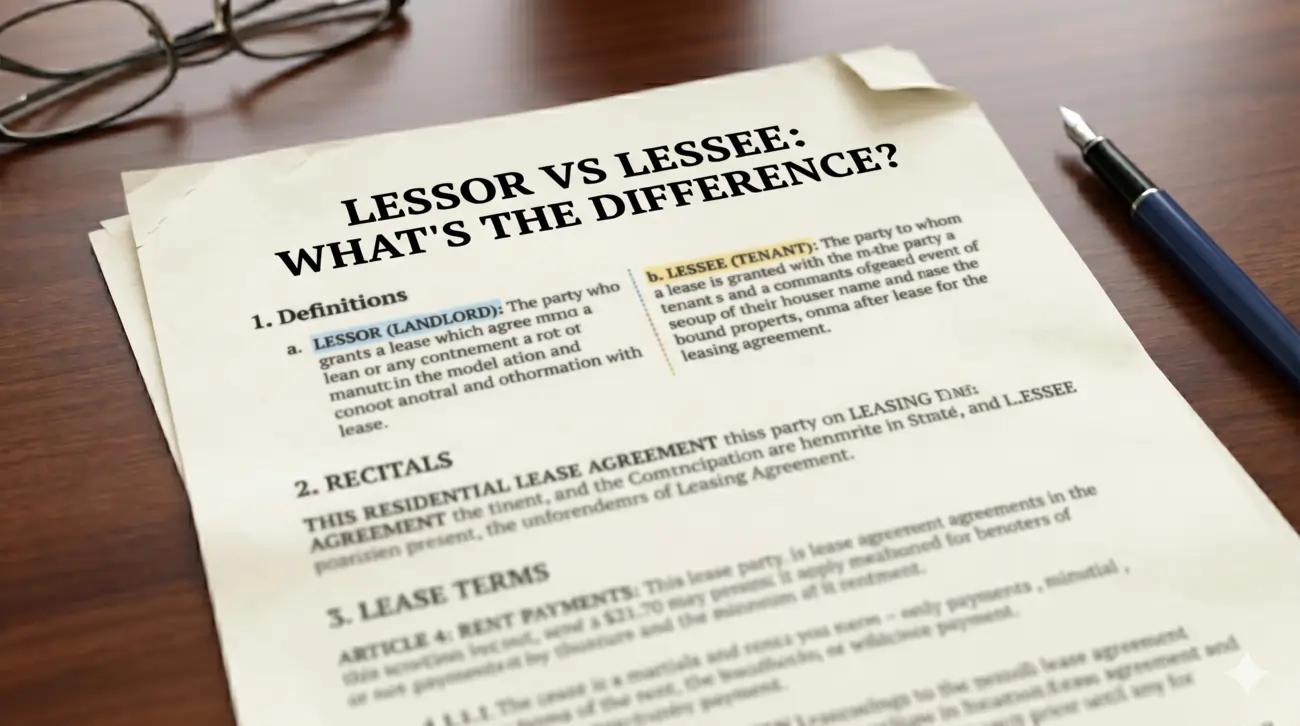
- The lessor is the landlord or property owner.
- The lessee is the tenant or person renting the property.
Lessor vs Lessee
These legal terms appear in residential leases, commercial leases, and rental contracts across the US. But despite sounding formal, the meaning is simple:
Understanding the difference matters because lease agreements often assign different rights, responsibilities, and liabilities to each party.
Misunderstanding the terms can lead to confusion about who is responsible for rent, repairs, insurance, or ending the lease.
What Is a Lessor?
A lessor is the person or company that owns the property and leases it to someone else.
In most residential rental situations, the lessor is the landlord. In some cases, the lessor could also be:
- A property management company acting on behalf of the owner
- A business leasing office space
- A car dealership leasing a vehicle
- An equipment company leasing machinery
In a rental property lease, the lessor is responsible for providing the property and setting the terms of the lease.
Typical responsibilities of the lessor include:
- Providing a safe and habitable rental property
- Maintaining the property as required by state and local law
- Collecting rent
- Returning the security deposit if the tenant meets the lease terms
- Following the legal process for notices, rent increases, or eviction
What Is a Lessee?
A lessee is the person or business that rents or leases the property.
In residential rentals, the lessee is simply the tenant.
The lessee agrees to follow the terms of the lease in exchange for the right to live in or use the property.
Typical responsibilities of the lessee include:
- Paying rent on time
- Keeping the property reasonably clean and undamaged
- Following the rules in the lease agreement
- Reporting maintenance issues
- Giving proper notice before moving out
Why Do Lease Agreements Use “Lessor” and “Lessee”?
Lease agreements use these terms because they are legally precise.
Rather than repeatedly writing “the landlord” and “the tenant,” contracts define each party once at the beginning:
“This lease agreement is entered into between John Smith (‘Lessor’) and Jane Doe (‘Lessee’).”
From that point on, the document uses “lessor” and “lessee” throughout.
You’ll most often see these terms in:
- Apartment leases
- Commercial leases
- Vehicle leases
- Equipment leases
- Real estate contracts
Lessor vs Lessee in a Rental Property Example
Here’s a simple example:
Sarah owns a duplex and rents one unit to Mike.
- Sarah is the lessor because she owns the property and leases it out.
- Mike is the lessee because he pays rent to live there.
If the lease says:
“The Lessee must pay rent by the first of each month.”
That means Mike must pay rent by the first.
If the lease says:
“The Lessor is responsible for repairs to the HVAC system.”
That means Sarah must pay for and arrange those repairs.
Rights of the Lessor
A lessor generally has the right to:
- Receive rent payments on time
- Enforce the terms of the lease
- Keep part or all of the security deposit if the tenant damages the property or breaks the lease
- Enter the property when allowed by state law and the lease agreement
- Begin the eviction process if the tenant violates the lease
However, these rights are limited by state and local landlord-tenant laws. For example, some states require 24 hours’ notice before a landlord can enter a property, while others require 48 hours or more. States also have different rules about:
- How much notice must be given before entering the property
- When and how a security deposit can be withheld
- Whether and how often rent can be increased
- How much notice must be given before ending a lease or starting an eviction
Rights of the Lessee
A lessee generally has the right to:
- Live in a safe, habitable property
- Receive notice before the landlord enters the property
- Request repairs within a reasonable timeframe
- Receive the security deposit back if the lease terms are met
- Challenge illegal fees, discrimination, or eviction
These rights also vary by state and local law. For example, some states give tenants the right to withhold rent if major repairs are not made, while others do not. Laws also differ on:
- Security deposit limits and deadlines for returning deposits
- Required notice before a landlord enters the property
- Protections against rent increases or eviction
- Whether tenants can break a lease early in certain situations
Federal laws, including the Fair Housing Act, also protect lessees from discrimination regardless of where they live.
Is the Lessor the Same as the Landlord?
Usually, yes.
In most residential rental agreements:
- Lessor = landlord
- Lessee = tenant
However, there can be exceptions.
For example, if a property owner hires a property manager to sign leases on their behalf, the lease might list:
- The property owner as the lessor
- The property management company as the authorized agent
- The tenant as the lessee
The same idea applies in commercial real estate, where a corporation may be the lessor and a business may be the lessee.
How Landlords Can Avoid Lease Confusion
Whether you call yourself a lessor or a landlord, the best way to avoid confusion is to keep your lease and records organized.
Make sure you:
- Use a clear, written lease agreement
- Define who is responsible for repairs, utilities, and fees
- Keep records of rent payments, notices, and maintenance
- Store signed leases and documents in one place
- Track income and expenses for tax time
Using landlord software can make it easier to manage lease documents, rent payments, and property records without digging through paperwork or spreadsheets.