




Read summarized version with:

ChatGPT

Gemini

Claude

Grok

Add as preferred on Google
Late payments and rent reminders can quickly turn property management into a full-time chase. For landlords juggling multiple units, even one delayed transfer can disrupt cash flow and strain tenant relationships.
Automatic rent payments offer a smarter alternative. By setting up recurring digital transactions, landlords receive rent on time without constant follow-ups, while tenants enjoy the ease of “set it and forget it” convenience. The result is reliability on both sides, steady income for landlords, and fewer missed deadlines for renters.
With automation tools integrated into modern property management platforms, rent collection becomes less about administration and more about strategy. Landlords can focus on portfolio growth, confident that payments are processed securely and consistently in the background.
This article explores how automatic rent payments work, why they’re reshaping property management, and what landlords need to know to implement them effectively.
Related Article: The Best Way to Collect Rent Payments From Your Tenants
Understanding Automatic Rent Payments
Automatic rent payments refer to digital systems that withdraw rent directly from a tenant’s account and deposit it into a landlord’s or property manager’s account on a predetermined schedule.
At their core, they rely on Automated Clearing House (ACH) transfers or card-based payment gateways. ACH transfers move funds directly between bank accounts, often with lower fees than credit card payments, while card-based systems offer faster processing at a slightly higher cost.
Both methods eliminate the uncertainty of manual payments and paper checks, creating a consistent payment rhythm that supports financial planning.
Many property management tools integrate this automation into their broader accounting ecosystem.
Within platforms such as Landlord Studio, for instance, landlords can enable recurring rent schedules, receive instant payment confirmations, and automatically reconcile transactions with income reports.
For tenants, the process is equally straightforward. Once enrolled, they can authorize automatic payments and receive digital receipts each month, maintaining transparency without the need for direct communication or reminders.
Useful Read: Payment Apps: Why You Shouldn’t Use Them for Rent Collection
The Benefits of Automatic Rent Payments
The appeal of automatic rent payments extends well beyond convenience. For landlords, automation introduces predictability into an area traditionally marked by uncertainty. Regular, on-time deposits allow for more accurate financial planning, smoother budgeting, and fewer awkward conversations about overdue rent.
1. Improved Payment Reliability
Automatic systems drastically reduce late or missed payments. Once tenants enroll in autopay, rent is withdrawn automatically each month, minimizing human error or forgetfulness. This consistency helps landlords maintain steady cash flow, essential for covering mortgage payments, maintenance costs, and other recurring expenses.
The shift is already well underway - according to ZipDo's 2026 rental industry report, 65% of property managers now use automated rent collection, up from 48% in 2020. The impact on individual portfolios can be dramatic. Case & Associates hit 100% rent collection in its first month after switching to an automated system, with court filings for non-payment dropping to zero.
2. Time Efficiency and Administrative Ease
Manual rent collection can consume hours each month in reminders, bank visits, and reconciliation. Automation eliminates much of this overhead. Payment records are logged automatically, freeing landlords to focus on higher-value tasks like property improvements or portfolio analysis.
3. Enhanced Tenant Satisfaction
Tenants increasingly expect digital convenience. Allowing them to set up automatic payments aligns with broader consumer habits, such as online banking and subscription services. This ease can improve tenant relationships and retention rates sn reduce vacancies by streamlining one of the most routine aspects of renting.
4. Accurate Financial Tracking
When integrated into digital management systems, automated rent payments generate precise, time-stamped records. These entries simplify accounting, tax preparation, and performance reviews. Many landlords find that consistent data also supports better decision-making, offering a clearer view of rental income trends over time.
Useful Read: 11 Best Rent Collection Apps For Landlords
Challenges and Considerations
While automatic rent payments streamline many aspects of property management, they are not without challenges. Understanding potential drawbacks helps landlords adopt automation responsibly and avoid operational pitfalls.
1. Security and Data Protection
Automated payment systems rely on sensitive financial information. Ensuring that data is stored and transmitted securely is crucial. Reputable platforms use encryption, tokenization, and compliance with standards such as PCI DSS to protect users from breaches. Landlords should verify that their chosen system meets these standards before onboarding tenants.
2. Tenant Enrollment and Flexibility
Some tenants may hesitate to share bank details or commit to recurring withdrawals. Addressing these concerns through transparency, explaining how the system works, and what security measures are in place can encourage participation. It’s also useful to offer flexibility, such as allowing tenants to choose withdrawal dates or opt out when necessary.
3. Technical and Banking Dependencies
Automation introduces reliance on technology and third-party systems. Internet outages, software glitches, or bank processing delays can occasionally disrupt transactions. Establishing clear contingency plans, including communication protocols and late-fee grace periods, prevents frustration on both sides.
4. Regulatory and Compliance Factors
Depending on jurisdiction, landlords may face specific regulations governing electronic payments and tenant authorization. Reviewing local rental laws or consulting a property management association ensures compliance and protects both landlord and tenant interests.
Also Read: State by State Guide to Landlord-Tenant Laws
How to Set Up Automatic Rent Payments with Landlord Studio
Landlord Studio offers an all-in-one platform that integrates rent collection, accounting, tenant management, and reporting.
Below is a step-by-step guide to enabling automatic rent payments via Landlord Studio, emphasizing its pricing, user feedback, demo access, and conversion touchpoints.

1. Explore Pricing and Sign Up
Landlord Studio offers a free plan (GO) and paid tiers like Pro, with a 14-day free trial.
- Even on the free tier, landlords can use online rent collection features.
- Transaction fees: $2.50 per ACH payment. You can choose to absorb this cost or pass it to tenants.
- For credit or card payments, additional processing fees apply.
Once you’ve evaluated the pricing, click Get Started (or Start for Free) or log in if you already have an account.
2. Take a Demo or Tutorial Walkthrough
Before fully committing, many users benefit from viewing the demo. Landlord Studio often provides live demos or video walkthroughs that show the dashboard, payment flows, and reporting features.
These previews help landlords understand exactly how the online rent collection interface works, where to view payments, how to set up auto-pay, and how income is recorded.
3. Enable Online Rent Collection
Once logged in or during setup, navigate to the Collect Rent Online/Online Rent Collection section. This feature is active in both free (GO) and paid (Pro) plans.
Landlords must verify their bank account and configure lease details, including rent amount, due dates, late fees, and whether to block partial payments.
4. Invite Tenants and Enable Auto-Pay
After setup:
- Invite tenants from inside the app, they’ll receive an email to set up their payments in the tenant portal.
- Tenants can securely link their bank/account info and optionally enable auto-pay, so rent is withdrawn each month on a schedule.
- If you change how transaction fees are handled (landlord vs tenant), auto-pay may temporarily be disabled until tenants review.
5. Monitor Payments and Reconcile
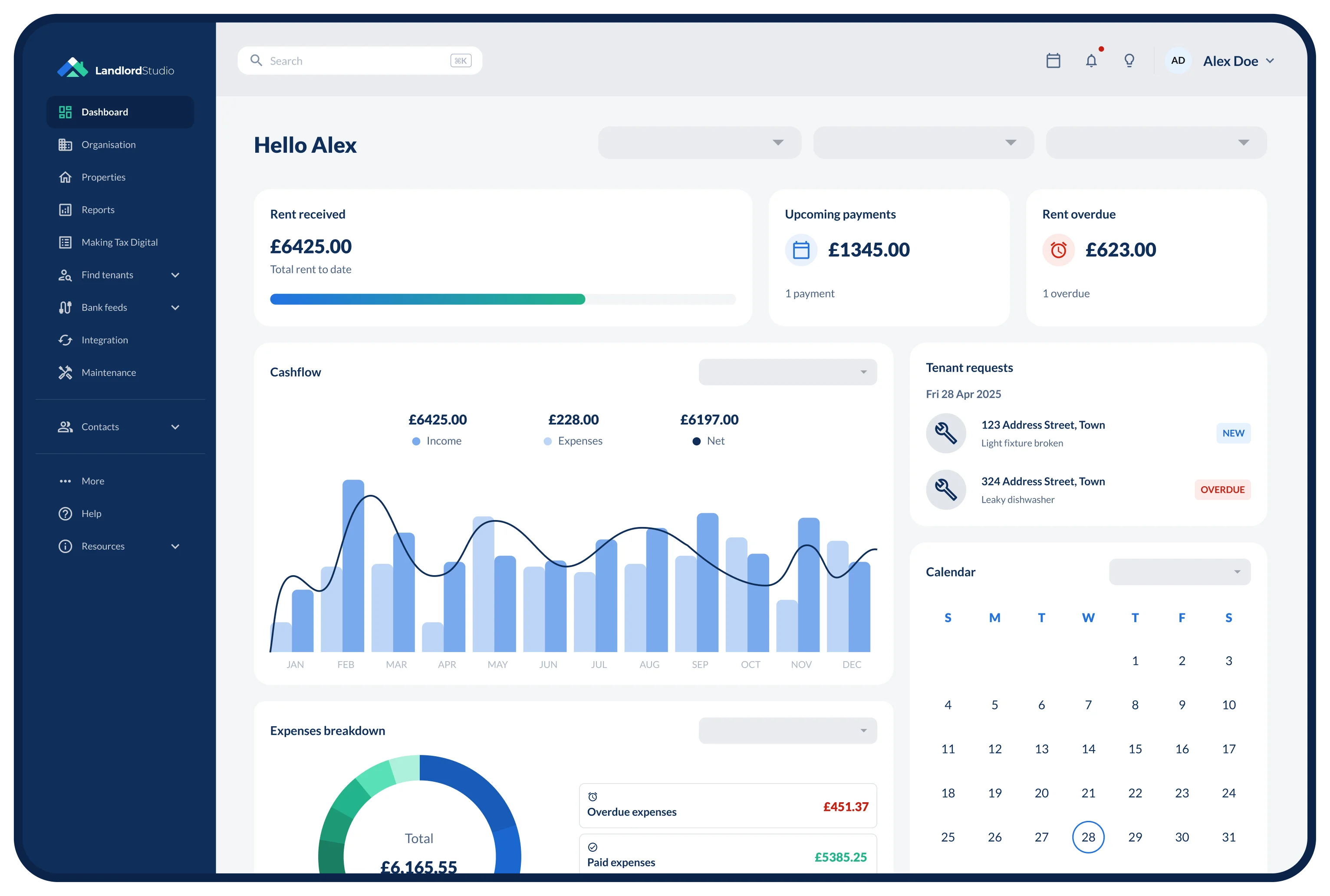
After activation, the Landlord Studio dashboard displays real-time status: pending, processing, received, or failed payments.
Every rent payment is automatically logged against the property, and the processing fee is recorded as an expense.
Funds typically arrive in your bank account within 3–5 business days via ACH.
Best Practices for Managing Automated Payments with Landlord Studio
Once automatic rent payments are active in Landlord Studio, maintaining consistency and tenant trust depends on good communication, system monitoring, and ongoing optimization. These practices help landlords make the most of Landlord Studio’s automation tools, boosting reliability and reinforcing professionalism.
1. Communicate Clearly with Tenants
Successful automation starts with transparency. Use Landlord Studio’s built-in email or messaging features to explain:
- How autopay works through the secure ACH network.
- Expected processing times (3–5 business days).
- Options for tenants to pay via the mobile app or desktop portal.
Encouraging tenants to enable Auto-Pay minimizes late fees and improves their rental experience. They can log into the tenant portal anytime to view payment history, rent amounts, or lease details, reducing the need for manual follow-ups.
2. Optimize Late Fee and Reminder Settings
Within Landlord Studio, landlords can automate reminders and late fees to reduce manual oversight. To prevent misunderstandings, review these settings quarterly and ensure they align with lease terms and local rental laws.
The ability to block partial payments further ensures consistent rent collection without negotiation delays.
3. Track and Reconcile Automatically
Each completed payment in Landlord Studio automatically syncs with rental income records and expense categories. Regularly reviewing the Rent Collection Dashboard helps confirm all payments are matched with the correct property.
This automation simplifies tax reporting and provides accurate financial insights at a glance.
4. Use Reports to Strengthen Financial Oversight
The Reports tab offers breakdowns of paid, overdue, and upcoming rent. Reviewing these trends monthly helps landlords identify recurring issues, such as tenants frequently paying near due dates, and take proactive steps. The data can also inform rent adjustments or renewal discussions.
5. Encourage Ongoing Tenant Engagement
Tenants who understand how Landlord Studio benefits them are more likely to remain enrolled in auto-pay. Periodically remind renters that the system is free for landlords and offers transparent tracking for both parties.
Positive engagement helps maintain tenant satisfaction and long-term occupancy.
Useful Read: 11 Best Online Rent Payment Systems for Landlords in 2025
Conclusion
Automatic rent collection has changed the way landlords manage their properties. Throughout this article, you’ve seen how Landlord Studio makes it easy to collect rent on time, reduce late payments, and keep financial records accurate, all in one secure, easy-to-use platform.
More than just a payment tool, Landlord Studio gives landlords peace of mind. It removes the stress of chasing rent and replaces it with clear reporting, automatic reminders, and reliable deposits straight to your bank account.
Picture managing your rentals without worrying about missed payments or messy spreadsheets, just organized income, complete visibility, and more time for what matters most. That’s the simplicity Landlord Studio delivers.
Get started with Landlord Studio’s online rent collection today, it’s free for landlords and trusted by thousands who’ve already made rent day effortless.
Frequently Asked Questions (FAQ)
Can tenants set up auto-pay to avoid late fees?
Yes. Tenants can enable automatic rent payments through the tenant portal or mobile app. Once activated, payments are made automatically on the due date, helping tenants avoid late fees and ensuring landlords receive rent on time every month.
How long does it take for rent payments to process?
Payments made through Landlord Studio are securely processed via the ACH network and typically clear within 3–5 business days. Once processed, funds are deposited directly into your bank account, with full transaction visibility in your dashboard.
Is Landlord Studio’s rent collection system secure?
Absolutely. Landlord Studio uses bank-verified ACH transfers, PCI-compliant encryption, and secure data handling to protect every transaction. Sensitive payment details are never shared between landlords and tenants, ensuring peace of mind on both sides.
What does it cost to collect rent online with Landlord Studio?
Online rent collection is free for landlords. There’s a small $2.50 transaction fee per payment, which can either be absorbed by the landlord or passed on to the tenant, offering flexibility for every setup.
Can I collect other payments, like deposits or utilities, through Landlord Studio?
Yes. Landlord Studio allows landlords to collect security deposits, late fees, and utility reimbursements using the same secure payment process. Each payment is automatically recorded against the correct property for accurate accounting and easy tax reporting.