A cross icon (x)

Welcome! Where would you like to log in?

Landlord Studio
Tenants
Nexus
Landlord Studio
Tenants
A cross icon (x)
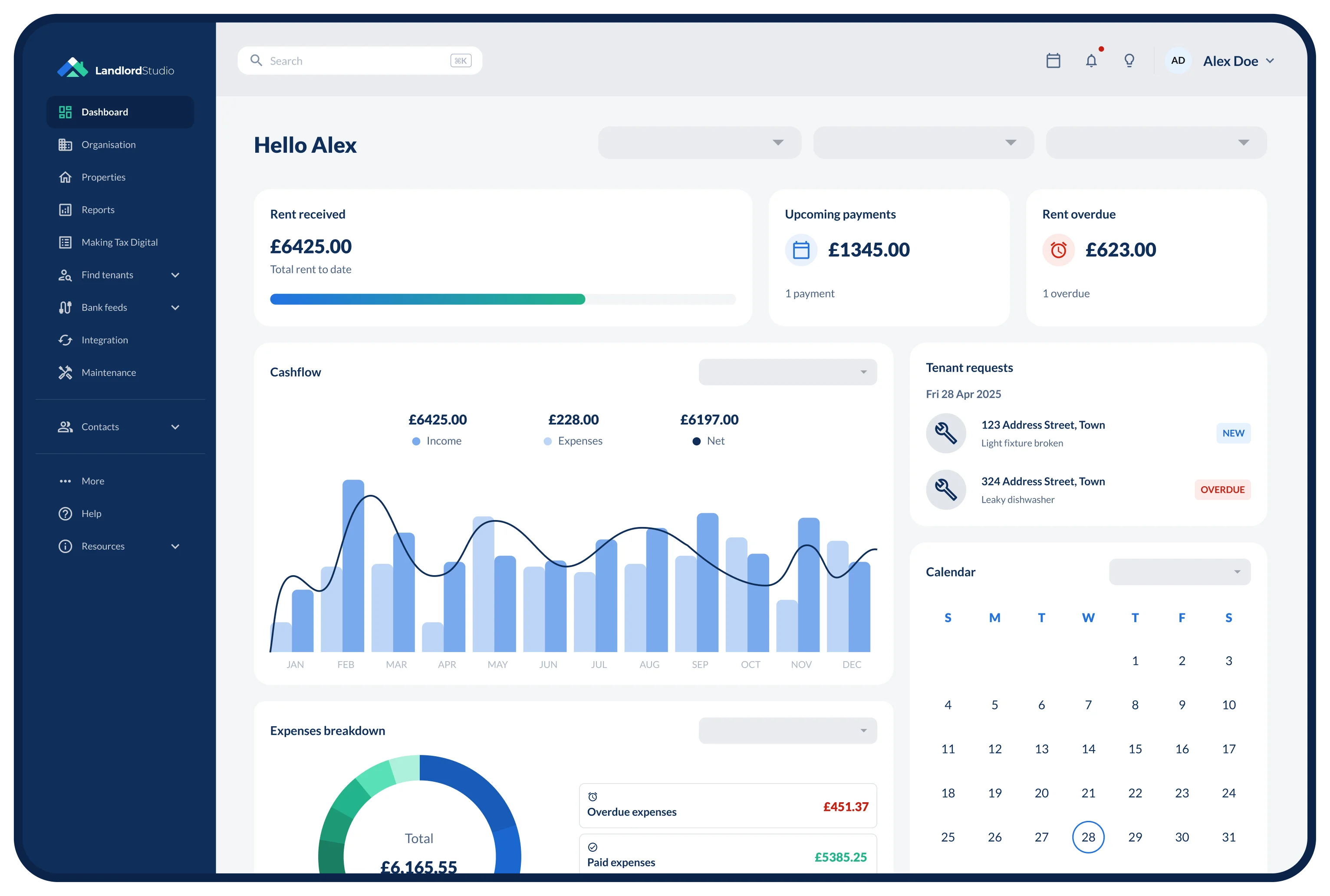
Mobile dashboard showing rent, payments, expenses, property listing, cashflow chart, and maintenance alert.Landlord Studio dashboard showing rent, payments, cashflow chart, tenant requests, expenses, and calendar.

Sign up and get
PRO free for 14 days

Once your PRO trial is over you can continue using Landlord Studio GO completely free.

Thank you! Check your email for confirmation.
Oops! Something went wrong while submitting the form.

By continuing you agree to our Terms & Conditions.

Already have an account? Log in

Looking for Nexus? Log in here →

Landlord Studio Logo with Text
Features
Polygon pointing up
Chart line icon
Rental accounting
Receipt icon
Making Tax Digital
Credit card icon pink
HMRC tax reporting
Hammer icon
Property maintenance
User Icon Circle Pink with Tick
Tenancy management
Red icon warning with exclamation mark
Landlord compliance
E-signature icon
Electronic signatures
Landlord Studio UK dashboard greeting 'Hello Logan' with rent received, upcoming payments, a cashflow chart and top expense categories
See it in action
Watch the Landlord Studio demo
PricingNexus for LandlordsNexus for AgentsAccountants
Education
Polygon pointing up
Open book icon
Blog
Shield icon
Academy
Graph icon
Resources
Dollar icon
Webinars
Maths icons
Calculators
Bookmark icon
Definitions
Question mark icon
Renters' Rights
Laptop on desk displaying UK government page for filing Self Assessment tax return online.
Featured resource
Making Tax Digital (MTD)
for UK Landlords: The Complete
Hub
Log inGet StartedGet started
We surveyed 500 UK Landlords and Letting agents about Making Tax Digital. Read the report →
Back to All Definitions

Contents

Example H2
Example H3
Example H4
Example H5

About Landlord Studio

Hand holding phone with Landlord Studio dashboard displayed from mobile app.

Landlord Studio is an easy to use MTD compliant property management and accounting software designed for UK landlords.

Manage tenancies, track income and expenses, run reports, and more - all for free.

Learn more

Freehold vs Leasehold

High Level Summary

A freehold property means that the owner has outright ownership of both the property and the land it is built upon. In contrast, leasehold ownership refers to a situation where the buyer owns the property for a set period, but not the land it stands on. Instead, they lease the property from the freeholder, who owns the land.

‍

Freehold vs. Leasehold in Property Ownership

Freehold and leasehold are two primary forms of property ownership in the UK, each with distinct legal implications and responsibilities for the owner.

What is Freehold?

A freehold property means that the owner has outright ownership of both the property and the land it is built upon. This type of ownership is most commonly associated with houses, where the buyer purchases both the building and the land beneath it. When an individual owns a freehold, they have full control over the property and are responsible for its maintenance, both inside and out.

One of the key advantages of freehold ownership is the absence of ground rent or service charges, which are common in leasehold arrangements. Freehold owners are also not subject to the restrictions often imposed by leaseholders, such as limitations on property alterations or requirements for obtaining permission from the freeholder for significant changes.

What is Leasehold?

In contrast, leasehold ownership refers to a situation where the buyer owns the property but not the land it stands on. Instead, they lease the property from the freeholder, who owns the land. Leasehold arrangements are typical for flats or apartments, but some houses may also be sold as leasehold properties.

A leaseholder essentially rents the property from the freeholder for a specified period, which can range from 99 to 999 years, depending on the terms of the lease. The leaseholder has the right to live in and use the property during this period but must comply with the conditions set out in the lease agreement. They are also typically required to pay ground rent and service charges to the freeholder.

The freeholder, sometimes referred to as the landlord in this arrangement, retains ownership of the land and is responsible for maintaining communal areas, such as stairways, gardens, and the building’s exterior. However, the leaseholder may be responsible for maintaining the interior of their flat.

Freehold vs. Leasehold: Key Differences

  • Ownership: In a freehold, the owner holds both the property and the land indefinitely, while in a leasehold, the property is leased from the freeholder for a specified term.
  • Responsibilities: Freeholders are fully responsible for maintaining their property, while leaseholders may only be responsible for internal upkeep, with external and communal areas managed by the freeholder.
  • Costs: Leaseholders are often required to pay additional fees, including ground rent and service charges, while freeholders have no such obligations.

Purchasing the Freehold

In some cases, leaseholders can purchase the freehold of their property, either individually or collectively with other leaseholders in a building. This process, known as collective enfranchisement, allows leaseholders to gain full ownership and control over their property, eliminating ongoing ground rent and service charges.

Freehold vs. Leasehold: Conclusion

Understanding the concepts of equity and freehold is essential for property investors in the UK. Equity represents an investor's stake in a property, offering opportunities for portfolio growth, while freehold provides complete ownership and control over both a property and its land. Both concepts play a significant role in shaping the financial and legal aspects of property investment strategies.

Related Articles

  • Accidental Landlord? Here’s What You Need To Know
  • Property Management Fees UK: How Much Should Landlords Pay?
  • Navigating Buy-to-Let Mortgages: Deposits and Rates Compared
  • How Much Do Letting Agents Charge? UK Fees Explained (2026)
  • Renting Out A Property For The First Time: A Landlord Guide

Get started with
Landlord Studio now.

Get started for free

Contact Us

help@landlordstudio.com(270) 671 9733

FEATURES

Rental accountingHMRC reportingMaking Tax DigitalFind tenantsProperty maintenanceElectronic signatures

RESOURCES

BlogHelp centerResourcesWebinarsGuidesCalculators

About Us

Our storyContact usCareersFacebook groupFeature request

COMPARE

Arthur Online
Hammock
Landlord Vision
QuickBooks
Sage

Partners

AgentsAccountants
Landlord Studio Logo without Text
Copyright 2026 Landlord Studio. All rights reserved.
Privacy PolicyTerms & ConditionsCookies
Facebook IconInstagram logoTwitter IconLinkedIn IconYouTube Icon
Propertymark Logo Industry Supplier badgeXero LogoApp store download badgeGoogle Play badge
Landlord Studio UK Limited (trading as “Landlord Studio”) is an agent of Plaid Financial Ltd., an authorised payment institution regulated by the Financial Conduct Authority under the Payment Services Regulations 2017 (Firm Reference Number: 804718). Plaid provides you with regulated account information services through Landlord Studio as its agent.