
Welcome! Where would you like to log in?

Sign up and get
PRO free for 14 days
Once your PRO trial is over you can continue using Landlord Studio GO completely free.
By continuing you agree to our Terms & Conditions.

Accidental Landlord? Here’s What You Need To Know
What is an accidental landlord? Learn the legal and tax essentials for UK landlords and avoid costly compliance and financial mistakes.
.jpg)
Written by
Ben Luxon
PUBLISHED ON
December 11, 2025
UPDATED ON
September 5, 2026
READ TIME
0 min


Read summarised version with:


Maybe you inherited a property, or you've decided to move in with your partner and rent out your old place. If so, you're not alone. You've just become an accidental landlord.
It's a surprisingly common situation. Research from the 2021 English Private Landlord Survey found that a massive 42% of landlords in England started this way, either by inheriting (8%) or by buying a place to live in that they later rented out (35%).
But here's the important bit: HMRC doesn't have an 'accidental' category. The moment you take that first month's rent, you are running a regulated business. And with major tax changes looming for 2026, the old 'winging it' approach is a recipe for expensive mistakes.
With that said, here are the biggest fumbles every accidental landlord must try to avoid.
What Is an Accidental Landlord?
An accidental landlord is someone who rents out a property without originally intending to become a landlord. Unlike professional property investors who deliberately purchase buy-to-let properties, accidental landlords enter the rental market due to unexpected circumstances rather than careful planning.
Common scenarios include:
- Unable to sell in a slow housing market
- Job relocation requiring a move (UK or abroad)
- Inheriting property from family members
- Moving in with a partner and having a "spare" property
- Divorce or separation
- Financial circumstances making sale unfeasible
The key distinction from professional landlords is intent and preparation. Accidental landlords typically lack industry knowledge and experience managing tenancies. However, with proper guidance and understanding of legal obligations, you can successfully navigate this unexpected transition.
4 Major Mistakes to Avoid as An Accidental Landlord
Mistake 1: Ignoring the Mountain of Compliance
The single biggest error is thinking you can just hand over the keys and collect the rent. As a landlord, you are legally responsible for your tenant's safety. Before your tenant even moves in, you must have:
- A valid Gas Safety Certificate (CP12), renewed annually.
- An EICR (Electrical Installation Condition Report), valid for five years.
- An EPC (Energy Performance Certificate) rating of 'E' or above.
- Proof the tenant's deposit is protected in a government-approved scheme.
- Confirmation of the tenant's Right to Rent in the UK.
These are not optional extras. They are the absolute minimum. Failing to provide these puts you at risk of being served fines, and it can even make it impossible to regain possession of your property using a Section 21 notice if things go wrong.
You also need to ensure smoke alarms and carbon monoxide detectors are fitted and working. This is your duty of care as a landlord.
📢 MEES Update — January 23, 2026: The Government has announced critical changes to energy efficiency requirements. While the current minimum is EPC band E, all rented homes must achieve band C by 2030. Key changes include: the interim 2028 deadline for new tenancies has been axed, the spending cap has been reduced from £15,000 to £10,000 per property, improvements from October 2025 count toward this cap, and low-interest loan funding will be available. If you're becoming an accidental landlord, factor these upcoming costs into your planning.
Mistake 2: Forgetting to Tell Your Lender (and Insurer)
Here's a trap that can invalidate your most important contracts. Your standard residential mortgage is for you to live in the property, not rent it out.
Renting it without informing your lender is likely a breach of your mortgage terms.
You'll need to contact them to get "Consent to Let," which they may grant for a fee, or you'll have to switch to a formal Buy-to-Let mortgage, which will have different rates and criteria.
The same goes for your insurance. Standard home insurance is void the moment a tenant moves in. You must have a specific landlord insurance policy.
Mistake 3: Getting the Tax Maths Terribly Wrong
This is where things get really confusing for new landlords. The financial side is a labyrinth, especially when you're still earning a separate salary.
It's a common story. One new accidental landlord on a Reddit forum perfectly summed up the feeling:
"I'm relatively comfortable with the landlord side of things on a practical level... but the finances elude me!"
It's no wonder. The financial reality is a minefield of confusing rules. As another user in the same thread warned:
"Sorry to add on the tax part - it's total income so anything over 40% threshold will be 40% You can save 20% on your mortgage interest only - not total payment (which is often a lot less than you think)"
That comment highlights two bombshells: your rental profit stacks on top of your PAYE salary (pushing many into the 40% tax bracket), and the complex Section 24 rules mean you only get a 20% tax credit on mortgage interest.
This can lead to a situation where you are paying tax on a "profit" you never actually see in your bank account.
You must register for Self Assessment with HMRC and file a tax return, but most importantly, you need to keep on top of your tax position throughout the year.
Mistake 4: The "Shoebox and Spreadsheet" Mindset
The final mistake is thinking you can manage all this with a simple spreadsheet. It might seem fine for one property, but it's prone to errors, and you'll almost certainly miss allowable expenses.
Are you tracking your mileage for every trip to the property? The business portion of your phone bill? The cost of landlord-specific software? These are all deductible, and they add up.
This old-school approach is also terrible preparation for what's coming.
From April 2026, Making Tax Digital (MTD) begins its rollout for landlords. This new HMRC system will require those earning over the threshold to keep digital records and submit tax updates quarterly.
This is why getting your financial system right from day one is the single best thing you can do to prepare yourself.
You need a simple, digital way to track every penny of income and every single allowable expense, from agent fees to that new boiler, right as it happens.
.jpeg)
Legal Requirements Every Accidental Landlord Must Meet
Stepping into the role of landlord comes with important legal duties. Missing any of these can lead to fines, legal action, or even criminal charges. Below is a clear, scannable overview of what you must do.
Right to Rent Checks
Before anyone moves in, you are legally required to confirm they have the right to live in the UK.
Key points:
- Check original ID and immigration documents for every adult (18+).
- Keep dated copies for your records.
- Penalties for renting to someone without the legal right to rent can include unlimited fines or imprisonment.
Related: Rent to Rent UK 2025: A Complete Guide for Property Investors
Tenancy Agreements
Most rentals use an Assured Shorthold Tenancy (AST). Your agreement should set out:
- Rent amount and payment schedule
- Deposit details
- Tenancy length
- Notice periods
- Responsibilities for both landlord and tenant
A clear AST protects both sides and helps prevent disputes later.
Tenancy Deposit Protection
When you take a deposit, the clock starts ticking.
Within 30 days, you must:
- Protect the deposit with one of the three government-approved schemes:
- Give tenants the legally required prescribed information about where it's protected.
Failing to comply can lead to compensation of up to 3× the deposit. At the end of the tenancy, return the deposit within 10 days of agreeing on deductions.
Licensing Requirements
Some properties and certain areas require landlords to hold a licence.
You'll need one if:
- Your property is an HMO with 5+ tenants from 2+ households sharing facilities (mandatory licence).
- Your council operates selective or additional licensing schemes.
Always check with your local council before advertising your property.
Safety Certificates & Ongoing Compliance
These requirements protect tenants and reduce your legal liability.
Gas Safety
- Annual inspection by a Gas Safe registered engineer.
- Provide the Gas Safety Certificate to tenants at move-in and within 28 days of each yearly check.
- Breaches can result in fines up to £6,000 and potential imprisonment.
Electrical Safety (EICR)
Every 5 years, obtain an Electrical Installation Condition Report and ensure all electrical installations remain safe.
Keep records of inspections and repairs.
Fire Safety
- Smoke alarms on every storey.
- Carbon monoxide alarm in rooms with a solid fuel appliance.
- Test alarms at the start of each tenancy.
- All supplied furniture must meet fire safety regulations.
Energy Performance Certificate (EPC)
- Required before marketing your property.
- Minimum rating: E (F or G requires improvements).
- EPCs last 10 years.
- The minimum standard will rise to C by 2030 (the previous interim 2028 deadline has been removed).
Related: Landlord Responsibilities and Legal Obligations
Don't Let Being An Accidental Landlord Make You a Liability
Being an accidental landlord doesn't mean you have to be an unprepared one. The key is to switch your mindset from 'homeowner' to 'business owner'. And fast. The 2026 MTD deadline is the flashing light on the dashboard, warning you to get your engine in order.
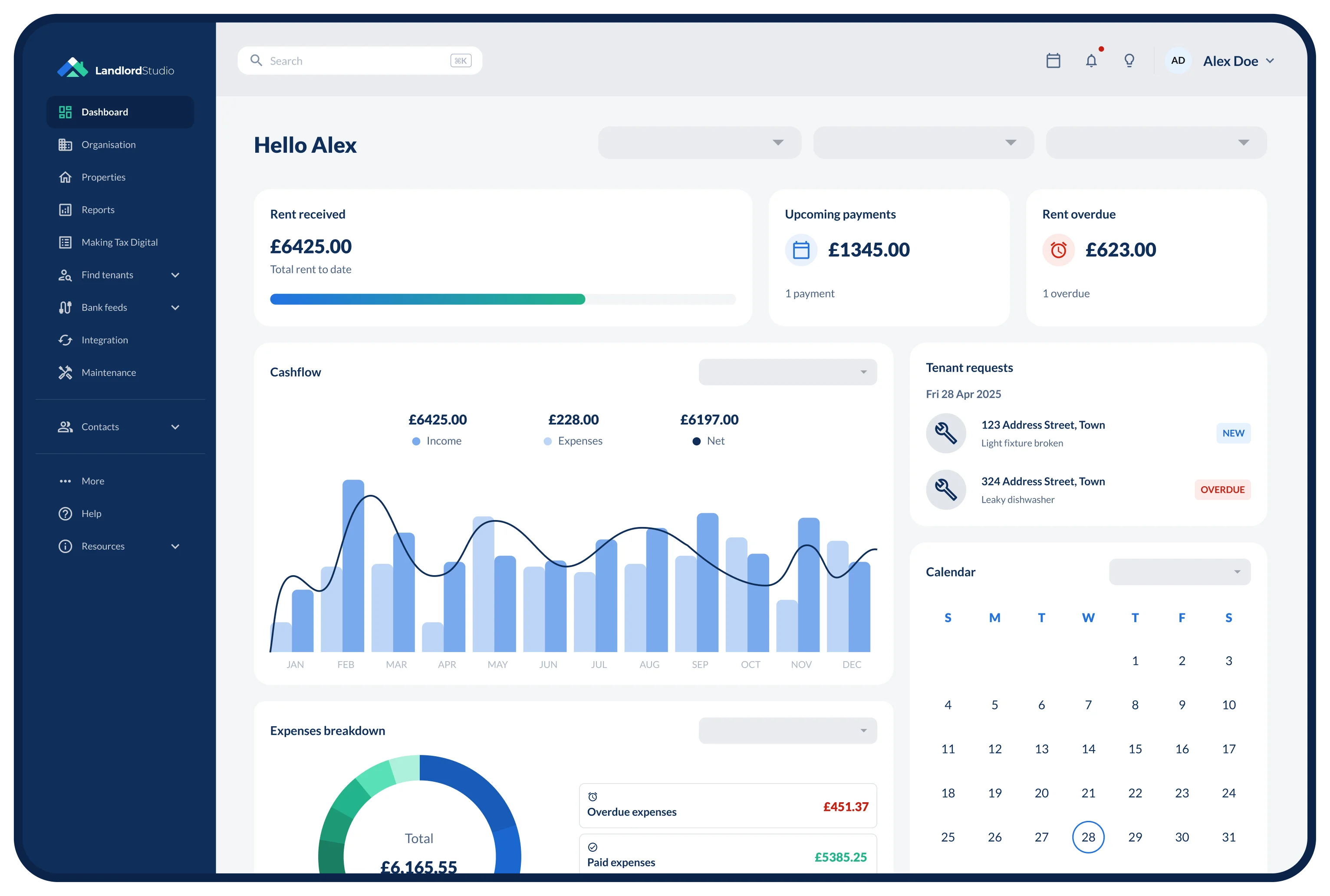
This is exactly why we built Landlord Studio. It's designed to take the chaos and confusion of property finances and make them simple. You can track income, log expenses on the go with our receipt scanner, stay on top of compliance deadlines, and get fully MTD-ready without having to be an accountant.
Don't let your accidental investment become an expensive mistake.
Take control of your new role. Create your free Landlord Studio account today and run your property business the right way, from day one.
About Landlord Studio
.webp)
Landlord Studio is an easy to use MTD compliant property management and accounting software designed for UK landlords.
Track income and expenses, run reports,, find and prescreen tenants, manage property maintenance, and more.
.webp)