



.webp)
Read summarised version with:

ChatGPT

Gemini

Claude

Grok

Add as preferred on Google
If you’re considering renting out a property for the first time, you’re stepping into one of the most reliable ways to build long-term wealth. However, success as a landlord isn’t just about finding tenants—it’s about navigating legal responsibilities and compliance, managing finances, and making sure your property remains profitable and well-maintained.
As a first-time landlord, navigating tenant selection, rental accounting, and property maintenance can feel overwhelming. However, with the right planning, tools, and knowledge, you can ensure a smooth and profitable rental experience.
This landlord guide will walk you through everything you need to know about renting out a property for the first time, from legal compliance to tenant management.
Understanding Your Legal Responsibilities as a First-Time Landlord
Before you can rent out your property, you must comply with UK landlord laws and regulations. Failing to meet these requirements can result in fines or legal action.
Here are the key legal obligations you need to be aware of:
Safety and Compliance Checks
- Gas Safety Certificate (CP12): A gas safety check must be conducted annually by a Gas Safe-registered engineer.
- Electrical Safety Standards (EICR): A qualified electrician must inspect wiring and electrical systems every five years.
- Smoke and Carbon Monoxide Alarms: Smoke alarms must be installed on every floor, and carbon monoxide detectors are required in rooms with solid fuel appliances.
- Energy Performance Certificate (EPC): Your property must have a minimum EPC rating of 'E', however, there are currently proposals suggesting this will be raised to 'C' as soon as 2028.
Right to Rent Checks
Landlords must verify that all tenants have the legal right to rent in the UK by checking passports or residency permits.
Tenancy Agreements & Deposits
- Use an Assured Shorthold Tenancy (AST) agreement to outline rental terms.
- Protect your tenant’s deposit in a government-backed deposit protection scheme (DPS, MyDeposits, or TDS) within 30 days.
By ensuring compliance with these legal requirements, you can protect yourself from potential disputes and penalties.

How Do I Rent Out My Home? A Step-by-Step Guide
If you’re wondering, "How do I rent out my home?", there are a few steps you will need to follow:
Step 1: Prepare Your Property for Tenants
Your property should be clean, well-maintained, and meet legal safety standards. Consider whether to rent it furnished or unfurnished, and make necessary repairs before listing it.
Step 2: Set a Competitive Rent Price
Research similar properties in your area to determine a competitive rental price. Consider:
- Local rental market trends
- The condition and size of your property
- Whether bills will be included in the rent
Step 3: Advertise Your Property & Find Tenants
Use reputable property listing sites such as Rightmove, Zoopla, and OpenRent to attract tenants. High-quality photos and a well-written description can help your property stand out.
Step 4: Tenant Referencing Checks
Choosing the right tenant is arguably the most important decision you'll make as a first-time landlord. A bad tenant can lead to late payments, property damage, or even legal disputes. To avoid these risks landlords should run a tenant referencing on prospective tenants to:
- Check credit history to review of late payments or outstanding debts.
- Verify employment references to ensure they have a steady income that covers the rent.
- Request previous landlord references and ask specific questions about punctuality, care for the property, and any past disputes.
Step 5: Create a Tenancy Agreement & Secure the Deposit
Once you find the right tenant, provide a legally binding Assured Shorthold Tenancy (AST) agreement and register their deposit in a protection scheme.
Step 6: Conduct an Inventory & Move-In Inspection
Document the property's condition before the tenant moves in with photographic evidence to avoid disputes when they leave.
Managing Your Rental Property Efficiently
Once your tenants have moved in, effective property management is the key to keeping operations smooth and profitable.
Rent Collection & Financial Management
Make sure your tenants know how you want them to pay the rent, how much the rent is, and when the rent is due. Some landlords prefer simple direct bank transfers, while others use rent collection platforms.
Property Maintenance & Repairs
Regular maintenance keeps your rental in good condition and prevents costly repairs. As a landlord, you are responsible for fixing structural issues, heating, plumbing, and electrical faults.
Staying Compliant with Tax & Expenses
As a first-time landlord, keeping track of your rental income and allowable expenses is vital for tax efficiency. Making Tax Digital (MTD) for Income Tax started on 6 April 2026. Landlords with qualifying income over £50,000 keep digital records, no more spreadsheets, and submit quarterly updates and a final declaration. The threshold lowers to £30,000 from 6 April 2027 and to £20,000 from 6 April 2028.
Using Landlord Studio to Simplify Property Management

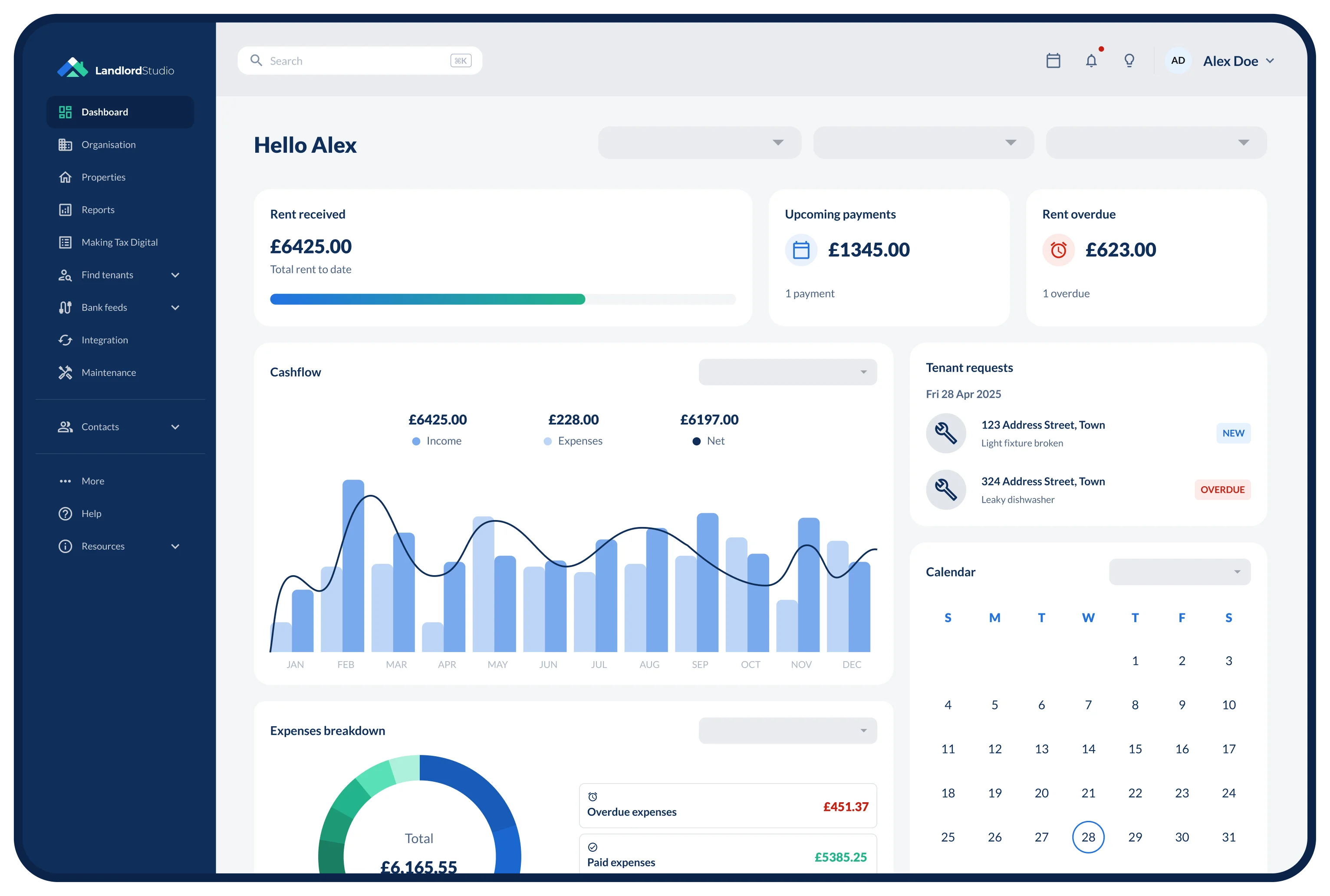
Managing rent payments, expenses, and tenant details manually can be time-consuming. Landlord Studio offers a comprehensive property management solution to help you:
- Automate income and expense tracking
- Generate financial reports and streamline taxes
- Store documents like tenancy agreements, receipts, EPCs
- Monitor property performance with financial insights
By integrating smart landlord software like Landlord Studio into your property management workflow, you can stay organised, reduce paperwork, and ensure you meet all your landlord compliance requirements with minimal effort.
Avoiding Common Mistakes as a First-Time Landlord
Even experienced landlords make mistakes, but first-time landlords are particularly vulnerable to missteps that can lead to financial losses or legal issues. Watch out for these common errors:
Skipping Tenant Referencing
A tenant may seem responsible, but failing to check their background could lead to late payments or even eviction.
Forgetting To Protect The Deposit
If you don’t register the deposit in an approved scheme, you could be fined up to three times the deposit amount.
Ignoring Maintenance Issues
Small repairs can quickly turn into costly damage if neglected—always address issues promptly.
Setting The Rent Too High Or Too Low
Pricing too high leads to long vacancy periods, while pricing too low means missing out on potential income.
Not Keeping Proper Financial Records
Poor record-keeping can cause problems when submitting tax returns or claiming deductions. Use landlord software like Landlord Studio to track income and expenses efficiently.
Renewing Tenancies & Handling End-of-Tenancy Procedures
At the end of a tenancy, you’ll need to decide whether to renew the agreement or find new tenants.
Renewing the Tenancy
If your tenants are reliable and wish to stay, you can:
- Renew the tenancy for another fixed term
- Allow it to become a rolling periodic tenancy
- Negotiate a rent increase (if justified by market trends)
Handling Tenant Departures
If tenants are moving out:
- Conduct a final inspection using the original inventory
- Deduct any justified repairs from the deposit
- Return the deposit balance within 10 days
Proper end-of-tenancy management ensures a smooth transition for both you and the tenants.
Final Thoughts: Renting Out a Property for the First Time
Managing a rental property—especially as a first-time landlord—involves juggling legal requirements, tenant communications, and financial tracking. With so much to manage, having the right tools can make all the difference.
Landlord Studio simplifies the process by automating rent follow-ups, streamlining income and tracking expenses, and generating tax reports—all from one easy-to-use platform. Instead of chasing payments or struggling with paperwork, you can focus on maximizing your investment.
Becoming a landlord and managing your first rental property doesn’t have to be stressful. With the right approach and smart tools, you can enjoy a successful and profitable experience as a first-time landlord.