



Rental Yield Calculator
Work out the gross and net yield on a rental property, factor in void periods and running costs, and see what your investment really returns.

How to manually calculate your rental yield
Gross yield is annual rent divided by the property value, times 100. Net yield does the same after running costs come off the rent - and the gap between the two is usually wider than landlords expect.
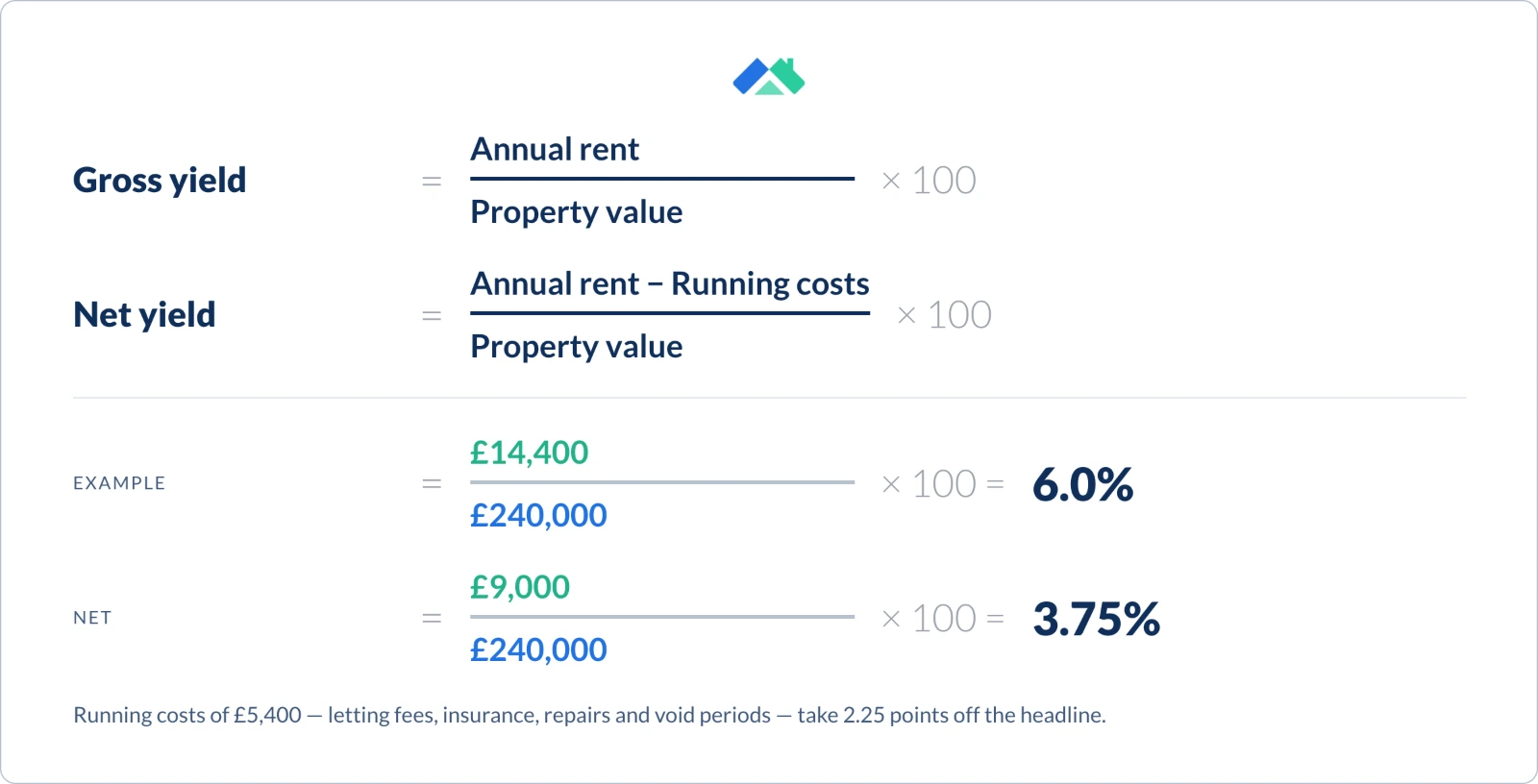
Work out your annual rent
Multiply the monthly rent by 12.
Divide by the property value and multiply by 100
That gives your gross yield - the headline figure most listings quote.
Take off your running costs and repeat
Letting fees, insurance, repairs and void periods all come off the rent before you divide, which gives the net yield you actually earn.
Worked example
A property worth £200,000 earns £1,100 per month in rent, with £3,200 a year in running costs.
Gross yield = (£13,200 ÷ £200,000) × 100 = 6.6%
Net yield = (£10,000 ÷ £200,000) × 100 = 5%

Other calculators you might be interested in

Open Market Rent Calculator
Estimate what your property could rent for and build a defensible Section 13 evidence pack.
Mileage Tracking Calculator
Log property journeys, apply the HMRC mileage rate, and download an expense pack for Self Assessment.
Rental Income Tax Calculator
Work out the tax on your rental profit, including Section 24 relief and the property allowance.

Manage up to 3 rental properties for free!
Sign up and get PRO free for 14 days. When the trial ends, keep tracking rent, expenses and reports for up to 3 properties, free forever with Landlord Studio GO.
By continuing you agree to our Terms & Conditions. · Already have an account? Log in
Calculating rental yield

Estimating a property's performance
Before you buy, work out the yield to judge whether the deal stacks up. You need the purchase price, the expected rent, an estimate of running costs and a realistic vacancy rate.

Understanding an existing property's performance
Keep an eye on yield across a property you already own so you know your investment is still returning what it should - and can act if costs have crept up.

Why should you use our rental yield calculator?
- Gross and net yield side by side, so you can see what costs really do
- Factors in void periods rather than assuming 100% occupancy
- Adds cash-on-cash return if you're buying with a buy-to-let mortgage
- Shows how long it takes to pay back the cash you put in
- Free, fast and no sign-up
