
Welcome! Where would you like to log in?

Sign up and get
PRO free for 14 days
Once your PRO trial is over you can continue using Landlord Studio GO completely free.
By continuing you agree to our Terms & Conditions.

How to Become a Landlord in the UK: A Step-by-Step Guide
Learn how to become a landlord in the UK, key legal requirements and responsibilities, and how Landlord Studio simplifies property management and compliance.

Written by
Ben Luxon
PUBLISHED ON
February 13, 2025
UPDATED ON
September 11, 2026
READ TIME
0 min


Read summarised version with:


Becoming a landlord in the UK can be a highly rewarding endeavor, though it’s important to understand what you’re getting yourself into first. Whether you're purchasing a new buy-to-let property or you’re looking at letting a property you already own, becoming a landlord in the UK comes with legal, financial, and tax obligations that need to be understood first.
In this guide, we’ll take a closer look at each step involved with becoming a landlord, from what constitutes a buy-to-let property to finding and managing tenants to managing tax and accounting. By the end, you’ll have a strong understanding of the key steps involved with becoming a landlord, and you will be more informed about whether it’s the right fit for you.
What to Consider Before Becoming a Landlord (UK)
First things first, before even looking at properties to buy, spend some time determining whether you really want to become a landlord. Consider the duties and commitments you will need to undertake on a regular basis. Make sure you understand the full scope of your responsibilities, including:
- Financial Commitments: Owning a rental property involves costs such as deposits, mortgage payments, maintenance, insurance, and periods where the property may be vacant.
- Legal Responsibilities: Landlords must comply with tenant rights, safety regulations, and tax laws to avoid penalties.
- Property Management: Decide whether you might want to manage a property yourself or hire the services of a letting agent.
Is A License Required To Rent Out a Property in the UK?
Depending on the property type and local council regulations a license may indeed be required to rent out your property. The primary types of property that require a license are:
- License Required for HMO (House in Multiple Occupancy)
- Mandatory HMO License: It is required if you rent your home to five or more people from different households who share facilities such as kitchens or bathrooms.
- Additional Licensing: Some councils require an additional license for landlords of smaller HMOs (e.g. a property with 3 or more unrelated tenants) to have an additional license.
- Selective Licensing: Applies to all rentals in specific areas, regardless of tenant numbers, often introduced to improve housing standards.
Not having the required license when letting an HMO carries potential fine often in the region of £10,000 - £40,000, restrictions on eviction rights, and possible rent repayment orders.
Make sure to check the licensing requirements with your local council.
Now, you’ve got your license and you’ve decided to go ahead, but you’re wondering, “how does buy-to-let work?” let’s break it down.
How Does Buy-to-Let Work?
A buy-to-let property is purchased with the intention of renting it out rather than living in it. To manage a buy-to-let effectively, there are a few stages involved:
Securing a Buy-to-Let Mortgage
Most landlords finance their investment with a buy-to-let mortgage, which differs from a residential mortgage in that:
- The deposit requirement is higher. Typically you’ll need a deposit of at least 25% of the property value.
- Lenders assess rental income rather than just personal income.
- Interest rates may be higher than residential mortgages.
Choosing the Right Property
Location is key when selecting a buy-to-let property. The location you choose should present investment opportunities with relatively low property prices and high rental yields.
A few indicators to look for include:
- High rental demand
- Good transport links
- Proximity to schools and employment hubs
Additionally, you should look at the historical appreciation of property in the area as well as the development plans that might impact the long-term value of the property.
Once you’ve secured financing and a suitable property, it’s time to prepare it for its new occupants - your tenants.
Preparing Your Property for Letting
Before letting a property, landlords need to make sure it adheres to a range of legal and safety requirements.
Legal and Safety Requirements
- Energy Performance Certificate (EPC): Your property must have a minimum EPC rating of E to be rented.
- Gas and Electrical Safety: You must obtain a Gas Safety Certificate (annually) and an Electrical Installation Condition Report (EICR) (every five years)
- Smoke and Carbon Monoxide Alarms: These must be installed and regularly tested.
- Deposit Protection: Any deposit taken from tenants must be secured in a government-approved deposit protection scheme within 30 days.
Related: Landlord Responsibilities and Legal Obligations: The Checklist
Once your property is ready, the next step is finding reliable tenants that are likely to pay the rent on time and look after your property.

Should I Use a Letting Agent or Self-Manage?
At this stage, you’ll need to decide whether to hire a letting agent or manage your rental property as a private landlord. This is a personal choice, and there is no right or wrong answer. It’s just important that you understand the facts so you can make an educated decision.
Here are some pros and cons:
Using a Letting Agent
Pros:
- Handles tenant sourcing, rent collection, and maintenance
- Ensures legal compliance
Cons:
- Charges fees (typically 10-15% of rent)
- Less control
Self-Managing
Pros:
- No letting fees
- Direct control over tenant relationships
Cons:
- More time-consuming
- You don’t have access to a professional’s industry expertise
Renting Out My House: Finding the Right Tenants
Some aspiring landlords get cold feet when they first start looking for tenants, and this thought suddenly hits them: ‘I’m renting out my house’. This is a valid concern, and it can feel very daunting to hand over the keys of a much loved property to people who are effectively strangers. That’s why it’s really important to secure reliable tenants. This will save you time, energy, money, and most importantly, your sanity.
When it comes to finding highly reliable tenants, you want to have a wide pool to pick from. The more tenants that apply for a viewing, the more choice you have.
So how can you make sure your property gets plenty of interest?
Marketing Your Property
- List your property on Rightmove, Zoopla, and local letting agents.
- Take high-quality photos and write a compelling property description.
- Highlight key features such as location, amenities, and transport links.
Related: 5 Free Rental Listing Sites Every Landlord Needs to Know About
Tenant Screening and Referencing
- CHeck the tenant has the ‘Right to Rent’ in the UK.
- Conduct credit checks, employment verification, and ask for landlord references.
- Ensure tenants earn at least 2.5 times the annual rent.
Related: How to Select The Best Available Tenant: Tenant Referencing
Setting Up a Tenancy Agreement
- Use an Assured Shorthold Tenancy (AST) agreement outlining rent terms and tenant responsibilities.
- Ensure the tenant’s deposit is placed in a Deposit Protection Scheme (DPS).
Once you have found suitable tenants and the administrative side of things have been sorted, your tenants will be ready to move in. At this stage, it’s time to make sure you are fulfilling your own legal responsibilities as a landlord.
Managing a Tenancy and Legal Responsibilities
Rent Collection and Financial Management
- Use a dedicated bank account for rental payments.
- Update your rental income and expenses monthly
- Run regular reports and make sure finances are accurate for tax time.
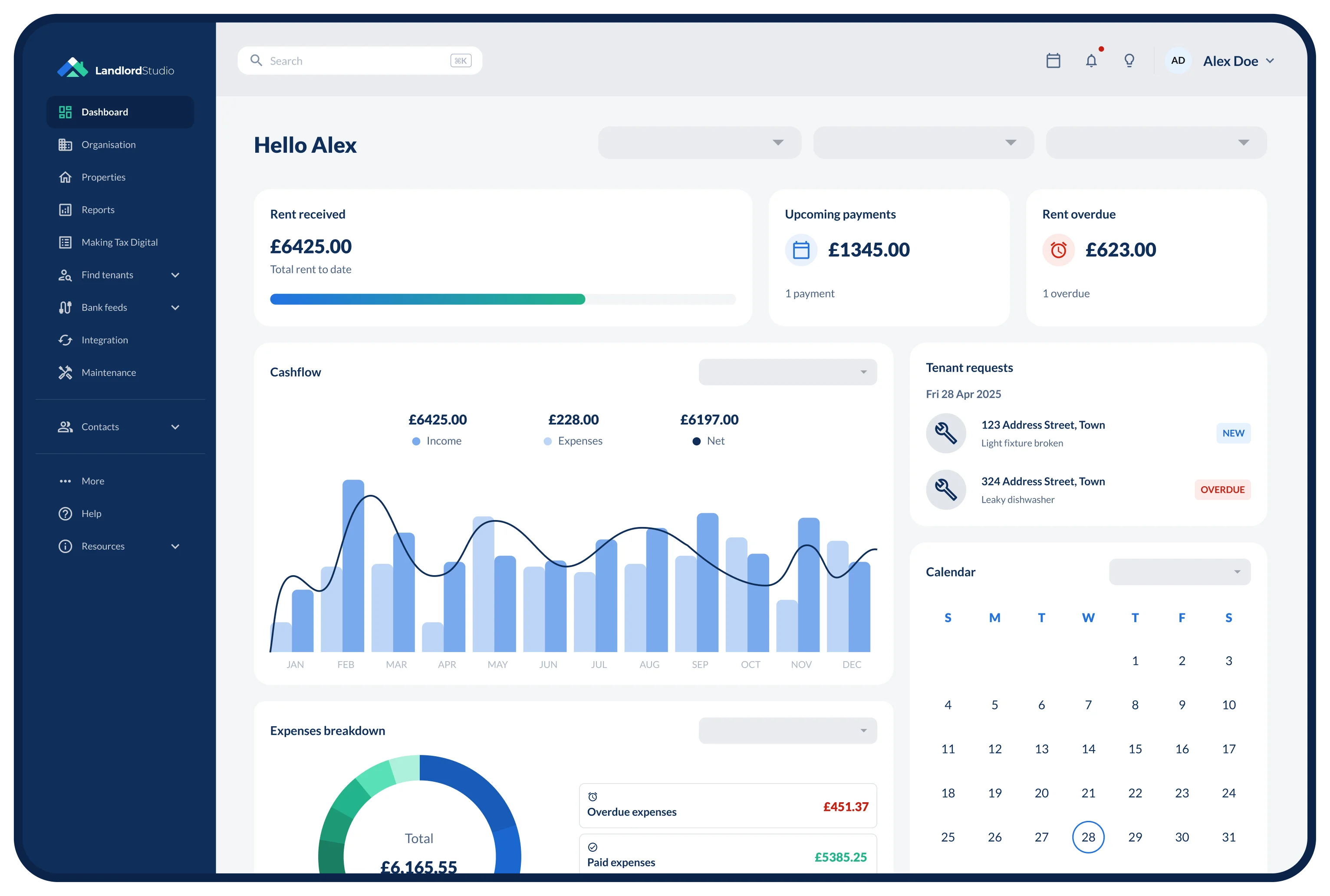
Consider landlord software like Landlord Studio to streamline your rental property accounting and property management.
Property Inspections and Maintenance
- Conduct inspections every 3-6 months to ensure the property is well-maintained.
- Address maintenance requests promptly to avoid disputes.
Related: Managing Property Maintenance For Buy to Lets: What Landlords Need To Know
Complying with UK Landlord Laws
- Right to Rent Checks: Verify tenants’ legal residency status.
- HMO Licensing: If renting to multiple unrelated tenants, an HMO (House in Multiple Occupation) license may be required.
- Evictions: If a tenant fails to pay rent, landlords must follow legal eviction procedures, using Section 8 or Section 21 notices.
What Taxes Do Landlords Pay?
As a landlord, you’ll be responsible for several types of taxes on your rental income and property:
Income Tax
Paid on your rental profits (income minus allowable expenses). Tax rates are based on your overall income:
| Band | Taxable Income | Tax Rate |
|---|---|---|
| Personal Allowance | Up to £12,570 | 0% |
| Basic Rate | £12,571 to £50,270 | 20% |
| Higher Rate | £50,271 to £125,140 | 40% |
| Additional Rate | Over £125,140 | 45% |
Stamp Duty Land Tax (SDLT)
If you purchase a buy-to-let property, you’ll pay an additional 5% surcharge on top of the standard SDLT rates.
| PURCHASE PRICE OF PROPERTY | STAMP DUTY RATE | STAMP DUTY RATE FOR ADDITIONAL PROPERTIES |
|---|---|---|
| Up to £250,000 | 0% | 5% |
| £250,001 to £925,000 | 5% | 10% |
| £925,001 to £1.5 million | 10% | 15% |
| Over £1.5 million | 12% | 17% |
Use Our Free Free Stamp Duty Calculator
Capital Gains Tax (CGT)
Capital gains tax on buy-to-let properties are payable when you sell a rental property for a profit. Rates are 18% for basic-rate taxpayers and 24% for higher-rate taxpayers.
National Insurance Contributions (NICs)
If property letting is your main business, you might also need to pay Class 2 NICs.
For detailed guidance, visit HMRC’s property income manual.
How Can I Minimise Void Periods in My Rental Property?
Void periods (times when your property is vacant) can have a big impact on your rental income. Sometimes, no matter how hard you try, void periods can’t be avoided, but there are some things you can do to reduce their frequency:
- Keep the Property Well-Maintained: Properties in good condition attract tenants faster.
- Price Competitively: Research local rental rates to ensure your property is priced appropriately.
- Advertise Effectively: Use online platforms like Rightmove and Zoopla and highlight key features.
- Consider Long-Term Tenancies: Offering longer tenancy agreements can reduce turnover.
- Build Good Relationships: Satisfied tenants are more likely to renew their leases.
Pro Tip: Using property management software like Landlord Studio helps streamline tenant communication and lease management, reducing the likelihood of long vacancies.
What Happens If a Tenant Stops Paying Rent?
If a tenant stops paying rent, it’s important to act calmly but promptly while following legal procedures to protect your rights:
Step 1: Communication
- Contact the tenant as soon as possible to discuss the issue.
- Sometimes, missed payments are due to temporary financial difficulties that can be resolved with a payment plan.
Step 2: Serve a Formal Notice
- If the issue isn’t resolved, serve a Section 8 Notice citing rent arrears as grounds for eviction.
- Alternatively, a Section 21 Notice can be used if you want to regain possession without giving a specific reason (provided it’s within legal guidelines).
Step 3: Legal Action
- If the tenant doesn’t leave after the notice period, you’ll need to apply to the court for a possession order.
- If the tenant still refuses to vacate, request a warrant for eviction, allowing bailiffs to remove the tenant legally.
Important: Never attempt to evict a tenant yourself (e.g., changing locks or removing belongings), as this is illegal and can lead to fines or criminal charges.
Helpful Resource: For eviction guidelines, visit the National Residential Landlords Association (NRLA).
Final Thoughts on How to Become a Landlord (UK)
Becoming a landlord in the UK involves more than just purchasing a rental property—it requires a solid understanding of financial commitments, legal responsibilities, tenant management, and tax compliance. From securing a buy-to-let mortgage to ensuring your property meets safety regulations and effectively managing tenants, each step plays a crucial role in your long-term success.
That’s where Landlord Studio comes in.

Landlord Studio is designed to make property management easier, helping landlords stay compliant with automated reminders, document storage, tenant communications, and seamless property maintenance tracking. Most importantly, it offers the best property accounting software on the market, allowing you to effortlessly track income and expenses, generate reports, and stay on top of your finances.
That matters more now that Making Tax Digital (MTD) for Income Tax is live. Since 6 April 2026, landlords with qualifying income over £50,000 have had to keep digital records and file quarterly updates with HMRC using MTD-compatible software. HMRC lowers the threshold to £30,000 from 6 April 2027 and to £20,000 from 6 April 2028.
Choosing a system like Landlord Studio now keeps you compliant from the start, and ready for the lower thresholds as they arrive.
Adopting software on day one of being a landlord will help you stay compliant and form good habits, like keeping up-to-date books and organised documents. Create your free Landlord Studio account today.
About Landlord Studio
.webp)
Landlord Studio is an easy to use MTD compliant property management and accounting software designed for UK landlords.
Track income and expenses, run reports,, find and prescreen tenants, manage property maintenance, and more.
.webp)