
Welcome! Where would you like to log in?

Sign up and get
PRO free for 14 days
Once your PRO trial is over you can continue using Landlord Studio GO completely free.
By continuing you agree to our Terms & Conditions.

Rent in Advance Rules: Renters’ Rights Act
From 1 May 2026, England’s Renters’ Rights Act caps rent in advance at one month. Learn the new rules, what counts as initial rent, and how to stay compliant.

Written by
Matt Hardy
PUBLISHED ON
June 9, 2026
UPDATED ON
September 5, 2026
READ TIME
0 min


Read summarised version with:


Why this rule change matters
From 1 May 2026, landlords cannot require more than one month's rent upfront under the Renters' Rights Act. Over 626,000 private rented households paid rent in advance in 2024-25, and 1 in 5 renters used advance payments to secure a property. That practice is now closed for all new assured periodic tenancies.
Over 626,000 private rented households paid rent in advance in addition to a deposit in 2024-25, according to the English Housing Survey. The majority paid one month, but a significant number paid considerably more. This was not a niche practice confined to a handful of landlords.
1 in 5 renters used advance payments to secure a property, according to the State of the Lettings Industry Report 2025, often because they couldn't pass standard referencing by other means. The Renters' Rights Act 2025 (Sections 8 and 9) adds new provisions to the Tenant Fees Act 2019 that close this practice for all new assured periodic tenancies starting on or after 1 May 2026. The loophole is gone.
The rules in plain English
What is now banned
From 1 May 2026, landlords and letting agents cannot require, invite, or encourage any person - whether that's the tenant, a guarantor, or anyone acting on the tenant's behalf - to pay more than one month's rent before or at the start of a tenancy. Understanding the rent in advance rules UK landlords must follow is essential before entering into any new tenancy agreement from this date.
- No rent can be accepted before both parties have signed the tenancy agreement.
- Lump-sum upfront rent (for example, 3 or 6 months paid at signing) is prohibited.
- Anti-avoidance rules mean you cannot use a third party or indirect mechanism to achieve the same outcome.
- The rent period itself must not exceed one month: a clause requiring a tenant to pay two months at a time breaches the rule even if the total is spread across a longer tenancy.
What 'initial rent' means
The Act introduces the concept of 'initial rent': the first month's rent payment due at tenancy commencement. This can only be collected once both parties have signed the tenancy agreement - not before. Holding deposits (capped at one week's rent) and security deposits (capped at 5 or 6 weeks' rent depending on annual rent) are entirely separate and remain permitted.
The anti-avoidance rule
Landlords cannot invite, encourage, or benefit from a third party circumventing these rules. This matters particularly for letting agents who may have legacy referencing processes or onboarding scripts that nudge tenants toward upfront offers. Even if the landlord doesn't ask directly, facilitating that outcome is still a breach.
Before vs after: a quick comparison
| Scenario | Before 1 May 2026 | From 1 May 2026 |
|---|---|---|
| Upfront rent at tenancy start | Up to 6-12 months permitted | Maximum 1 month |
| Pre-signature rent payment | Technically possible | Prohibited |
| Holding deposit | 1 week max | Unchanged |
| Security deposit | 5 or 6 weeks max | Unchanged |
| Voluntary overpayment by tenant | Permitted | Not permitted (landlord cannot invite or encourage) |
Transitional treatment: rent already collected
If you collected 6 months' rent in advance before 1 May 2026, you are not in breach. Existing tenancies and payments made before the commencement date are excluded under Section 4B(2)(a) of the Housing Act 1988 (as inserted by Section 8 of the Act). Historic payments are not retrospectively unlawful.
Here's a worked example. A landlord takes 6 months' rent in February 2026, covering February through to July 2026. That payment was lawful at the time. When the next payment cycle falls due in August 2026, the tenancy is now governed by the new rules and only one month's rent can be required. The transition is not about refunding past payments. It's about ensuring every future payment cycle from 1 May 2026 onwards is compliant.
The practical action here is simple: diarise the date your current advance payment period expires. If that date falls after 1 May 2026, make sure your next payment request asks for one month only. For a broader look at whether landlords should accept rent payments in advance and the trade-offs involved, it is worth reviewing the considerations before the deadline arrives.
What this means for student landlords
Student landlords have historically relied on paying rent upfront more than almost any other sector. Students typically have no UK rental history, no income, and no credit file - so collecting 6 or 12 months upfront was the default risk management tool.
The Renters' Rights Act contains no exemption for student lets. The one-month cap applies equally, and with 1 in 5 renters having used advance payments to secure a property, students are disproportionately represented in that group. The removal of fixed-term tenancies under the Act compounds the issue: landlords can no longer guarantee a full academic year's rent in a single payment.
That's a real cash-flow shift, and it's worth being honest about that. But there are legitimate alternatives:
- Parental or guarantor agreements: a UK-based guarantor who passes affordability checks is the most direct substitute for upfront rent. Get the agreement in writing and reference the guarantor properly.
- Professional referencing: specialist services can assess affordability for students and applicants with limited credit history, including income projections and parental income checks.
- Rent guarantee insurance: some insurers now offer products that cover student tenancies. Availability and terms vary, so check current offerings with a specialist broker.
- Standing order or direct debit mandates: set these up at the start of the tenancy so monthly payments are automated from day one.
None of these are perfect substitutes for cash in hand, but they are workable. Landlords who build proper referencing and guarantor processes will be better placed than those who relied on upfront payments as a shortcut.
How accidental breaches happen
This section matters most for letting agents and landlords using templates that haven't been updated since the Act came into force.
- Legacy tenancy agreement templates: if your template includes a clause requiring 2 or 3 months' rent at signing, that clause may constitute a breach even if you don't enforce it. The clause itself is the problem.
- 'Voluntary' tenant offers: a tenant with a poor credit history proactively offers 6 months upfront to secure the property. You cannot accept it. A voluntary offer is not a defence - the prohibition sits with the landlord, not the tenant.
- Letting agent onboarding packs: any pack that includes a 'rent reserve' or 'advance payment' option as a standard product needs to be reviewed and updated.
- Guarantor payment structures: a guarantor asked to pre-pay rent on the tenant's behalf before the tenancy agreement is signed falls squarely within the anti-avoidance provisions.
The civil penalty risk is real. Local authorities can fine landlords and agents who breach the Tenant Fees Act as amended. Agents face the same exposure as landlords - there is no safe harbour for agents who claim they were just following the landlord's instructions.
What landlords can still do
The toolkit for managing higher-risk tenancies still exists. It just looks different now.
- Collect one month's initial rent at tenancy commencement, after both parties have signed.
- Take a security deposit of up to 5 weeks' rent (or 6 weeks if annual rent exceeds £50,000).
- Take a holding deposit of up to 1 week's rent.
- Require a guarantor and carry out full affordability referencing on the guarantor.
- Use professional tenant referencing services.
- Set up direct debit or standing order mandates for monthly rent.
- Consider rent guarantee insurance as a risk mitigation tool.
- Understand your rights when rent goes unpaid: a past-due rent notice is an important early step in following the correct process if a tenant falls behind.
Landlords who build robust referencing and guarantor processes will be in a stronger position than those who relied on upfront cash as a substitute for proper risk assessment. The change forces better practice, even if the short-term adjustment is uncomfortable.
It is also worth familiarising yourself with the rules around late rent fees and grace periods, since monthly payment cycles make it more important than ever to have a clear, legally compliant policy in place from the start of the tenancy.
Staying compliant: record-keeping and audit trails
If a local authority investigates a complaint, you need to demonstrate that rent was collected in compliance with the new rules. That means documentation.
Key records to keep:
- Signed tenancy agreement with the date of execution clearly recorded.
- Date and amount of initial rent collected.
- All subsequent rent payment records showing monthly amounts and dates.
- Any guarantor agreements and referencing reports.
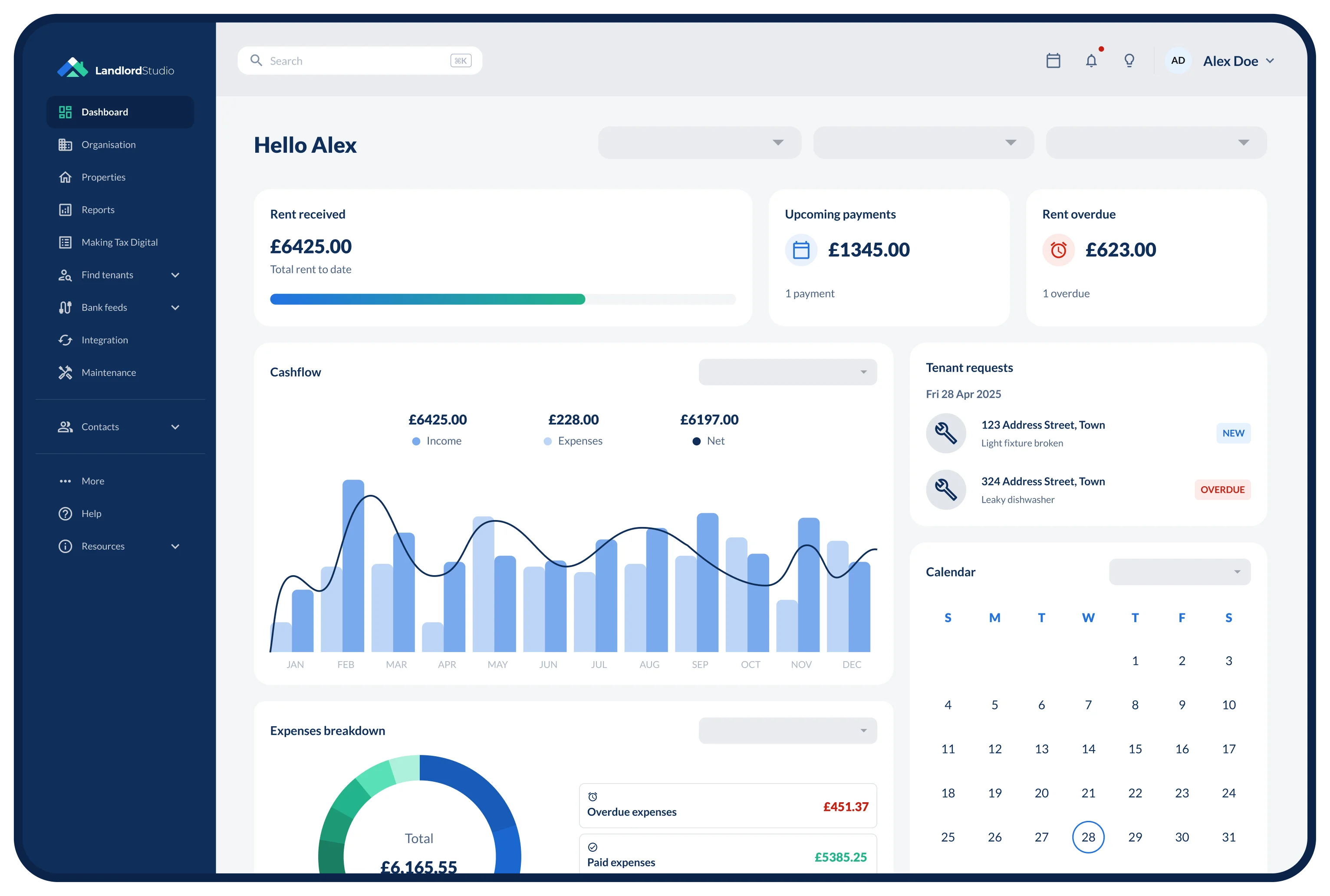
Landlord Studio is an all-in-one property management platform designed for self-managing landlords. Its rent tracking features let you log each payment against the correct tenancy period, creating a timestamped record of every transaction - exactly the kind of organised payment history a compliance audit would require. If you are reviewing your processes in light of the rent in advance ban, keeping clean, searchable rent records is one of the simplest things you can do to protect yourself.
Frequently asked questions
Can a tenant voluntarily pay more than one month's rent upfront?
No. The landlord cannot invite, encourage, or accept a voluntary overpayment. The prohibition sits with the landlord, not the tenant. A tenant offering more does not make it lawful for you to accept.
Do I need to refund rent already collected before 1 May 2026?
No. Existing tenancies and payments made before the commencement date are not affected retrospectively. You do not need to refund historic advance payments.
Does the rent in advance ban apply to student lets?
Yes. There is no exemption for student tenancies under the Renters' Rights Act. The one-month cap applies equally to all new assured periodic tenancies.
Can a guarantor pay rent in advance on behalf of the tenant?
No. The rules cover anyone acting on behalf of the tenant. A guarantor pre-paying rent to get around the cap falls within the anti-avoidance provisions.
When exactly can I collect the first month's rent?
Only after both parties have signed the tenancy agreement. Not before. Pre-signature rent payments are prohibited.
Does this affect the security deposit cap?
No. Security deposits (up to 5 or 6 weeks' rent) and holding deposits (up to 1 week's rent) are separate from rent and are not affected by the rent in advance rules. For guidance on other types of upfront charges, the rules around pet deposits, pet fees, and pet rent are worth reviewing separately.
What is the penalty for non-compliance?
Local authorities can issue civil penalties under the Tenant Fees Act as amended. Both landlords and letting agents can be held liable. This is not a minor administrative issue. The end of the eviction moratorium is a useful reminder that regulatory changes in the private rented sector can have significant practical consequences when landlords are unprepared.
How should I update my tenancy agreement?
Remove any clause that requires more than one month's rent at tenancy start. Review all onboarding documentation and agent instructions. If you are unsure whether a specific clause is compliant, seek legal advice before using the template.
Conclusion
The rent in advance ban is in force from 1 May 2026 for all new tenancies. One month's rent only at signing, collected after both parties have signed the agreement. No voluntary exceptions. If your tenancy agreement template or agent onboarding pack hasn't been updated yet, that's the first thing to fix.
The adjustment is real, particularly for student landlords and those who used upfront rent as their primary risk management tool. But guarantors, professional referencing, rent guarantee insurance, and good record-keeping give you a workable path forward. These are also better long-term practices than relying on cash in hand.
Landlord Studio can help you keep rent records organised and demonstrate compliance without adding extra admin to your process. If you're reviewing how you manage tenancies in light of the Renters' Rights Act, it's worth taking a look at what the platform offers.
This article is for informational purposes only and does not constitute legal advice. The law in this area is complex and individual circumstances vary. You should seek independent legal advice specific to your situation before making decisions about your tenancy agreements or rental practices.
About Landlord Studio
.webp)
Landlord Studio is an easy to use MTD compliant property management and accounting software designed for UK landlords.
Track income and expenses, run reports,, find and prescreen tenants, manage property maintenance, and more.
.webp)