



.webp)
Read summarised version with:

ChatGPT

Gemini

Claude

Grok

Add as preferred on Google
Since 6 April 2026, landlords and self-employed individuals earning over £50,000 annually must comply with Making Tax Digital for Income Tax Self Assessment (MTD for ITSA). A key component of this compliance involves submitting quarterly updates to HMRC, replacing the traditional annual income tax return. This initiative is part of the government’s broader strategy to digitise the tax system and enhance efficiency for taxpayers. In this article, we will delve into the details of these quarterly updates, who they apply to, and what landlords need to do to ensure compliance.
Understanding MTD for ITSA
MTD for ITSA is designed to simplify the tax process for landlords and self-employed individuals. Instead of submitting one comprehensive annual return, taxpayers in scope submit four quarterly updates throughout the tax year. This approach aims to reduce the burden of record-keeping and improve the accuracy of tax submissions, leading to a more efficient tax system.
Who Needs to Submit Quarterly Updates?
MTD for landlords is being phased in for landlords and self-employed individuals. Since 6 April 2026 all landlords and self-employed individuals with an annual income exceeding £50,000 have been obligated to comply with MTD rules. From April 2027 this extends to all landlords and self-employed individuals with an annual income exceeding £30,000, and from April 2028 to those exceeding £20,000.
If your own start date has not arrived yet, it’s crucial to start preparing for this transition now to avoid any last-minute issues.
Why Are Quarterly Updates Necessary?
The move to quarterly updates serves several purposes:
- Simplification of Reporting: Quarterly updates require less detailed information compared to a single annual return, making the process more manageable for landlords.
- Timely Information: By submitting updates quarterly, landlords can provide HMRC with timely information about their income and expenses, ensuring that their tax affairs are up to date.
- Tax Estimates: Taxpayers will receive estimates based on their reported rental income, allowing them to plan for tax liabilities throughout the year. This means no more scrambling at the end of the financial year to figure out how much tax is owed.
- Error Corrections: Since updates are cumulative over the tax year, landlords can correct any errors or make adjustments in subsequent updates, which can reduce the stress associated with tax reporting.
How to Submit Quarterly Updates
Landlords must submit quarterly updates to HMRC using MTD-compatible software. This means that landlords should invest in accounting software that is compliant with MTD regulations. The software will facilitate the gathering and submission of the necessary information, provided that records are maintained consistently throughout the year.
To submit quarterly updates, landlords can choose to do it themselves or delegate the task to their accountant or bookkeeper. If you prefer to have a professional handle your updates, ensure that you authorise them to submit on your behalf. It's advisable to reach out to your advisor or your accounting software provider for guidance on the authorisation process.
Property Management and Accounting Software Designed For Landlords
Create your free account with Landlord Studio today and discover how easy it can be to keep accurate up-to-date rental property accounts with landlord accounting software designed for you.
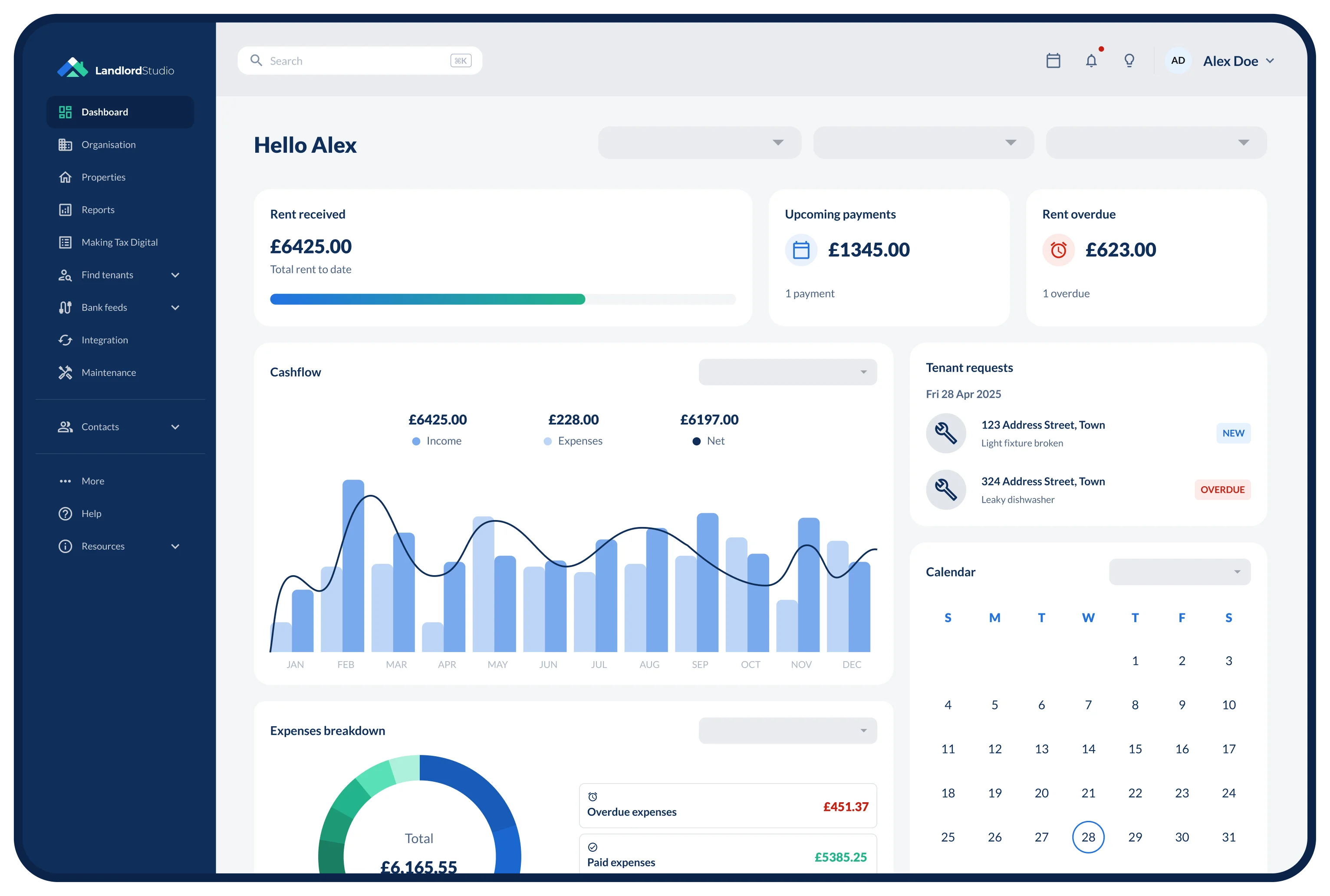
Landlord Studio is HMRC-recognised and MTD compliant, with direct HMRC integration.
Key Dates for Quarterly MTD Submission
After the end of each quarter, landlords have one month to submit their quarterly update to HMRC. This timeline allows for sufficient time to prepare the necessary information. As updates are cumulative, landlords can make corrections or adjustments in their next submission if needed. Keeping track of these dates is crucial to avoid penalties for late submissions.
| Period Covered | Filing Deadline |
|---|---|
| Quarterly Update 1: 6 April to 5 July | 7 August |
| Quarterly Update 2: 6 April to 5 October | 7 November |
| Quarterly Update 3: 6 April to 5 January | 7 February |
| Quarterly Update 4: 6 April to 5 April | 7 May |
Alternatively, businesses can make a 'calendar quarter election,' which allows them to draw up quarterly updates to the end of the previous month. Where this election is made, the quarterly updates will be as follows.
| Period Covered | Filing Deadline |
|---|---|
| Quarterly Update 1: 1 April to 30 June | 7 August |
| Quarterly Update 2: 1 April to 30 September | 7 November |
| Quarterly Update 3: 1 April to 31 December | 7 February |
| Quarterly Update 4: 1 April to 31 March | 7 May |
The first quarterly updates under MTD for ITSA were due for filing by 7 August 2026 and covered either the quarter ended 5 July 2026, or 30 June 2026 (where a calendar quarter election is in place).
Separate quarterly updates are required for each trade or property business carried on by an individual. There is no requirement to make tax or accounting adjustments to the information provided in quarterly updates.
End of Period Statement (EOPS) and Final Declaration
Following the 2023 Autumn Statement, the government announced the removal of the End of Period Statement (EOPS) from the ITSA submission requirements. This decision was made because much of the information typically included in an EOPS is now covered in the Final Declaration.
The Final Declaration will be the final submission for the tax year, due by January 31. In this declaration, landlords must disclose other forms of income, such as investment or savings income, and submit any claims for relief. This means that, in addition to their rental income, landlords need to ensure they report all relevant income accurately.
Preparing for MTD for ITSA
Preparation is essential for a smooth transition to MTD for ITSA. Here are some steps landlords should take:
- Consult with Professionals: Engage your accountant or bookkeeper in discussions about signing up for MTD for ITSA. Their expertise can guide you through the requirements and help you understand how to best manage your tax affairs.
- Familiarise Yourself with Digital Tools: Start using MTD-compliant accounting software (like Landlord Studio) now. The more comfortable you become with these digital tools, the easier the transition will be.
- Stay Informed: Keeping abreast of the latest developments in MTD is crucial. Bookmark the HMRC website or relevant resources, such as the Making Tax Digital resource hub, to stay updated on any changes or additional information that may be released as the remaining phases approach.
- Organise Your Records: Maintain accurate and up-to-date financial records throughout the year. This not only facilitates easier quarterly updates but also ensures that you have all necessary information readily available for your Final Declaration.
MTD Quarterly Updates: Conclusion
The implementation of MTD for ITSA and the requirement for quarterly updates marks a significant change for landlords. While it may seem daunting at first, understanding the requirements and taking proactive steps can ease the transition.
By preparing now, engaging with professionals, and embracing digital tools, landlords can navigate these changes smoothly and ensure compliance with HMRC regulations. With MTD now in force and further phases due in 2027 and 2028, staying informed and organised is key to successfully managing this process and avoiding potential penalties.
The easiest way to become MTD-ready is to use HMRC-recognised software like Landlord Studio.
Landlord Studio makes it easy to meet MTD requirements with accurate up to date digital record-keeping tools and a streamlined quarterly submission flow. Watch the video below to see exactly how simple MTD can be.
Create your free Landlord Studio account today and stay on top of the Making Tax Digital requirements with software designed for you.