



Read summarised version with:

ChatGPT

Gemini

Claude

Grok

Add as preferred on Google
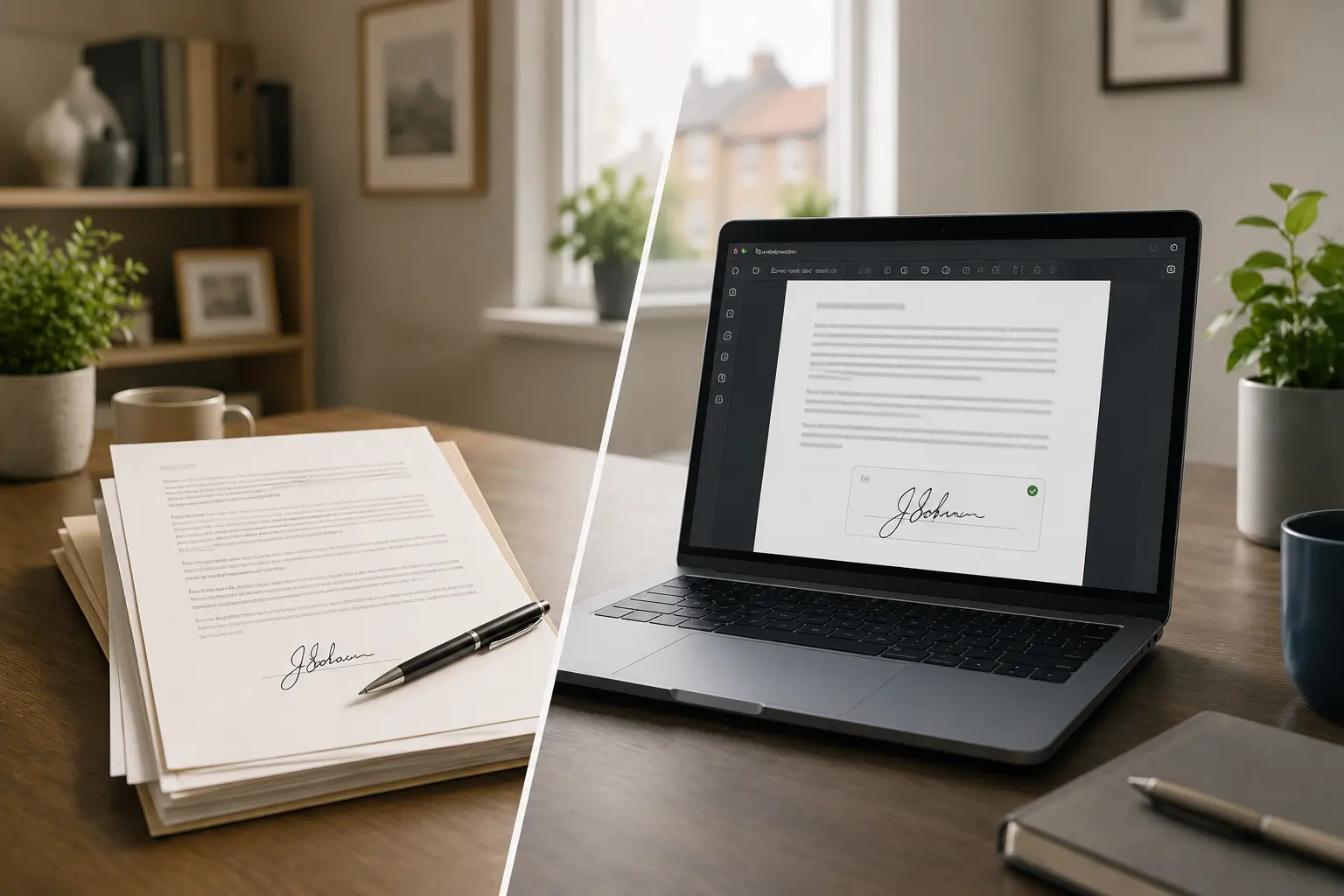
Paper tenancy agreements feel familiar, but they slow lettings down. For UK landlords moving to a more digital business, e-signatures are one of the easiest upgrades you can make.
Here is why they win on speed, cost, compliance and record-keeping - plus what UK law actually says about signing your tenancy agreements electronically.
8 Benefits of E-Signatures Over Paper Signatures
1. Get tenancy agreements signed in hours, not weeks
Once your tenant referencing and right to rent checks are complete, the last thing you want is a paper agreement holding up move-in. With an e-sign tool you can send the agreement straight to the tenant’s phone.
Most people sign within a few hours. Where paper contracts can take 5 to 10 days when you factor in printing, posting and chasing, e-signatures often complete the same day.
2. Cut printing, postage, and storage costs
A standard AST runs to 10 to 15 pages, sometimes more once you bolt on inventories, EPC certificates and the How to Rent guide.
Multiply that by every tenancy, renewal, deposit deduction notice and prescribed information form, and the paper bills add up. E-signing removes the printer cartridges, postage, scanning and filing cabinets in one go.
3. Reduce errors and missing signatures
The classic paper problem is the page that didn’t get signed, or the date field left blank.
E-sign platforms only let a signer complete the document once every required field is filled, which means you rarely receive an incomplete agreement. Most platforms also flag any blank fields before sending so they can be corrected up front.
4. Get a built-in audit trail
.webp)
This is the benefit landlords most often overlook.
Every reputable e-sign platform produces an audit certificate showing exactly who signed, when, from which IP address, on which device, and in what order.
If a tenant ever disputes whether they signed (or what they signed), you have time-stamped evidence in one document — far stronger than a scanned paper copy and a vague email chain.
5. Strengthen your record-keeping for HMRC and MTD
Making Tax Digital is pushing landlords toward digital record-keeping by default.
Storing signed tenancy agreements, rent statements and renewal letters digitally fits naturally with that direction of travel. Records saved electronically are also available in seconds if HMRC, your accountant or a lender ever asks for them.
6. Improve security against fraud and tampering
A signed PDF locked by a reputable e-sign provider is harder to alter than a piece of paper.
Most platforms apply a cryptographic seal once everyone has signed, so any post-signature change invalidates the document. Compare that with a paper agreement (easy to lose, easier to “amend” with a pen) and the security story flips in favour of digital.
7. Sign from anywhere, on any device
Tenants increasingly do their entire rental search on a phone, including viewing, referencing and paying their holding deposit. Asking them to find a printer at the final step is a friction point that costs you days and the occasional tenant.
E-signing meets them where they already are.
8. Lower the environmental impact
Less paper, less ink, less courier mileage. For landlords moving toward greener letting practices — alongside higher EPC standards and energy efficiency upgrades — switching to e-signatures is a small but visible step.
Paper vs E-Signatures: A Side-by-Side Comparison
Here is how the two stack up across the factors landlords actually care about:
| Factor | Paper Signatures | E-Signatures |
|---|---|---|
| Time to complete | 5–10 days (print, post, return, chase) | Minutes to a few hours |
| Direct admin cost per signing | £3–£10 (printing, postage, ink) | Often £0 on free tiers; pennies on paid |
| Risk of missing pages or fields | High — a common cause of disputes | Low — forms block submission if incomplete |
| Audit trail | A scanned copy and an email chain | Time-stamped, IP-logged audit certificate |
| Storage | Filing cabinets and scanning chores | Cloud-based, searchable in seconds |
| Security after signing | Easy to misplace or alter with a pen | Cryptographically sealed PDF |
| Tenant convenience | Needs printer and scanner access | Sign on a phone, tablet or laptop |
| Suitability for MTD record-keeping | Requires manual digitisation | Already digital |
| Environmental footprint | Paper, ink, courier mileage | Negligible |
Are Digital Signatures Legally Acceptable on Leases and Landlord Docs?
In short: yes, for the vast majority of UK landlord documents.
Two main pieces of legislation give electronic signatures legal weight in the UK:
- The Electronic Communications Act 2000 confirms that an electronic signature is admissible as evidence in court.
- The retained UK eIDAS Regulation (the Electronic Identification and Trust Services for Electronic Transactions Regulations 2016, as updated post-Brexit) sets out how different types of electronic signatures are recognised.
In 2019, the Law Commission published a report concluding that electronic signatures are valid for the execution of most documents in England and Wales, provided the signer intended to authenticate the document and any formalities (such as witnessing) are properly met.
The government accepted the Law Commission's conclusions, removing remaining doubt for most landlord paperwork.
Deeds and longer leases
A lease granted for more than three years must be executed as a deed. Deeds traditionally required wet ink and an in-person witness, but the law has moved on. Since July 2020, HM Land Registry has accepted witnessed electronic signatures on certain registrable deeds, and "qualified electronic signatures" (a higher-trust category under eIDAS) on others.
If you grant a long lease, take advice from your solicitor on the exact signing method required, because the rules for deeds are stricter than for ordinary contracts.
Tenancy agreements (ASTs and similar)
Standard assured shorthold tenancies are not deeds. They are ordinary contracts, and an electronic signature is sufficient to make them legally binding, just as it would be for any other contract.
The same applies to:
- Tenancy renewals
- Rent increase notices
- Prescribed information for deposits
- Inventory reports
- Section 21 and Section 8 notices (signed copy retained for evidence; service rules still apply)
- Mandate forms and guarantor agreements
How to Introduce E-Signatures into Your Lettings Workflow
A simple way to move from paper to digital, even on a small portfolio:
- Pick a reputable e-sign provider with audit trail features - most have free or low-cost plans for landlord-level volume.
- Save your standard tenancy agreement and prescribed forms as reusable templates.
- Use named fields (signature, initials, dates) so nothing gets missed.
- Send agreements as part of a digital onboarding pack alongside your tenancy application form, right to rent share code request and deposit information.
- Store the signed PDF and audit certificate in your property management software so they're searchable later.
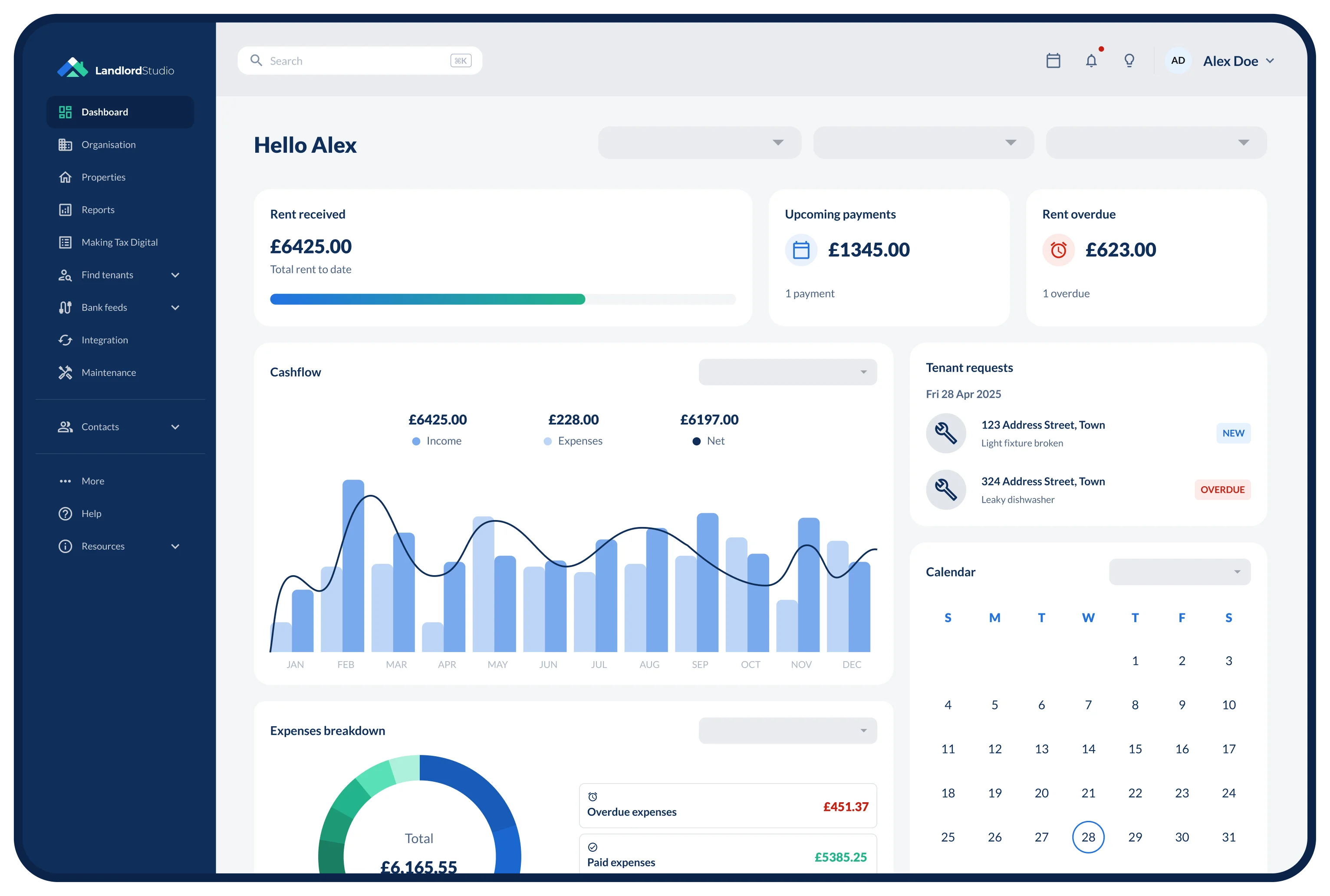
If you use property management software, the signed agreements and supporting documents can sit alongside your rent ledger, expenses and safety certificates — meaning one login for every record on every property.
Bringing It All Together
E-signatures save you time, cut admin costs, give you stronger records and align with where UK landlord regulation is heading. The legal position for tenancy agreements is settled, and modern e-sign platforms make implementation almost effortless.
The bigger win comes when you pair e-signing with a single platform for the rest of your rental admin — rent tracking, expenses, document storage, maintenance, and HMRC-ready records.