Free Mileage Tracker Calculator

Log every business journey from inspections, and contractor visits, to viewings and DIY stops. Calculate the driving distance automatically, then apply HMRC's flat mileage rate (55p/mile for the first 10,000 miles) to see your total deduction. Download a tax-ready PDF in three clicks.

For UK landlords

Mileage Tracker

Log property-related journeys, get an accurate driving-mile estimate, and produce an expense pack with the HMRC AMAP allowance ready for your Self Assessment.

  1. 1Add journeys
  2. 2Review & totals
  3. 3Expense pack

Add a journey

Enter the start and end UK postcodes — we'll work out the driving distance for you. Add as many journeys as you need.

To look up locations and work out distances, the postcodes or addresses you enter are sent to our mapping providers — postcodes.io, OpenStreetMap, and (if address autocomplete is on) Mapbox. Nothing else leaves your browser, and we don't store your journeys.

Review & totals

Check the route distances — you can edit the miles for any journey if you took a different route.

Cumulative miles already claimed this tax year

HMRC AMAP allows 45p/mile for the first 10,000 car/van miles per tax year (6 Apr–5 Apr), then 25p/mile. If you've already claimed some miles this tax year, enter that figure here so we apply the right tier.

Journeys
0
Total miles
0
HMRC AMAP
£0.00
Est. fuel cost
£0.00
Customise fuel cost estimate

"Est. fuel cost" above is a rough guide based on UK averages. Tune it to your vehicle if you'd like a more accurate figure. (Does not affect your HMRC AMAP allowance — that's calculated from the per-mile rates above.)

AMAP is the most common method — it covers fuel, wear and tear, and insurance in a single per-mile rate. The "actual cost" method is an alternative but once chosen for a vehicle you cannot switch back. Not tax advice — check with your accountant.

Your expense pack is ready

Attach a receipt (fuel, parking, toll) if you'd like it included in the printed pack, then download.

Landlord Studio · Mileage expense pack

How does the mileage calculator work?

Enter the start and end address for each journey - the tool works out the exact driving distance from mapping data. Add the date, the business purpose, and whether it was a return journey. Repeat for as many journeys as you need, then download a PDF expense pack with your total mileage deduction (at 55p/mile for the first 10,000 business miles) ready for your Self Assessment.

Do I need to keep fuel receipts?

Not if you use HMRC's flat mileage rate. The 55p/25p rate is all-inclusive - it already covers fuel, insurance, road tax, servicing and wear and tear. What HMRC does want is a written log of each business journey, which is exactly what this tool produces. Keep parking, toll and congestion charges separately, though those are claimable on top of the mileage.

What counts as a claimable journey?

Any journey made wholly and exclusively for running your rental business: property inspections, meetings with contractors or maintenance crews, viewings with prospective tenants, picking up materials for repairs, trips to your accountant or solicitor on rental matters, and tribunal or court hearings. The wholly-and-exclusively test matters here - you can't combine a property trip with a personal errand (HMRC calls this "duality of purpose"), so popping to the supermarket on the way doesn't count. Check with an accountant on edge cases.

What's the difference between the flat mileage rate and claiming actual costs?

HMRC gives you two ways to claim vehicle costs. The flat mileage rate (55p, then 25p over 10,000 miles) bundles fuel, servicing, insurance and depreciation into one simple per-mile figure. Actual costs is the harder route - you work out the business-use proportion of every running cost and claim capital allowances on the vehicle separately. Most landlords choose the flat rate because it's far less paperwork. Important: if you've already claimed capital allowances on a vehicle, you can't use the flat rate for it — and once you start using the flat rate for a vehicle, you stick with it for as long as you own that vehicle.

How accurate is the mileage estimate, and why does it sometimes differ from Google Maps?

We use OpenStreetMap routing, which takes the shortest driving route - Google usually picks the fastest route with live traffic, so the two can disagree in built-up areas (especially around big junctions or airports). For tax purposes HMRC wants the actual miles you drove, not a theoretical route; so if you went a different way, edit the miles for any journey directly in Step 2. The tool just saves you typing in routine routes from scratch.

Maximise your tax relief

HMRC lets you claim 55p per business mile for the first 10,000 miles a year — driving to inspections, contractor visits, supply runs and viewings. Most self-managing landlords cover 3,000–8,000 business miles a year, so that's £1,650–£4,400 in allowable expenses left on the table if you're not tracking them.

Stay enquiry-ready with a proper log

A flat-rate claim still needs proof. HMRC expects a log showing the date, route, purpose and miles for every business journey — kept for at least five years. This tool builds that log for you and prints it in the format HMRC expects, so you're covered if they ever open an enquiry.

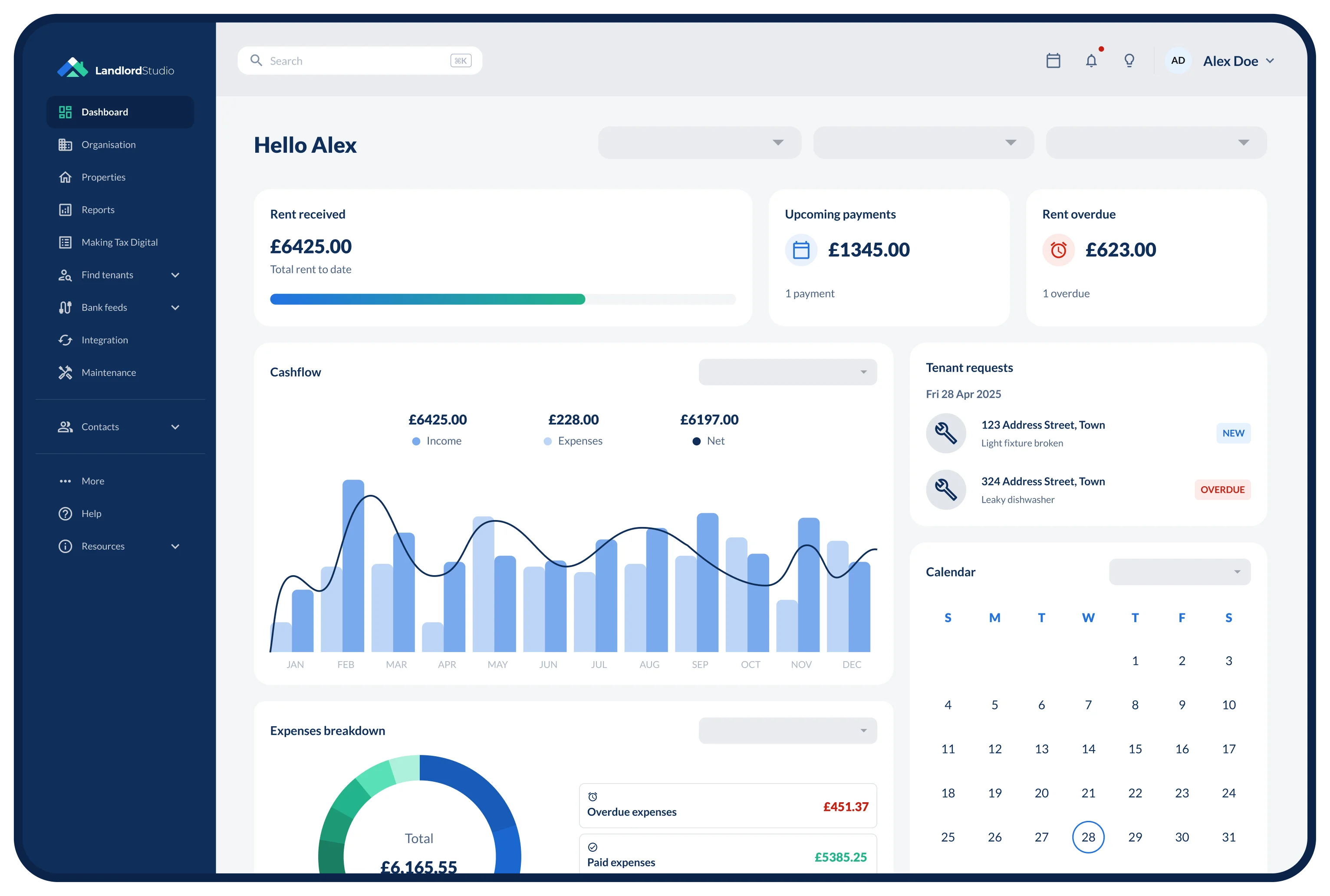
Log your mileage expenses in Landlord Studio

  • Track every journey automatically - GPS-powered logging, no manual entry
  • Categorise miles by property - relief rolls up correctly at tax time
  • One place for mileage, rent, expenses and tenants - no more spreadsheet sprawl
  • SA105-ready reports - export a single document for your accountant
  • Invite your accountant - they see exactly what they need, no email back-and-forth