





Read summarised version with:

ChatGPT

Gemini

Claude

Grok

Add as preferred on Google
The Renters’ Rights Act introduces one of the most significant changes to the private rented sector (PRS) in decades: the move to open-ended tenancies.
For many landlords and tenants, this represents a shift away from the familiar structure of fixed-term agreements and renewals. Naturally, that raises questions about control, flexibility, and risk.
This guide breaks down what open-ended tenancies actually are, how they work in practice, and what landlords need to do to prepare.
What Are Open-Ended Tenancies?
Open-ended tenancies (often referred to as periodic tenancies) are rental agreements with no fixed end date.
Instead of running for a set term (e.g. 6 or 12 months), the tenancy continues indefinitely until either:
- The tenant chooses to leave, or
- The landlord regains possession using a valid legal ground
Under the Renters’ Rights reforms, fixed-term assured shorthold tenancies are being replaced with this ongoing structure as the default.
The key difference is simple:
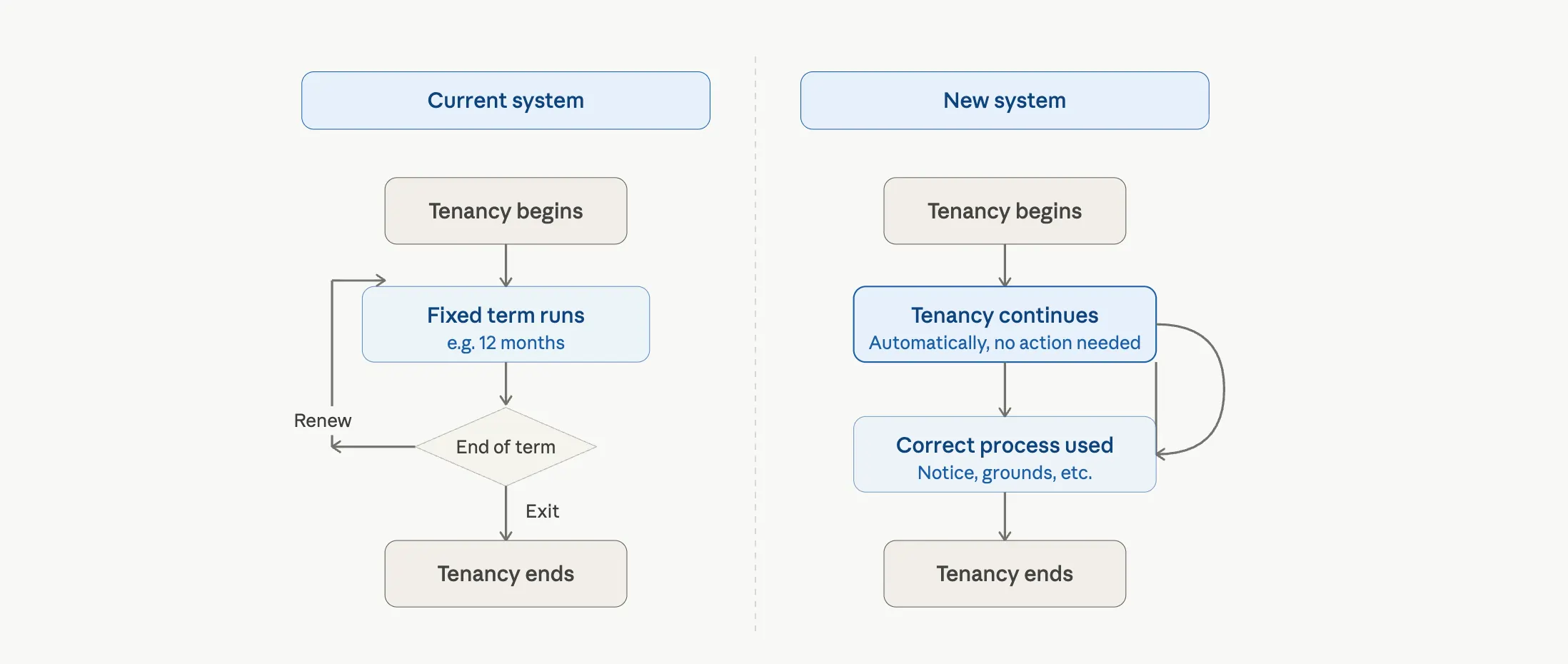
This removes the need for renewals but introduces a more structured framework for ending tenancies.
When Do Open-Ended Tenancies Come Into Effect?
Open-ended tenancies will be introduced as part of the Renters’ Rights Act rollout (May phase 1 2026). All tenancies (new and existing) will become “Assured Periodic Tenancies” - i.e. rolling / open-ended tenancies with no fixed end date.
Fixed-term tenancy agreements will no longer be the standard model.
How Open-Ended Tenancies Change the Rental Market
The shift to open-ended tenancies changes how landlords manage occupancy and plan ahead.
1. No fixed end date
Tenancies no longer naturally “expire.” There is no built-in opportunity to reset terms or regain possession at the end of a fixed period.
2. Continuous tenancy structure
The agreement rolls forward automatically, creating more stability for tenants but requiring landlords to think longer-term.
3. Fewer forced tenant decisions
Tenants are no longer required to renew or renegotiate at fixed intervals, which may reduce turnover.
For landlords, this means less administrative work around renewals, but more reliance on clear processes and forward planning.
Can Landlords Still End a Tenancy?
Yes. The ability to regain possession still exists- but the process is changing.
With the removal of Section 21 (“no-fault” evictions), landlords must now rely on Section 8 grounds.
This means:
- You must have a valid legal reason for ending the tenancy
- You must be able to provide evidence to support that reason
- In many cases, the process will involve court proceedings
Common grounds include:
- Selling the property
- Moving in yourself or a family member
- Rent arrears or breaches of the tenancy agreement
The key shift is from a discretion-based system to an evidence-based system.
What This Means for Landlords in Practice
Open-ended tenancies won’t just affect a small segment of the market - they will apply to virtually all private landlords in England.
According to government data, there are approximately:
- 2.6 to 2.8 million private landlords in the UK
- Around 4.6 million households in the private rented sector (PRS)
In day-to-day terms, open-ended tenancies will change how landlords operate. This means:
1. Longer tenant stays
Without fixed end dates, tenants may stay longer, reducing void periods but limiting flexibility.
2. More structured processes
Regaining possession requires clear documentation, valid grounds, and adherence to process.
3. Increased reliance on compliance
From tenancy agreements to record keeping, everything needs to be accurate, consistent, and up to date.
This reflects a broader trend across the PRS: less informality, more regulation.
How to Prepare for Open-Ended Tenancies
While the shift to open-ended tenancies is significant, preparation is less about learning something entirely new and more about tightening your processes and documentation.
Review your tenancy agreements
You won’t be issuing new fixed-term agreements in the same way, so it’s important to ensure:
- Your agreements reflect a periodic (open-ended) structure
- Clauses around rent increases, notice, and responsibilities are clear and compliant
Update your processes
Without fixed end dates, you’ll rely more on ongoing management rather than renewal points. This includes having clear workflows for:
- Rent reviews (following the correct legal process)
- Handling disputes or tenant issues early
- Regaining possession using valid Section 8 grounds
Strengthen your record keeping
As possession becomes more evidence-based, documentation becomes critical. You should maintain clear records of:
- Tenant communication
- Payment history and arrears
- Property condition (e.g. inspections, inventories)
- Compliance documents (EPC, gas safety, etc.)
You might want to try digital tools like Landlord Studio to make record keeping and tenancy management easier.
Plan for longer tenancies
Open-ended agreements are likely to result in longer average tenant stays, so it’s worth:
- Factoring this into your cash flow and maintenance planning
- Focusing on tenant relationships and retention
Work with a letting agent (if applicable)
Letting agents can help manage the increased compliance burden, particularly around:
- Legal processes for possession
- Ongoing tenancy management
- Keeping documentation consistent and up to date
Common Concerns (and Misconceptions)
Will I lose control of my property?
No - but you will need to follow a more structured process to regain possession. Control shifts from timing (end of term) to compliance (valid grounds).
Can tenants stay indefinitely?
Tenancies are open-ended, but not irreversible. Landlords can still regain possession where a valid ground applies.
Is eviction still possible?
Yes. The process is still there - it is simply more regulated and evidence-based than before.
Can I still increase rent?
Yes, but rent increases must follow the correct legal process and notice requirements under the new rules.
Do I need to update existing agreements?
Existing tenancies will transition, but you should review your agreements and processes to ensure they align with the new system.
What happens to fixed-term contracts?
Fixed-term tenancies will be replaced by open-ended (periodic) agreements as the default from 1 May 2026.
Adapting to a More Regulated PRS
Open-ended tenancies are part of a wider shift towards a more regulated private rented sector.
For landlords, this isn’t about losing flexibility entirely. It’s about operating within a clearer, more structured framework.
Those who rely on informal processes or short-term thinking may find the transition challenging. Those who adopt more organised, compliant systems will be better positioned to manage their properties with confidence.
Want to learn more about changes to renters’ rights phase 1? We’re hosting a free webinar: Renters’ Rights Changes: What UK Landlords MUST Do Before May 2026