


How to Serve the Renters’ Rights Info Sheet 2026 to Tenants
The Renters’ Rights Act Information Sheet had to reach existing tenants by 31 May 2026. What it is, who it applies to, and what to do if you missed it.

Read summarised version with:

ChatGPT

Gemini

Claude

Grok

Add as preferred on Google
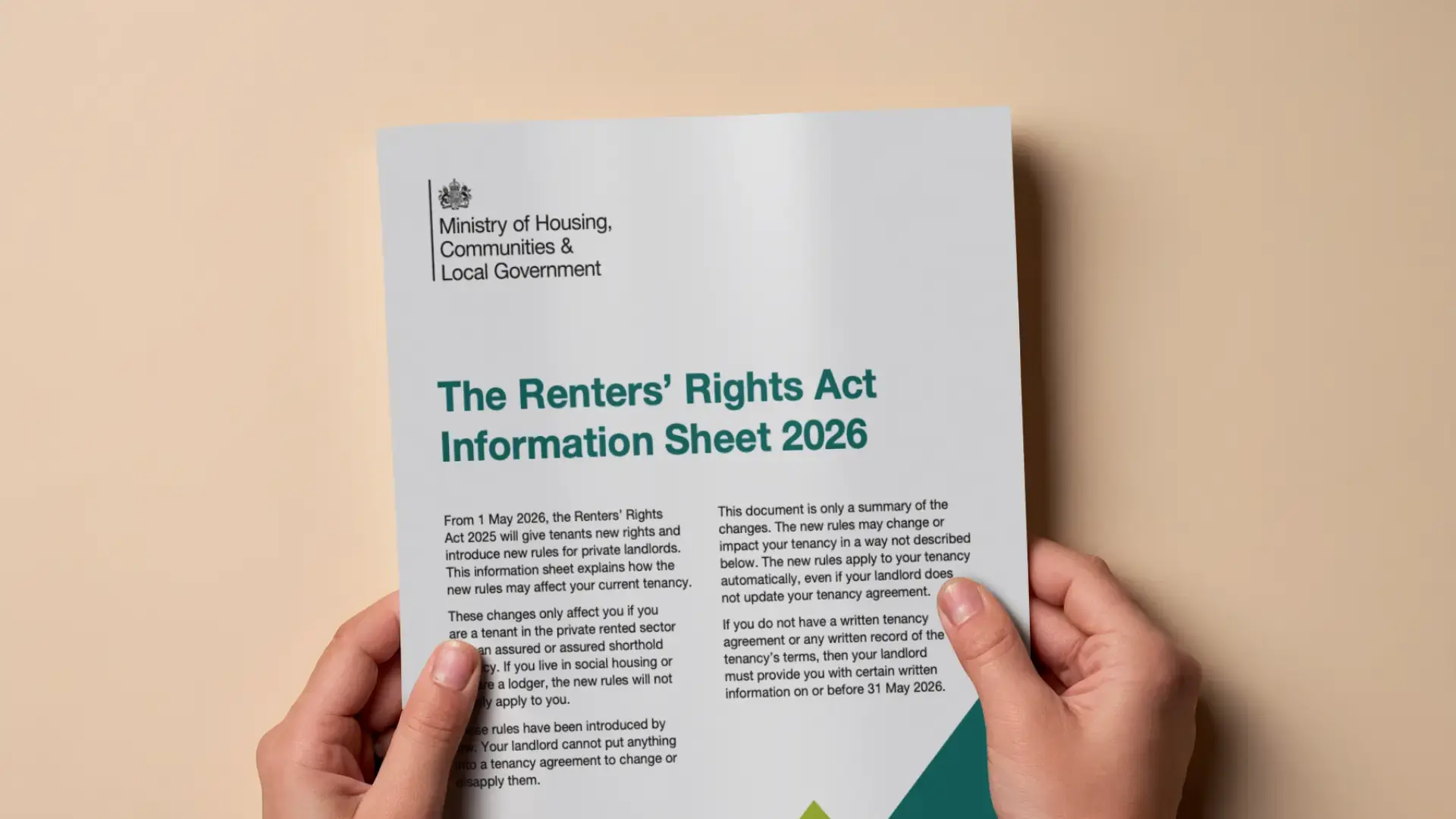
The Renters' Rights Act Information Sheet is an official government document that landlords in England had to serve to every existing tenant by 31 May 2026. The Act's main tenancy reforms came into force on 1 May 2026, when existing assured and assured shorthold tenancies converted to periodic tenancies and Section 21 "no-fault" evictions ended. If a tenancy began before 1 May 2026, the sheet had to be served within one month, by 31 May 2026. Missing it can mean a civil penalty of up to £7,000.
Key takeaways
- The Information Sheet explains the Renters' Rights Act changes to existing tenants.
- It had to be served to tenants on pre-1 May 2026 tenancies by 31 May 2026.
- You must serve the exact official PDF, not a link, by post, hand, email, or text.
- Lodgers and purely verbal pre-1 May tenancies are handled differently (see below).
- If you missed the deadline, serve it now and keep proof; penalties can reach £7,000.
The main provisions of the Renters' Rights Act took effect on 1 May 2026. If you had existing tenants on a tenancy agreement created before 1 May 2026, you were required to serve the official Renters' Rights Information Sheet to every named tenant by 31 May 2026. This guide explains what the sheet is, who it applies to, how to serve it correctly, and what to do if you have only just taken on a tenant or missed the deadline.
What is the Renters' Rights Information Sheet?
The Renters' Rights Information Sheet is an official government document that explains how the Renters' Rights Act affects tenants. It covers the key changes, including:
- The end of fixed-term tenancies (existing tenancies became periodic on 1 May 2026)
- The new process for rent increases
- The removal of Section 21 ("no-fault") evictions
You do not need to serve it to lodgers. If you have a tenancy based entirely on a verbal agreement made before 1 May 2026, you cannot give this Information Sheet; you must instead provide certain written information about the key terms of the tenancy. See GOV.UK guidance on "Tenancy agreements: written information for your tenant".
Who has to serve it, and by when?
If a tenancy agreement was created before 1 May 2026, you had to serve the Information Sheet to every named tenant within one month of the Act taking effect, meaning by 31 May 2026. Each individual tenant must receive their own copy, including where you have multiple properties or multiple tenants in one property. A managing letting agent can serve it on your behalf, but the legal responsibility remains with you.
What landlords need to do, step by step
1. Download the official PDF
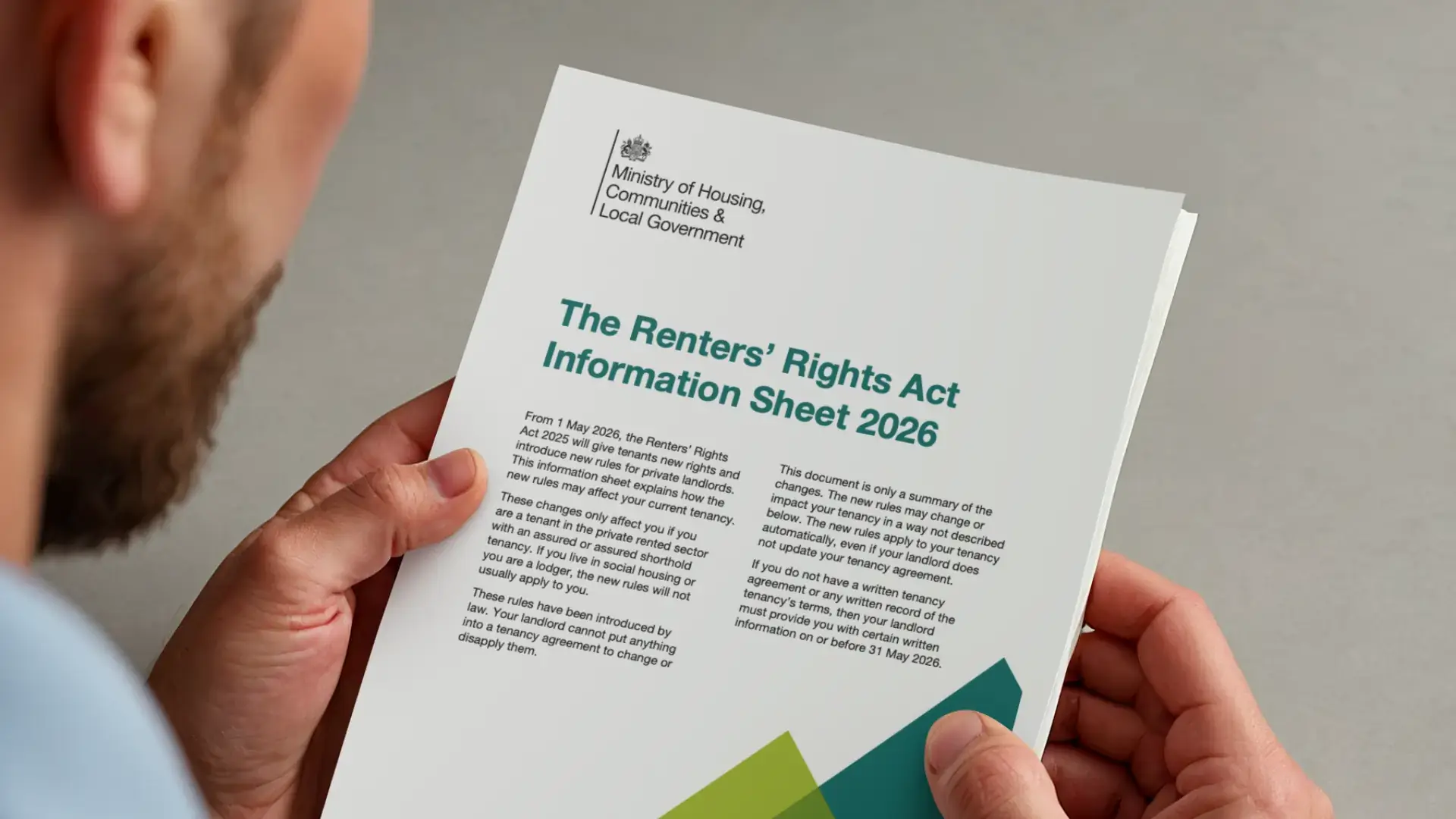
Use the exact version provided by the UK Government. No edits, no branding, no changes.
2. Serve the document as-is
Deliver the document exactly as published, as the PDF file itself (not a link to it).
3. Deliver it using an approved method
You can serve the Information Sheet as a printed copy (posted or delivered by hand) or as a digital copy, sending the PDF as an attachment by email or text message. Sending a link alone is not valid; it must be the actual PDF file.
4. Check your tenancy agreement
If your tenancy agreement does not allow electronic communication, send a printed copy and obtain a dated certificate of posting.
5. Keep proof of service
Keep a record of how and when the Information Sheet was delivered and to whom, in case of disputes or council enforcement. Note how the document was sent, when it was sent, and who it was sent to. This is critical if you ever need to prove compliance.
What if you missed the 31 May 2026 deadline?
If you did not serve the Information Sheet by 31 May 2026, serve it as soon as possible using an approved method and keep dated proof of delivery. Acting now reduces your exposure, since failing to comply can lead to a civil penalty of up to £7,000. If you are unsure of your position, check the current GOV.UK guidance or take legal advice.
What about tenancies that started on or after 1 May 2026?
From 1 May 2026 all new tenancies are periodic under the Renters' Rights Act. The Information Sheet is aimed at tenants who were on a tenancy that existed before that date. For new tenancies you must give tenants a written statement of the key terms of the tenancy. Check the latest GOV.UK guidance for the exact documents required for new lettings.
Why this matters
UK landlords face increasing regulatory pressure, and missing compliance steps can lead directly to financial penalties. Serving the Information Sheet correctly, and keeping proof, is one of the easiest compliance risks to eliminate. Once served, store your documentation (certificate of posting, email confirmation, or a screenshot of the sent message) somewhere safe. Using a system like Landlord Studio's document storage keeps everything organised, accessible, and ready if you need to demonstrate compliance.
Frequently Asked Questions
What is the Renters' Rights Information Sheet?
It is an official UK Government document explaining the Renters' Rights Act changes to tenants, including the end of fixed terms, the new rent-increase process, and the removal of Section 21 evictions. Landlords had to serve it to existing tenants by 31 May 2026.
Do I have to serve it to all tenants?
Yes. Every existing tenant on a pre-1 May 2026 tenancy must receive the Information Sheet. Where you have multiple properties or multiple tenants in one property, each individual tenant must receive their own copy.
Can I send a link to the PDF instead?
No. A link on its own does not meet the legal requirement. You must send the PDF as an attachment or provide a printed copy.
Can my letting agent do this for me?
Yes. If your letting agent manages the property, they can serve it on your behalf. The legal responsibility still sits with you as the landlord, so confirm it has been done and keep a record.
What happens if I missed the 31 May 2026 deadline?
Serve the Information Sheet as soon as possible and keep dated proof. Failing to serve it can result in a civil penalty of up to £7,000, so acting promptly is the best way to limit the risk.
Do new tenancies started after 1 May 2026 need the Information Sheet?
The Information Sheet targets tenants who were on a tenancy before 1 May 2026. For new tenancies you provide a written statement of the tenancy's key terms instead. Check current GOV.UK guidance for the required documents.
About Landlord Studio
.webp)
Landlord Studio is an easy to use MTD compliant property management and accounting software designed for UK landlords.
Track income and expenses, run reports,, find and prescreen tenants, manage property maintenance, and more.
Stay Updated on Property Insights

Get weekly tips, tax updates, and landlord strategies straight to your inbox.
How to Submit your Second Quarterly MTD Submission
Missed your first MTD submission or unsure what changed? Learn how to file your second quarterly update correctly before the 7th November HMRC deadline.
Details:
Free
Hosted by:
Logan Ransley
When:
October 15, 2026
12:00pm BST
Duration:
45 minutes
Guest:
Logan Ransley, co-founder of Landlord Studio