




Read summarised version with:

ChatGPT

Gemini

Claude

Grok

Add as preferred on Google
Until now, a tenant challenging a Section 13 rent increase at the First-tier Tribunal (the housing and property court in England and Wales that decides Section 13 rent disputes) was a relatively rare event. Most tenants accepted the increase, negotiated, or moved out. Tribunal hearings were the exception, not the rule.
That's about to change.
From 1 May 2026, the Renters' Rights Act makes Section 13 the only lawful way to increase rent. As Logan Ransley, co-founder of Landlord Studio, summarised in our recent UK landlord webinar:
"Rent increases are now limited to once a year and any rent review clauses in your existing tenancy agreements become invalid from May 1st 2026. Going forward, all increases follow the same process. You need to serve your tenant a formal notice. It's called a Form 4A, giving at least two months' written notice before the increase kicks in." Logan Ransley, co-founder of Landlord Studio
At the same time, the Act tilts the playing field toward tenants.
This means the Tribunal can only confirm the rent you proposed (or reduce it) — it cannot increase the rent above the figure in your Section 13 notice, even if it thinks market rent is higher. Because the Tribunal can no longer raise the rent above the amount in your notice, tenants face less downside in challenging, so most legal commentators expect applications to rise sharply.
This guide walks through what actually counts as evidence of open market rent, and how to build a defensible case before you ever serve the notice.
A quick note on terminology: Section 13 & Form 4A
- Section 13 is the legal mechanism under the Housing Act 1988 that lets a landlord propose a rent increase on a periodic tenancy. It hasn't been abolished by the Renters' Rights Act - it has been amended.
- Form 4A is the new prescribed government form used to serve a Section 13 notice from 1 May 2026 onwards. It replaces the old Form 4. It must be the official form - a letter or email won't do.
What is the rental increase Tribunal actually deciding?
When a tenant challenges a Section 13 notice, the First-tier Tribunal (Property Chamber) doesn't decide whether the increase is "fair" in any subjective sense.
It decides one specific thing: what the open market rent for that property would be if it were let today on a new assured periodic tenancy.
The Tribunal then sets the rent at that figure. From 1 May 2026, two important changes apply to that decision:
- The Tribunal cannot set a rent higher than the figure the landlord proposed in the Section 13 notice
- The new rent applies from the date of the Tribunal's decision, not the date in the original notice (so any increase is effectively delayed)
Both changes shift risk onto landlords. If you propose £1,400 and the Tribunal decides market rent is £1,500, your rent stays at £1,400. If you propose £1,400 and they decide it's £1,250, you get £1,250 — and you've lost months of the higher rent during the dispute.
As Logan put it directly in the webinar:
"The increase must be no higher than the open market rent. Tenants can actually challenge anything they think is above that at a tribunal." Logan Ransley, co-founder of Landlord Studio
The implication is straightforward: get the figure right and evidence it properly, the first time.
How should landlords calculate open market rent?
Tribunals look for evidence that's comparable, current, and credible. Anecdotes and assertions don't carry weight.
What does:
1. Direct comparisons from major listing portals
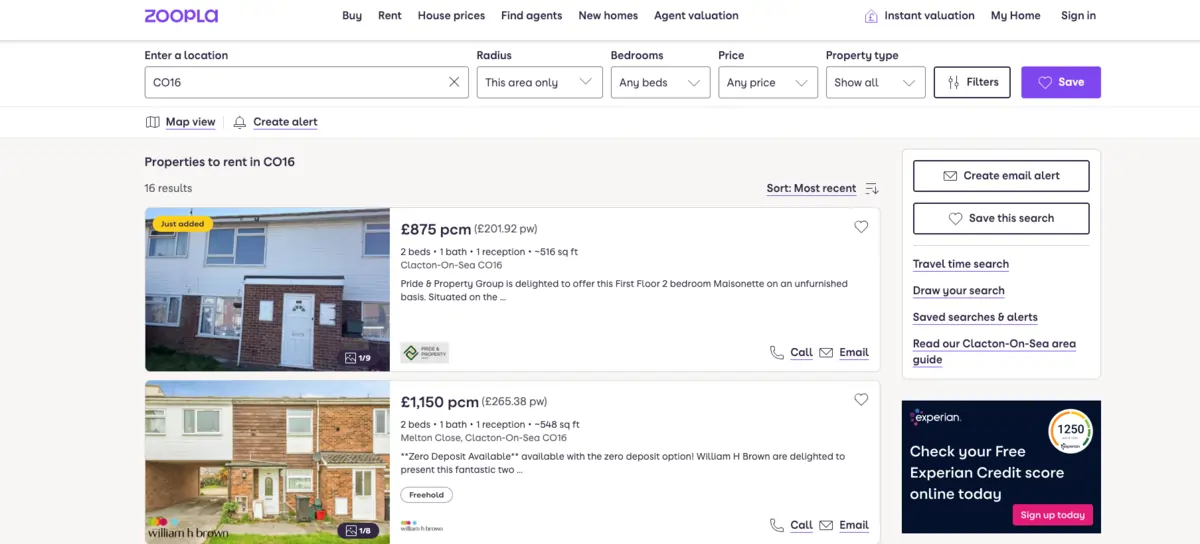
Rightmove, Zoopla, OpenRent and SpareRoom listings for similar properties in the same area, advertised in the same period as your Section 13 notice. The closer the match on bedrooms, condition, location and tenancy length, the stronger the evidence.
Three to five strong comparables are generally more persuasive than ten weak ones.
2. Letting agent valuations
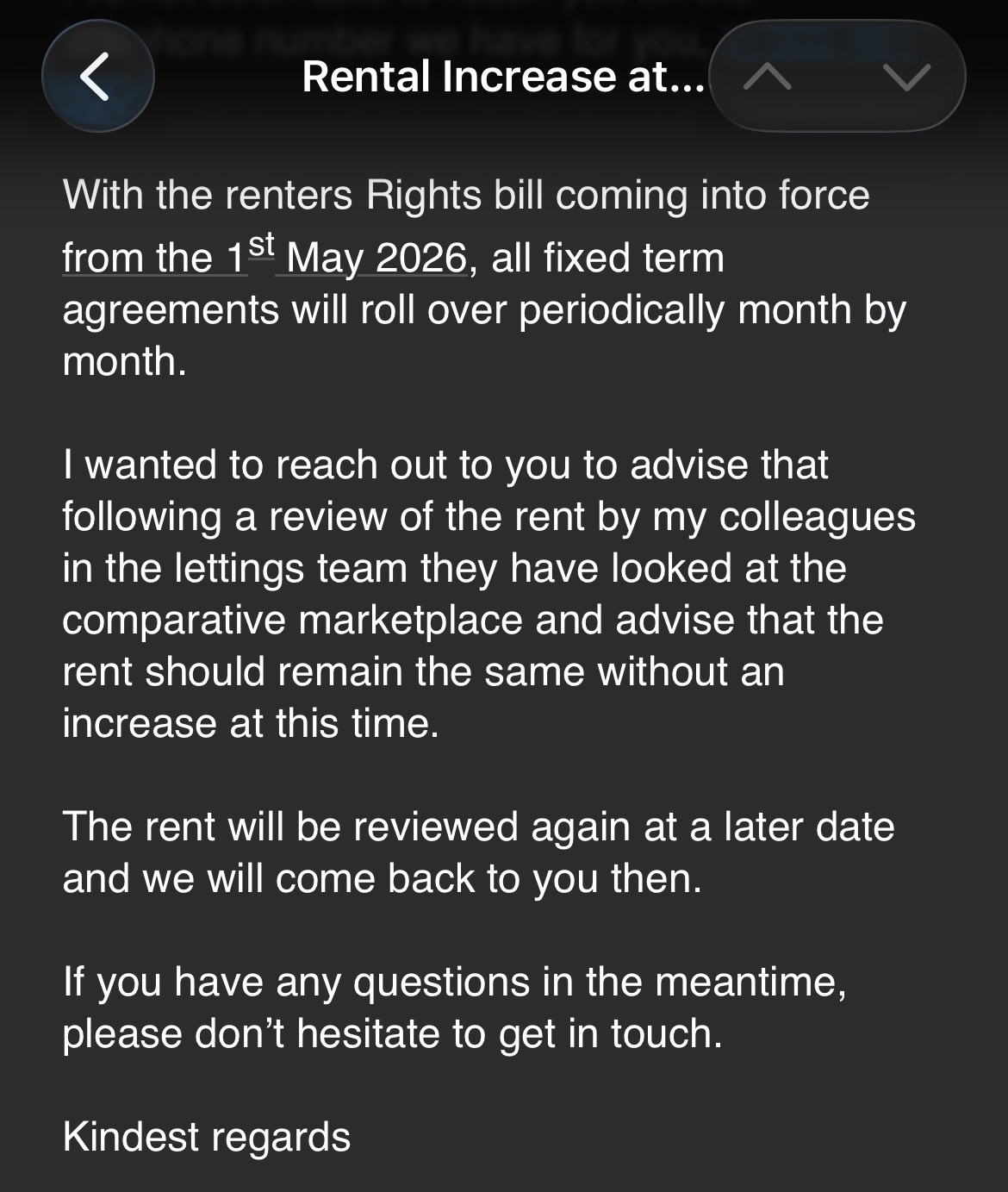
A written market appraisal from a local letting agent carries real weight, particularly if the agent has lettings under management on similar properties.
Aim for two independent valuations rather than one.
3. Recent let evidence
If you (or other landlords you can identify) have let a comparable property in the area in the last 6-12 months, the agreed rent is strong evidence.
Listing prices show what landlords are asking - achieved rents show what tenants are actually paying. Government tribunal guidance specifically notes that evidence from actual agreed lettings is stronger than asking prices.
4. Local market data
ONS Price Index of Private Rents (PIPR) data shows annual rental growth by region. This won't establish the absolute level of market rent, but it's a useful context for showing your proposed increase is consistent with broader market movement.
5. Property-specific factors
Photographs, condition reports, EPC ratings, and details of any improvements you've made (new kitchen, double glazing, etc.) all help justify why your property sits at the higher or lower end of the local range.
What doesn't count for much during a rent increase Tribunal?
- Generic "average rent" statistics for a city or postcode area
- Comparables from significantly different property types (a 2-bed flat is not a comparable for a 2-bed terraced house)
- Listings from more than 3-4 months before the Section 13 was served
- Your own opinion of what the property is worth, without supporting data
How to screenshot listings as evidence
This sounds basic, but it's where most landlords trip up. A Tribunal won't accept a printout of a Rightmove search result with no date stamp.
When you save listings as evidence:
- Take full-page screenshots showing the listing URL, date, asking rent, and property details
- Capture multiple pages of each listing (descriptions, photos, key features)
- Save the listing reference number where shown
- Date-stamp every file with the date you captured it
- Save in PDF format with the date of capture in the file name
Listings get removed from portals once they are let. If you don't capture them at the time you serve the Section 13, they may be gone by the time the Tribunal hearing happens.
Building your case before you serve the notice
The biggest mistake landlords make is treating evidence-gathering as something you do after a tenant challenges. By then, comparables have moved on and the original market context has shifted.
The right approach is to build the evidence file before you serve the Section 13. This also matters for timing - as Logan flagged in the webinar:
"Think about your timing. If you want a rent increase in July, you need to be serving that notice in May. So definitely get ahead of it if you do have those planned." Logan Ransley, co-founder of Landlord Studio
A simple workflow:
1. Capture comparables 2-4 weeks before serving the notice
Pull and save 5-8 listings of similar properties in the immediate area. Take dated screenshots of each.
2. Get one or two letting agent valuations in writing
Email is fine - you don't need a formal report. Ask for a market appraisal in writing for a periodic assured tenancy, with a brief justification.
3. Document the property's condition
Recent photos, EPC certificate, gas safety certificate, and any improvement records.
4. Save everything in one place against the tenancy
This is where digital record-keeping pays off - if a Tribunal hearing happens 6-9 months after you serve the notice, you don't want to be hunting for emails and files. This is where digital tools like Landlord Studio can help.
5. Build a rent comparison summary
A simple one-page document listing your proposed rent, the comparable rents you found, the agent valuations, and a brief justification of where your property sits in the local range.
If you do all this and the tenant still challenges, you walk into the Tribunal with a complete, dated, organised file. That alone changes the dynamic.
The proportionality argument
Tribunals also look at the size and reasonableness of the increase relative to where the rent currently sits.
A jump from £900 to £1,500 (67%) is going to attract scrutiny even if £1,500 is genuinely market rent, because the Tribunal will ask why the rent was so far below market for so long.
Your evidence should address both questions:
- What is the current open market rent? (the comparables question)
- Why has the gap to market opened up? (the history question)
The second is often answered by inflation, neglect of historic rent reviews, or below-market starting rents on long-running tenancies.
None of these are weaknesses — they just need to be explained. A property let on a friendly basis at £900 in 2019 isn't unreasonably being moved to £1,400 in 2026 if everything around it now lets at £1,400.
But you need to say that, and evidence it.
What happens if a tenant challenges (and what to do)
If you serve a Form 4A (a Section 13 notice) and the tenant applies to the First-tier Tribunal, you'll receive notice from the Tribunal with a deadline for submitting your evidence. The process is paper-heavy but generally not adversarial.
A few practical tips:
- Respect the deadlines - late evidence is often excluded.
- Submit a clear bundle - number your pages, include a contents list, and lead with your strongest 3-5 comparables.
- Prepare for a hearing - most cases are decided on paper, but you may be invited to a hearing. Be ready to explain how you arrived at the proposed rent.
- Be specific, not defensive - tribunals respond to evidence, not advocacy. State the facts and let the comparables do the work.
- Continue collecting rent at the existing level until the decision - the tenant continues to pay the current rent (not the proposed new rent) until the Tribunal rules.
How digital landlord tools can help
Building a defensible Section 13 case is fundamentally a record-keeping problem.
You need dated comparable evidence, professional valuations, condition records, and a clear paper trail showing when each step happened.
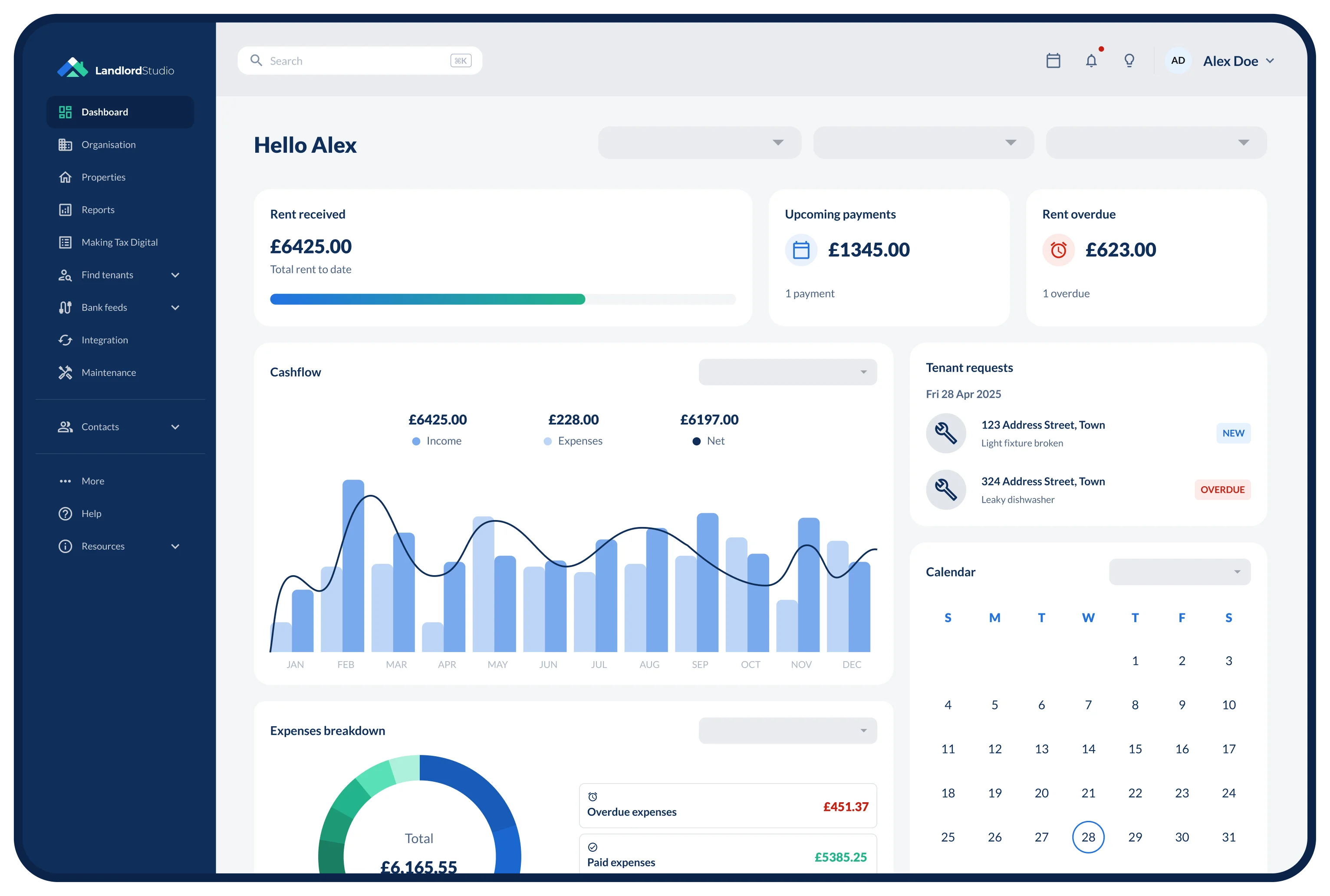
Tools like Landlord Studio let you store rent comparison evidence, agent valuations, photos, EPCs and notices in one place against each tenancy. Notes against each property let you record the rationale for each rent increase.
If a Tribunal hearing comes 6 months after you served the notice, your file is intact and ready to submit.
For landlords with multiple properties, that single audit trail is what turns a stressful Tribunal challenge into a routine paperwork exercise.
Watch the full webinar
This article expands on questions that came up in our recent UK landlord webinar with Logan Ransley on the Renters' Rights Act Phase 1 changes.
To watch the full replay - covering the end of Section 21, fixed-term tenancies, rent in advance bans, pets, and anti-discrimination rules - head to our UK webinars page.
Section 13 Tribunal Evidence FAQs
How many comparables do I need?
Three to five strong comparables (genuinely similar properties, recent listings, in the same immediate area) is usually more persuasive than ten loose ones. Quality over quantity.
Is 5% a fair rent increase?
There's no legal "fair" percentage — what matters is whether the new figure reflects open market rent. A 5% increase that brings the rent in line with local comparables is defensible. A 5% increase that takes the rent above local comparables is challengeable. The percentage matters less than the absolute level relative to similar properties locally.
Can my landlord increase my rent by 33%?
There's no legal cap on how much rent can be increased in a single jump - what matters is whether the new figure reflects open market rent. A 33% increase is large enough that a tenant is very likely to challenge at the Tribunal. The increase will only stand if you can evidence that the new rent matches comparable properties locally. Large jumps are usually a sign that historic rent reviews were missed - which is fine, but needs to be explained and evidenced.
Can I use comparables from neighbouring areas?
Only if the local market is genuinely comparable. A "neighbouring" postcode that happens to be more or less desirable can hurt your case. Stick to the immediate area unless you can specifically justify why a wider catchment is appropriate.
Do I need a professional valuation report?
Not necessarily, but two written letting agent appraisals will significantly strengthen your case. A formal RICS valuation is rarely needed for a residential rent dispute and is usually disproportionate to the amount at stake.
What if there are very few comparable properties in my area?
This is common in rural areas or for unusual property types. In these cases, lean more heavily on letting agent valuations, recent let evidence (if you can get it) and ONS regional rental growth data. The Tribunal will accept that perfect comparables aren't always available.
Can the Tribunal set a rent higher than I proposed?
Not after 1st May 2026. The Tribunal can only set the rent at the proposed figure or lower. This is a deliberate change in the Renters' Rights Act and one reason why challenges are expected to increase.
What happens if I lose at Tribunal?
The Tribunal sets a new rent (which will be at or below your proposed figure). You're bound by that decision. The increase takes effect from the date of the Tribunal's decision, not the original Section 13 effective date. There is a limited right of appeal on points of law only.
Should I propose a higher figure than I actually want, as a buffer?
No. Tribunals can see through inflated proposals and it weakens the credibility of your evidence. Propose what you can genuinely defend with comparables, plus a small reasonable margin if you wish.
The information in this article is general guidance and should not be relied on as legal advice. Section 13 challenges are fact-specific and the post-Renters' Rights Act Tribunal procedure continues to develop.