


Evicting a Tenant for Antisocial Behaviour Guide
Learn how to evict a tenant for antisocial behaviour. Ground 14 for nuisance, Ground 7A for serious cases, plus the evidence and timelines that matter.

Read summarised version with:

ChatGPT

Gemini

Claude

Grok

Add as preferred on Google
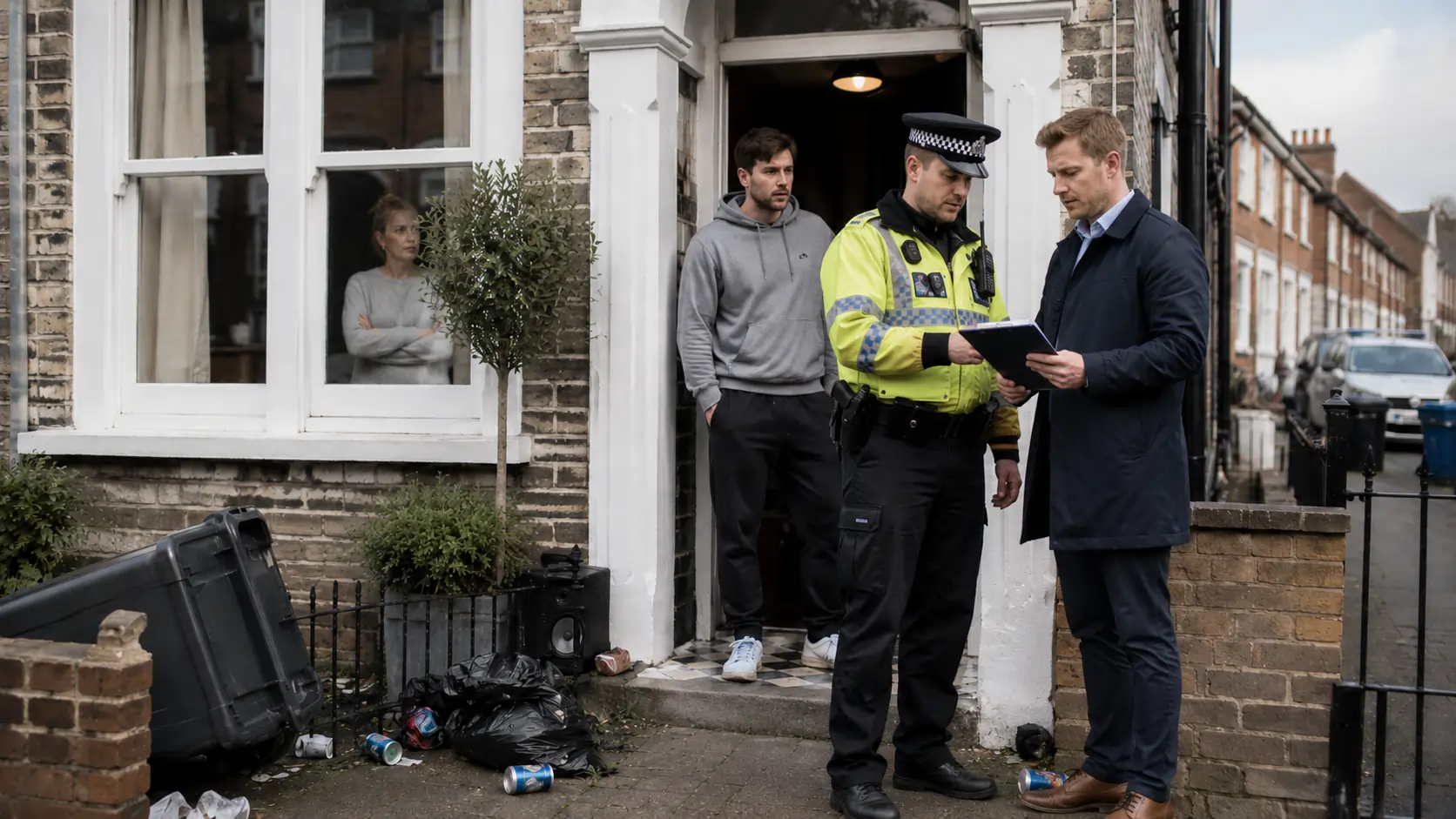
You can evict a tenant for antisocial behaviour using one of two possession grounds: Ground 14 for nuisance and disturbance, and Ground 7A for the most serious or criminal cases.
Both grounds let you apply to the court straight away, with no waiting period before you start proceedings.
Since Section 21 ended on 1 May 2026, these grounds are now your main route when a tenant, their household or their visitors are making life difficult for neighbours.
The catch is that antisocial behaviour cases are won or lost on evidence, so how you document the problem matters as much as which ground you choose. This guide explains both grounds in plain terms, what counts as antisocial behaviour, and what the court expects to see.
Can you evict a tenant for antisocial behaviour?
Yes. You cannot use a Section 21 notice any more, but you can serve a Section 8 notice using Ground 14 or Ground 7A, depending on how serious the behaviour is.
Both of these grounds let you apply to the court immediately after serving notice, which makes them the fastest possession routes available. They are also treated differently from other grounds in one important way, which we cover further down.
What counts as antisocial behaviour?
Antisocial behaviour covers conduct that causes, or is likely to cause, nuisance or annoyance to neighbours, visitors or anyone else in the area, as well as using the property for illegal or immoral purposes. Common examples include:
- Excessive noise: persistent loud music, parties or shouting, especially late at night.
- Harassment or threats: intimidating or abusive behaviour towards neighbours.
- Illegal use of the property: drug dealing, or using the property for other criminal activity.
- Criminal damage: vandalism to communal areas, neighbouring property or the locality.
- General nuisance: behaviour that repeatedly disturbs or distresses people nearby.
It is not just the tenant: the conduct of anyone living in or visiting the property counts too.
The tenant stays responsible - a tenant who blames a partner or guest is still accountable for behaviour at the property.
What doesn't count as antisocial behaviour?
Not every complaint is antisocial behaviour, and treating the wrong situation as a possession matter can backfire or put a vulnerable person at risk. Several issues need a different response entirely.
Domestic abuse: frequent arguments, shouting or signs of conflict between adults can indicate domestic abuse rather than antisocial behaviour. Pursuing possession in these cases can penalise the victim and is rarely the right route. If you suspect abuse, or think someone is at immediate risk, contact the police. Victims of domestic abuse also have specific housing protections, so take advice before acting.
Child welfare and safeguarding: a child making frequent noise, or showing signs of distress, can point to a safeguarding concern such as neglect or abuse rather than a tenant problem. If you are worried about a child's welfare, contact your council's children's services, and the police if a child is at immediate risk.
Behaviour linked to disability or mental health: conduct connected to a disability or a mental health condition needs particular care. Under the Equality Act 2010, seeking possession for behaviour arising from a disability can amount to unlawful discrimination, and because Ground 14 is discretionary the court will weigh the tenant's circumstances when deciding what is reasonable. Where support might resolve the issue, involving the council or relevant services is often more appropriate than a possession claim. Take legal advice before relying on antisocial behaviour grounds here.
Ordinary, everyday living noise: day-to-day sounds such as footsteps, a baby crying, occasional DIY or normal household activity are not antisocial behaviour, even if a neighbour finds them irritating. Differences in lifestyle, working hours or culture do not count either.
One-off incidents and personality clashes: a single argument, an isolated disagreement or a personal clash between neighbours is not the same as a sustained pattern of nuisance. Courts look for repeated, evidenced behaviour, so a one-off incident rarely supports possession on its own.
Complaints that are not really about conduct: be wary of complaints driven by prejudice or a personal grudge rather than genuine nuisance. Acting on these can expose you to discrimination or harassment claims, so check the substance of a complaint before treating it as antisocial behaviour.
If in doubt, record what you know, signpost the right service, and take advice before treating a situation as grounds for eviction.
What is Ground 14?
Ground 14 is the discretionary ground for nuisance and antisocial behaviour, and it is the one most landlords will use. It applies when the tenant, a member of their household or a visitor causes nuisance or annoyance, or uses the property for illegal or immoral purposes.
'Discretionary' means you have to prove the behaviour happened, and then the court decides whether eviction is reasonable. It weighs the seriousness and persistence of the behaviour, the effect on others, and the steps you took to deal with it.
You do not need a criminal conviction to use Ground 14 for nuisance, but strong, dated evidence is essential. There is no notice period, so you can apply to court as soon as you serve the notice, although the court cannot make a possession order until 14 days after the notice date.
What is Ground 7A?
Ground 7A is the mandatory ground for the most serious antisocial behaviour, usually where there has already been a conviction or court order. If you prove one of its conditions is met, the court must grant possession.
You can use Ground 7A if the tenant, someone living at the property, or a visitor meets one of five conditions.
- Serious conviction: convicted of a serious criminal offence.
- Breached injunction: broke an injunction to prevent nuisance or annoyance.
- Breached order: broke a criminal behaviour order.
- Closure order: the property has been closed for more than 48 hours.
- Noise conviction: convicted of breaching a noise abatement notice or order.
A few practical points to remember:
1) There are deadlines: you have 12 months from a conviction to serve notice, and three months from a closure order.
2) It is hard to use alone: most private landlords cannot use Ground 7A without police or council support, because it relies on convictions and orders you do not control.
3) Ground 14 does the heavy lifting: most real cases lean on Ground 14, with Ground 7A added when a conviction or order is in place.
Ground 14 or Ground 7A: which should you use?
Use Ground 14 for ordinary nuisance and disturbance, and Ground 7A only when there is a conviction or court order behind the behaviour. Many landlords plead more than one ground on the same notice to strengthen their case, often adding Ground 12 where the behaviour also breaks a clause in the tenancy agreement.
What evidence do you need?
Evidence is what wins an antisocial behaviour case, especially on the discretionary Ground 14 where the court has to be persuaded eviction is reasonable. Start a written record the moment a complaint comes in, and keep building it.
Useful evidence includes a dated incident log noting what happened, when, and who was affected; complaints from neighbours, ideally in writing, and witness statements; copies of any warnings you gave the tenant and their responses; police reference numbers or council noise team involvement; and photos or recordings where relevant, such as damage or noise reports.
A well-drafted tenancy agreement helps here, because a clear clause prohibiting antisocial behaviour also opens up Ground 12. Keeping every warning, message and complaint logged against the tenancy means your evidence trail is ready if you ever need it in court.
How long does it actually take?
Faster to start than other grounds, but not necessarily faster to finish. You can apply to the court immediately after serving notice, which sounds quick, but the court timetable then takes over.
The latest Ministry of Justice possession statistics show a median of around 26 weeks from a landlord's court claim to repossession, and defended antisocial behaviour cases often sit at the longer end of that range. The lack of a notice period is a genuine advantage, but it does not remove the court queue, so set your expectations accordingly. Our eviction timeline guide covers the stages.
The one advantage worth knowing about antisocial behaviour grounds
Antisocial behaviour grounds are not blocked by the compliance rules that hold up other evictions. Normally, you cannot get a possession order if you have not protected the deposit or, once the requirement is live, registered on the PRS Database.
Government guidance confirms those restrictions do not apply to Ground 7A or Ground 14. So even if you have a compliance gap to fix, you can still pursue possession for antisocial behaviour. That does not excuse non-compliance, but it matters when a tenant is making neighbours' lives a misery.
Antisocial behaviour evictions step by step
- Step 1. Log the first complaint in writing, with date, detail and who reported it.
- Step 2. Raise it with the tenant in writing and set out what needs to change.
- Step 3. Keep building your evidence, and involve the council or police for serious cases.
- Step 4. Decide whether the behaviour fits Ground 14, Ground 7A, or both, plus Ground 12 if a tenancy term is broken.
- Step 5. Serve a valid Section 8 notice citing the relevant ground or grounds.
- Step 6. Apply to the county court (immediately for Grounds 14 and 7A).
- Step 7. Present your evidence at the hearing, knowing the court must grant possession on Ground 7A but weighs reasonableness on Ground 14.
Frequently asked questions
Can I evict a tenant for noise complaints?
Yes, under Ground 14, if the noise amounts to nuisance or annoyance. You will need dated records and ideally neighbour complaints or council noise team involvement, since the court decides whether eviction is reasonable.
Do I need a conviction to evict for antisocial behaviour?
Not for Ground 14, where evidence of the behaviour is enough. Ground 7A is different and generally relies on a conviction, a breached order, or a closure order.
Am I responsible if it is the tenant's visitor causing problems, not the tenant?
You can still act. Both antisocial behaviour grounds cover the conduct of anyone living at or visiting the property, so the tenant remains responsible for their household and guests.
How quickly can I start eviction for antisocial behaviour?
Straight away for Grounds 14 and 7A, as neither has a notice period before you apply to court. The court still cannot make a possession order until 14 days after the notice date.
What is the difference between Ground 14 and Ground 7A?
Ground 14 is discretionary and covers nuisance, so the court decides if eviction is fair. Ground 7A is mandatory and covers serious or criminal behaviour, so the court must grant possession if a condition is met.
Can I evict for antisocial behaviour if my deposit protection is not in order?
Yes. The deposit and PRS Database compliance rules that block other evictions do not apply to antisocial behaviour grounds, although you should still fix any compliance gap.
About Landlord Studio
.webp)
Landlord Studio is an easy to use MTD compliant property management and accounting software designed for UK landlords.
Track income and expenses, run reports,, find and prescreen tenants, manage property maintenance, and more.
Stay Updated on Property Insights

Get weekly tips, tax updates, and landlord strategies straight to your inbox.
How to Submit your Second Quarterly MTD Submission
Missed your first MTD submission or unsure what changed? Learn how to file your second quarterly update correctly before the 7th November HMRC deadline.
Details:
Free
Hosted by:
Logan Ransley
When:
October 15, 2026
12:00pm BST
Duration:
45 minutes
Guest:
Logan Ransley, co-founder of Landlord Studio