




Read summarised version with:

ChatGPT

Gemini

Claude

Grok

Add as preferred on Google
Most landlords are unprepared for the shift to quarterly digital tax reporting — and they're looking to people they already trust to help them navigate it.
For letting agents, that's both a challenge and a commercial opportunity.
You already hold the keys (literally) to the most accurate rental income data for clients. The question is how to package that into a scalable service that adds value for landlords, generates recurring revenue for your agency, and doesn't turn your team into tax accountants.
Isn’t MTD just an accountant opportunity?
Historically, landlord tax has largely been handled by accountants rather than letting agents. Agents manage the property, collect the rent, and maintain the relationship — but tax reporting happens elsewhere.
Because of that, many agents assume MTD is simply a revenue opportunity for accountants. But MTD changes the dynamic because it requires digital rental records and regular reporting through software.
Suddenly the question becomes: where does the most accurate rental data actually sit?
For many landlords, that data already exists inside their letting agent’s system.
Letting Agents Data = Source of Truth
In reality, the most reliable rental transaction data is usually recorded by letting agents.
Systems like Reapit, SME Professional, Alto, and others already contain the cleanest rental records.
This means agents already hold one of the most important pieces of the MTD reporting puzzle.
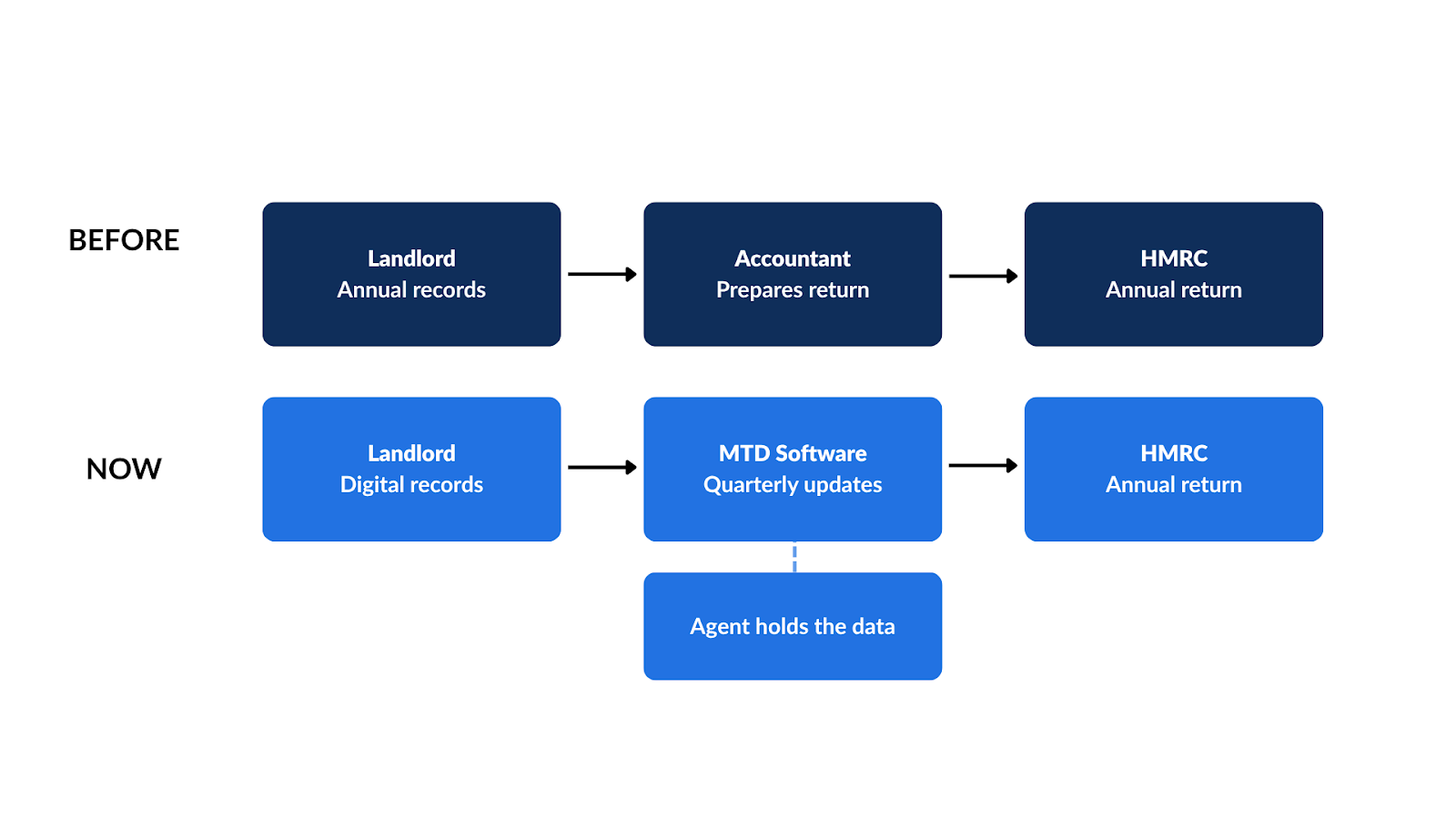
This doesn’t mean agents are expected to become tax advisors, but it does mean they can play an important role in enabling the process.
Agencies that recognise this early are beginning to see MTD not just as compliance, but as a landlord service opportunity.
Sizing the MTD opportunity for agents
Approximately half of UK landlords use a letting agent to find and manage their property rentals, with usage rates historically hovering around 50% to over 60% according to sources from NRLA and Propertymark.
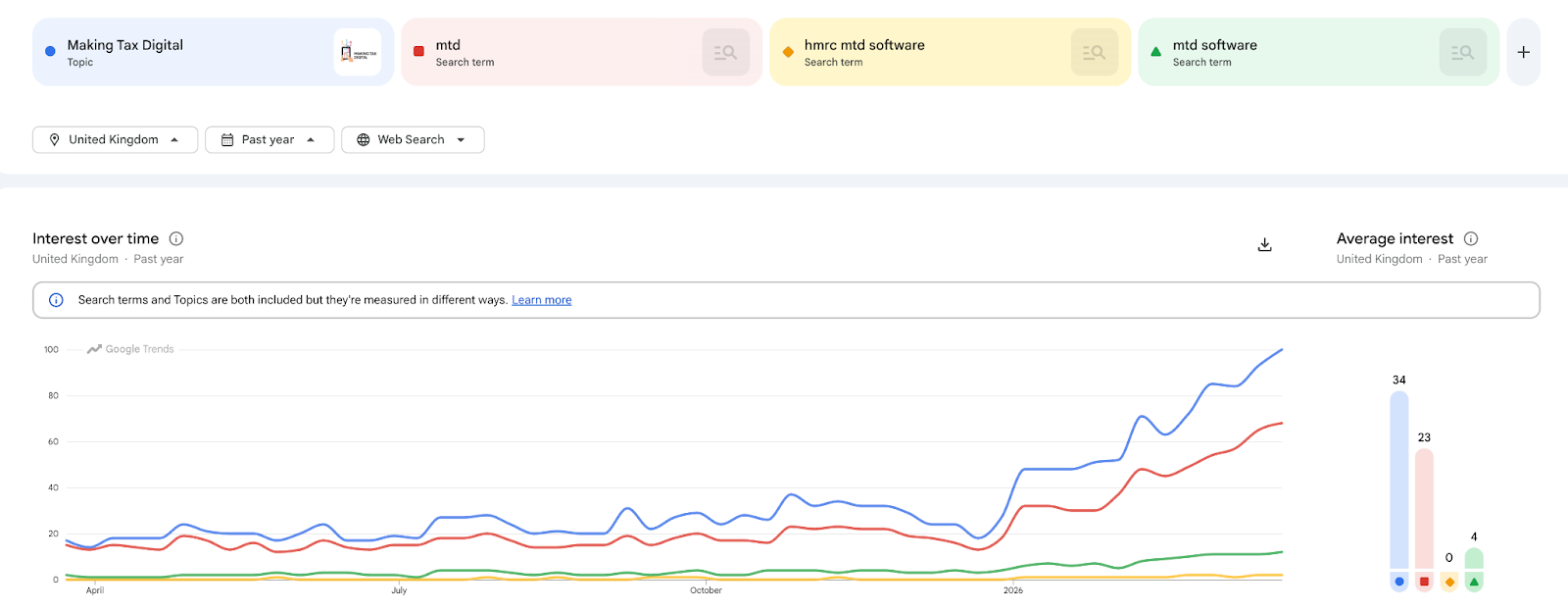
With searches for “making tax digital”, “mtd” and “HMRC mtd software” trending in the last few months it’s clear the the need help and support landlords is high.
This provides two key opportunities:
1. New Recurring Revenue
MTD creates a new category of landlord support service. Agents can package this as an “MTD readiness” or “MTD support” offering.This might include providing software access, rental summaries, and support connecting their records to HMRC.
Many agencies we’ve been working with are exploring pricing models between £5 and £15 per landlord per month.
For agencies managing hundreds of landlords, even modest adoption can create a meaningful recurring revenue stream. Instead of being purely compliance-driven, MTD can become a service that strengthens the financial sustainability of the agency.
2. Stronger Landlord Relationships
MTD introduces quarterly reporting, which naturally increases the frequency of landlord interactions. Instead of a once-per-year tax conversation, landlords now need to review their rental data every quarter.
This creates opportunities for agents to provide insights, summaries, and guidance throughout the year.
Agencies can position themselves as proactive partners helping landlords stay organised and compliant.That shift can deepen trust and strengthen long-term landlord relationships.
Ultimately, agencies that help landlords navigate regulatory changes often see improved retention and loyalty.
Where should letting agents start?
The first step is identifying which landlords are likely to be affected by the MTD thresholds.
Many agencies start with landlords who own multiple properties or generate higher rental income. This will help you size up the financial opportunity. You can then look at the other thresholds in your clientele (30k, then 20k) to assess just how profitable your service could be.
The next stage is considering the platform in which you deliver this service.
Some key questions to think about for your platform choice include:
- Is the platform HMRC-Recognised
- Is there a revenue share model / how much will it cost?
- Does it integrate with your existing property management system (Reapit, Alto, SME Professional etc.)?
- Does the landlord have a mobile app to review and approve submissions?
- Does it offer a multi-client management view, or is it designed for individual landlords?
- How much manual data entry is required, or does rental data flow in automatically?
- What does the landlord onboarding experience look like?
- How good is the customer support?
What Tools Are Available to Scale MTD as a Service?
For letting agents, the most effective option is an agent-focused platform that combines landlord-specific accounting with multi-client management and shared access, allowing you to standardise processes across your entire client base.
Right now, there are only a small handful of HMRC-recognised platforms that offer this.
Platforms like Nexus have partnered with existing agent CMS’s like Propertymark and Reapit (two of the leading bodies and systems in the UK letting agent ecosystem) to enable smoother data flow between property management and financial records.They are also HMRC-recognised and tick all the boxes you’d expect for a well-rounded client experience.
Understanding the revenue share model for MTD agent platforms
You’ll find most agent-focused platforms are offering a revenue share model.
In practice, this means:
- The letting agent introduces landlords onto their chosen MTD platform
- The landlord incurs the cost for the MTD software
- The agent receives a share of that revenue or incorporates it into their management fee
For agents, the upside is twofold:
- Monetisation - turning compliance support into a paid service
- Efficiency - reducing time spent chasing data and fixing inconsistencies
Most importantly, agents stay out of tax, while providing a valuable service.
How an MTD platform for letting agents works
As a quick demonstration of how agents can use an MTD platform using an example like Nexus:
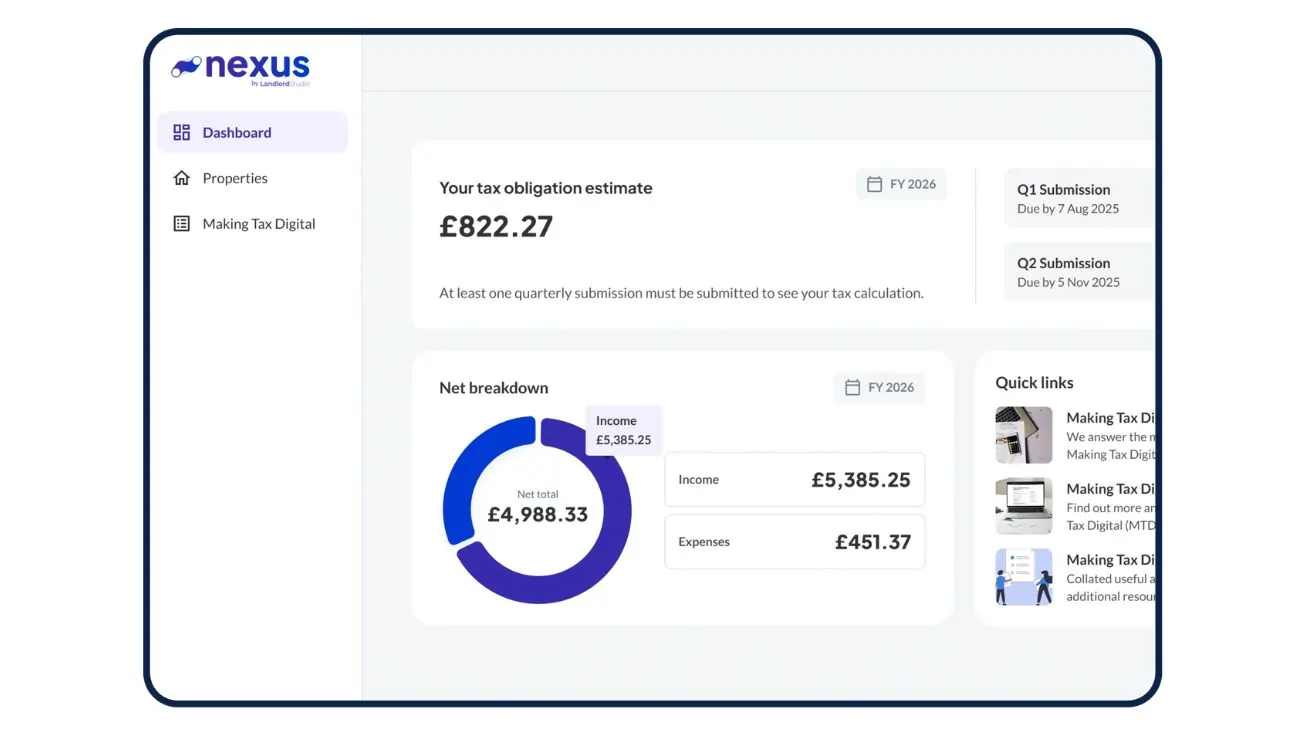
- Your letting agent enables Nexus within their platform
- You receive an invite and activate your account
- Your data syncs automatically
- Review and submit your quarterly MTD reports
Useful Resources for Implementing MTD as a Service
Some common questions we’ve been seeing in the letting agency community and the resources you need to solve them:
- How should letting agents communicate MTD service offering to clients
- What to look for in MTD Software for Agents
- As a letting agent, how can I help support landlords with MTD?
The Opportunity Is Right Now
MTD formally begins in April 2026, but the real commercial opportunity sits in the transition period leading up to the first quarterly submissions.
Demand for support will spike as deadlines hit. Landlords who have delayed action will need help quickly, and agents who already have a system in place will be best positioned to capture that demand.
The first wave of landlords earning over £50,000 represents the most immediate and valuable segment (more than 864,000 sole traders and landlords according to HMRC). These clients are more likely to have complex portfolios, higher expectations, and a greater willingness to pay for structured support.
This is also just the beginning. As thresholds drop in subsequent years, the opportunity expands.The agents who move first won’t just stay compliant. They’ll define how MTD services are delivered to their clients.
Learn more about Nexus
If you’re interested in learning more about how you can introduce MTD as a service, book in for a quick demo and chat with our team.